HydrogenShipbuilding.com

click to database

Tag: Lh2

  • Gen2Energy secures 195 MW grid capacity at Nesbruket

    Gen2 Energy has received confirmation of a total capacity reservation of 195 MW for its green hydrogen production project at Nesbruket in Vefsn municipality, Norway. This grid connection represents one of the largest capacity allocations for hydrogen production in Norway and positions the facility to produce approximately 42 tons of green hydrogen daily when fully operational. The project has already received its general building permit—the largest hydrogen plant to achieve this milestone in Norway—and is progressing toward final investment decision for construction start in 2026.
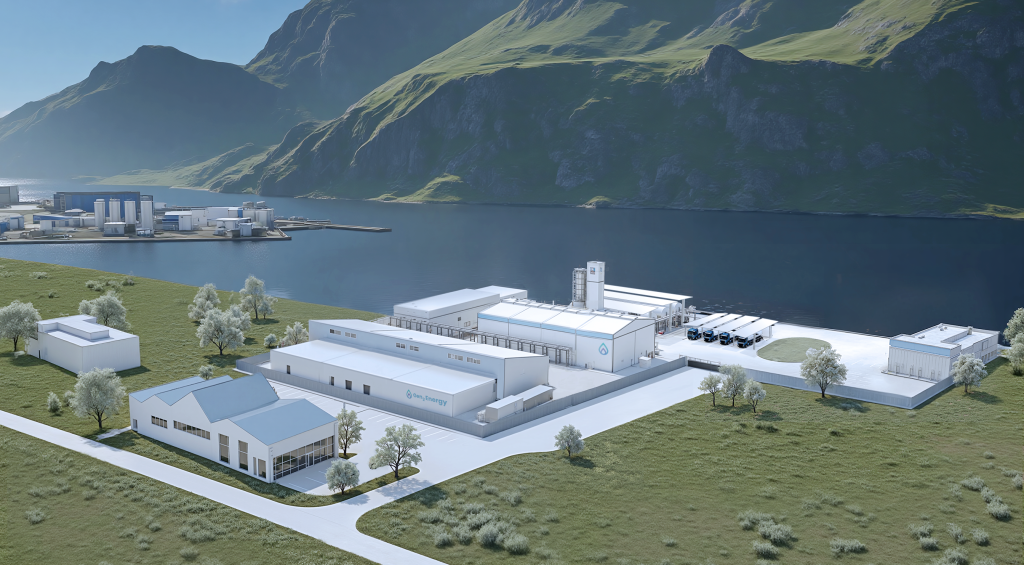
    Gen2 Energy hydrogen facility
    Illustration of the hydrogen plant at Nesbruket (Source: Gen2 Energy)

    Strategic Location in Norway’s Hydrogen Heartland

    The Nesbruket facility sits adjacent to Alcoa’s aluminum smelter in Mosjøen, at the end of the 48-kilometer Vefsnfjorden in the Helgeland region. This location is no accident—Mosjøen is positioned in the heart of Norway’s largest hydropower resources, with massive amounts of trapped renewable energy that can power large-scale electrolysis operations cost-effectively.

    The 195 MW capacity reservation from the grid operator represents the electrical infrastructure foundation necessary to produce hydrogen at commercial scale. This isn’t just paperwork—it’s the difference between a hydrogen project that remains on drawing boards and one that can actually operate profitably.

    Project Specifications

    The Nesbruket plant represents Gen2 Energy’s first phase in a broader Mosjøen hydrogen hub strategy that could eventually encompass 695 MW of total production capacity across two sites.

    Nesbruket Plant 1 key features:

    • Grid Capacity: 195 MW reserved
    • Production Capacity: Approximately 42 tons of green hydrogen per day
    • Technology: Water electrolysis powered by renewable hydroelectric energy
    • Export Method: Compressed hydrogen in 40-foot ISO containers
    • Target Markets: European industrial customers and maritime applications
    • Port Access: Deep-water quay facilities via Port of Helgeland
    • Planned Start: Production targeted for 2027

    Gen2 Energy is also developing Nesbruket Plant 2 adjacent to the first facility, which will supply hydrogen “over the fence” to neighboring company Norsk e-Fuel for sustainable aviation fuel (SAF) production. Additionally, a 500 MW facility is planned for Holandsvika, further along the Vefsnfjord.

    The Grid Capacity Bottleneck

    Securing 195 MW of grid capacity might sound like administrative procedure, but it represents one of the most critical bottlenecks in the hydrogen economy. Large-scale electrolysis requires massive amounts of electricity—current estimates suggest power costs account for 60-80% of green hydrogen’s operational expenses.

    Without sufficient grid connection capacity, even the best-designed hydrogen plant cannot operate. Grid operators must carefully balance total demand across all users, and reserving 195 MW for a single facility requires coordination with transmission system operators, load forecasts, and infrastructure upgrades.

    Norway’s hydropower advantage provides both abundant renewable electricity and—critically—baseload renewable power. Unlike solar or wind which produce intermittently, hydropower can provide steady output, allowing electrolyzers to run at high capacity factors. This operational consistency directly impacts project economics and hydrogen production costs.

    Why This Matters

    Grid capacity reservations like Gen2 Energy’s 195 MW allocation are the unsexy infrastructure reality that determines whether hydrogen projects move from PowerPoint to production. Europe’s hydrogen strategy targets 10 million tons of domestic production by 2030—requiring approximately 120 GW of electrolyzer capacity. But electrolyzers are useless without grid connections to power them. Norway’s combination of cheap hydropower, available grid capacity, and proximity to European markets positions projects like Nesbruket to produce cost-competitive green hydrogen while competitors in other regions struggle with expensive renewable electricity and grid connection delays stretching years. More importantly, the “over the fence” hydrogen supply to Norsk e-Fuel demonstrates how hydrogen hubs create industrial ecosystems where production facilities, export operations, and local consumers co-locate to minimize logistics costs and maximize infrastructure utilization—a model that could be replicated across Norway and Europe.

    Economics of Scale

    The economics of green hydrogen production hinge on three primary factors: electricity cost, electrolyzer capital cost, and capacity factor (how much of the time the system operates). Gen2 Energy’s Nesbruket location optimizes all three.

    Norway’s hydropower provides electricity costs significantly below European averages. The Norwegian government estimates current green hydrogen production costs around €5.20 per kilogram, with power and grid connection representing approximately 60% of total costs. As electrolyzer costs decline through mass production and the facility operates at high capacity factors enabled by steady hydropower, production costs should trend toward the €3-4/kg range by the late 2020s.

    This pricing trajectory is critical. Grey hydrogen produced from natural gas costs roughly €1-2/kg today. Green hydrogen needs to approach €3/kg to compete in industrial applications without subsidies. The combination of cheap Norwegian power, high utilization rates, and economies of scale at 195 MW capacity positions Nesbruket to reach competitive pricing faster than projects relying on more expensive electricity or intermittent renewable sources.

    Partnership with Norsk e-Fuel

    Gen2 Energy’s partnership with Norsk e-Fuel illustrates the hydrogen hub model’s potential. Norsk e-Fuel is developing a sustainable aviation fuel (SAF) facility on neighboring land at Nesbruket. Rather than building separate hydrogen production, Norsk e-Fuel will receive hydrogen “over the fence” directly from Gen2 Energy’s Nesbruket Plant 2.

    This arrangement optimizes capital efficiency—one large hydrogen production facility serving multiple customers achieves better economies of scale than several smaller dedicated plants. It also minimizes hydrogen transportation costs and energy losses, since the hydrogen moves via short pipelines rather than compression, storage, and trucking.

    Lars Bjørn Larsen, CCO of Norsk e-Fuel, emphasized the partnership’s strategic value: “Through strategic partnerships such as the one with Gen2 Energy, based on a shared commitment to innovation and efficient use of power and other resources, our collaboration not only facilitates the exchange of expertise, but also drives sustainable land use optimization and promotes cost efficiency.”

    Andreas Ekker, SVP Global Sales at Gen2 Energy, noted: “The short distance supply of hydrogen from our Nesbruket plant 2 to our neighbour Norsk e-Fuel is cost-efficient for both parties and represents a significant steppingstone towards the realization of the industrial ambitions in Vefsn municipality.”

    Norway’s Broader Hydrogen Strategy

    Gen2 Energy’s Nesbruket development aligns with Norway’s national hydrogen strategy, which targets hydrogen as a central pillar in the country’s transition to becoming a low-emission society by 2050. The government’s 2020 hydrogen strategy recognizes that achieving 90-95% emissions reductions compared to 1990 levels requires decarbonizing sectors where direct electrification proves challenging.

    Norway has committed significant public funding to accelerate hydrogen development. Enova, the Norwegian state enterprise managing climate and energy transition investments, allocated NOK 777 million (approximately €65 million) in November 2024 to support five green hydrogen production facilities targeting maritime applications. These investments complement private sector projects like Gen2 Energy’s Nesbruket plant.

    The country’s abundant hydropower resources—Norway generates approximately 95% of its electricity from hydropower—provide the clean energy foundation for large-scale hydrogen production without requiring massive solar or wind buildouts. However, Norway’s electrolyzer manufacturing capacity remains limited, with most equipment being imported from suppliers like Nel Hydrogen, thyssenkrupp nucera, and international competitors.

    Competitive Landscape

    Gen2 Energy faces competition from several Norwegian hydrogen developers. Norwegian Hydrogen is developing a 270 MW facility at Ørskog in Ålesund municipality, targeting 40,000 tons of annual production. Greenstat has begun constructing a 20 MW facility at Fiskå in Rogaland County as part of the Agder Hydrogen Hub in Kristiansand.

    However, Gen2 Energy’s 195 MW capacity at Nesbruket—potentially expanding to 695 MW across Mosjøen facilities—positions the company among Norway’s largest hydrogen producers. The early building permit, secured grid capacity, and partnership with Norsk e-Fuel provide competitive advantages in a sector where many projects remain in earlier development stages.

    Internationally, Norway competes with countries like Chile and Morocco that benefit from extremely cheap solar power for electrolysis. A 2024 academic study estimated Norwegian green hydrogen costs at €5.18-7.25/kg compared to potentially lower costs in sunnier regions. However, Norway’s advantages lie in proximity to European markets, established energy infrastructure, political stability, and existing industrial ecosystems—factors that matter as much as production cost alone.

    Looking Ahead

    With grid capacity secured and permits in hand, Gen2 Energy approaches the critical final investment decision phase. The company has completed FEED work with Wood, engaged equipment suppliers, and established customer relationships through partnerships like Norsk e-Fuel and commitments to European export customers.

    The 195 MW grid capacity reservation transforms Nesbruket from hydrogen project to hydrogen reality—a critical step in Norway’s ambition to become a major European hydrogen supplier and prove that green hydrogen can compete economically with fossil fuel alternatives.


    Sources

    • Gen2 Energy – “Gen2 Energy AS and Vefsn municipality have signed agreements on green hydrogen” (September 2021)
    • Gen2 Energy – “Agreement on the planning and design of the quay entered and application for general building permit delivered” (July 2023)
    • Gen2 Energy – “General building permit for the hydrogen plant in Mosjøen in place” (September 2023)
    • Gen2 Energy – “Gen2 Energy and Norsk e-Fuel partner on green hydrogen for production of sustainable aviation fuel” (January 2024)
    • Gen2 Energy – Production Sites information (gen2energy.com)
    • Wood – “Wood secures FEED for first large-scale green hydrogen production facility in Mosjøen in Norway” (May 2022)
    • Offshore Energy – “Gen2 Energy, Vefsn municipality sign green hydrogen deal” (September 2021)
    • CMS Law – “Hydrogen law and regulation in Norway” (November 2024)
    • Green Hydrogen Organisation – “Norway Country Profile” (2024)
    • ScienceDirect – “The competitive edge of Norway’s hydrogen by 2030: Socio-environmental considerations” (August 2024)
  • Norway supports liquid hydrogen fleet

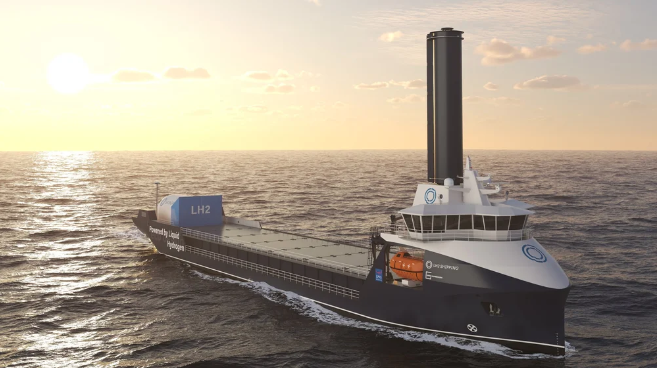
    Norway’s state-owned Enova has awarded substantial funding for six hydrogen-powered bulk carriers, marking a significant acceleration in the deployment of zero-emission maritime technology. The latest round brings the total number of liquid hydrogen bulk carriers to four, demonstrating growing confidence in hydrogen as a viable marine fuel.

    Expanding the Liquid Hydrogen Fleet

    LH2 Shipping, in partnership with Strand Shipping Bergen (part of the Vertom Group), received approximately $29 million in additional funding from Enova to construct two more liquid hydrogen-powered bulk carriers. This award follows an earlier grant of $23.5 million secured in the spring for the first two vessels, bringing the total number of hydrogen-powered ships in the project to four.

    Source: LH2 Shipping

    The expanded funding represents more than NOK 536 million ($52.5 million) in total state support for this single project—a clear signal of Norway’s commitment to maritime decarbonization.

    Technical Specifications

    The four vessels, branded under the “NordBulk” project, will be 7,700 dwt bulk carriers designed for short sea shipping. Each 108-meter (353-foot) vessel will transport bulk and general cargo between northern Norway, the Baltic region, and mainland Europe.

    Key technical features:

    • LH₂ Storage: 17 tonnes liquid hydrogen capacity per vessel
    • Power Generation: 3.5 MW PEM fuel cells
    • Battery Support: 1.5 MWh battery pack to support fuel cell operation
    • Shore Power: Equipped for shore power connection during loading/unloading
    • Backup System: Standby diesel/biodiesel generator for operational redundancy

    The onboard hydrogen systems consist of C-type vacuum-insulated tanks storing liquid hydrogen at -253°C. This proven technology builds directly on the experience gained from Norled’s MF Hydra ferry, which has been operating successfully on liquid hydrogen since 2023.

    Coastal Hydrogen Operations

    In addition to the liquid hydrogen bulk carriers, GMI Rederi received funding to construct two coastal bulk carriers powered by compressed hydrogen. These vessels will combine multiple zero-emission technologies:

    • Fuel cells running on compressed hydrogen
    • Battery energy storage systems
    • Wind-assisted propulsion technology

    The ships will operate along the Norwegian coast, transporting asphalt and construction materials—applications where the shorter range and established coastal infrastructure make compressed hydrogen a practical choice.

    Building the Supply Chain

    A critical component of these projects is the parallel development of hydrogen production and bunkering infrastructure. In November 2024, Enova awarded over NOK 777 million ($70.9 million) to five hydrogen production projects along the Norwegian coast, from Slagentangen in the southeast to Bodø in the north.

    These production facilities will provide:

    • Total capacity: 120 MW
    • Daily production: Approximately 40 tons of hydrogen
    • Coverage: Strategic locations along major shipping routes

    Nils Kristian Nakstad, CEO of Enova, stated: “The projects that receive support will be part of a network of hydrogen producers along the Norwegian coastline. This will make hydrogen more accessible to those who want to invest in sustainable shipping.”

    The Economics of Hydrogen Shipping

    The business case for hydrogen vessels is improving rapidly due to several factors:

    Regulatory Drivers:

    • EU Emissions Trading System (ETS) now includes maritime transport
    • FuelEU Maritime regulations mandate gradual emissions reductions
    • IMO’s 2050 net-zero target creates long-term regulatory certainty

    Cost Competitiveness:
    With carbon pricing mechanisms in place, the cost gap between fossil fuels and hydrogen is narrowing. After 2030, when CO₂ emission fees increase further under EU regulations, zero-emission vessels are expected to achieve operational cost parity with conventional ships on many routes.

    The Enova grants cover up to 80% of the additional costs associated with hydrogen technology—a significant increase from the previous 40% support level. This enhanced support reflects Norway’s strategic goal to establish first-mover advantage in zero-emission shipping technologies.

    Environmental Impact

    The six hydrogen-powered bulk carriers receiving funding in this round will collectively contribute to:

    • Annual CO₂ reduction: Significant emissions cuts in short-sea shipping
    • Zero local emissions: No NOx, SOx, or particulate matter during fuel cell operation
    • Scalable model: Demonstration of commercially viable hydrogen operations

    Enova emphasizes that supporting these pioneer vessels creates the foundation for broader adoption. As Andreas Bjelland Eriksen, Norway’s Minister for Climate and Environment, stated: “Norway must be at the forefront of the transition at sea.”

    Timeline and Next Steps

    The vessels are expected to enter service between 2026 and 2029, with construction beginning in 2025. Shipyard selection is underway, with Norwegian and European yards competing for the contracts.

    Enova has announced it will continue its support programs, with additional funding rounds planned for 2025 and 2026. The organization reports receiving 31 applications in the latest round, indicating strong industry interest in hydrogen and ammonia propulsion.

    Industry Significance

    This latest funding announcement positions Norway as the clear leader in hydrogen shipping deployment. The country’s comprehensive approach—supporting vessels, production facilities, and infrastructure simultaneously—creates the conditions for a functioning hydrogen maritime ecosystem.

    For the global shipping industry, Norway’s hydrogen program provides crucial real-world data on:

    • Operational costs of hydrogen vs. conventional fuel
    • Reliability of liquid vs. compressed hydrogen systems
    • Integration challenges in existing shipping operations
    • Bunkering procedures and infrastructure requirements

    As the maritime industry faces increasing pressure to decarbonize, Norway’s hydrogen pioneers are demonstrating that zero-emission bulk shipping is not just technically feasible—it’s becoming economically viable.

    Looking Ahead

    With four liquid hydrogen bulk carriers and two compressed hydrogen coastal vessels now funded and under development, Norway is creating a critical mass of hydrogen shipping operations. When these vessels enter service, they will provide the operational experience needed to scale hydrogen technology across larger ships and longer routes.

    The success of these projects will be closely watched by shipowners worldwide, particularly in Europe where emissions regulations are tightening rapidly. If the NordBulk vessels demonstrate reliable, cost-competitive operations, they may catalyze a broader shift toward hydrogen in the short-sea shipping segment.


    This article is based on reports from Maritime Executive, Ship & Bunker, Clean Shipping International, Norwegian Hydrogen, Hellenic Shipping News, and official Enova communications.

  • European Project Advances Liquid Hydrogen-Powered SOV Design

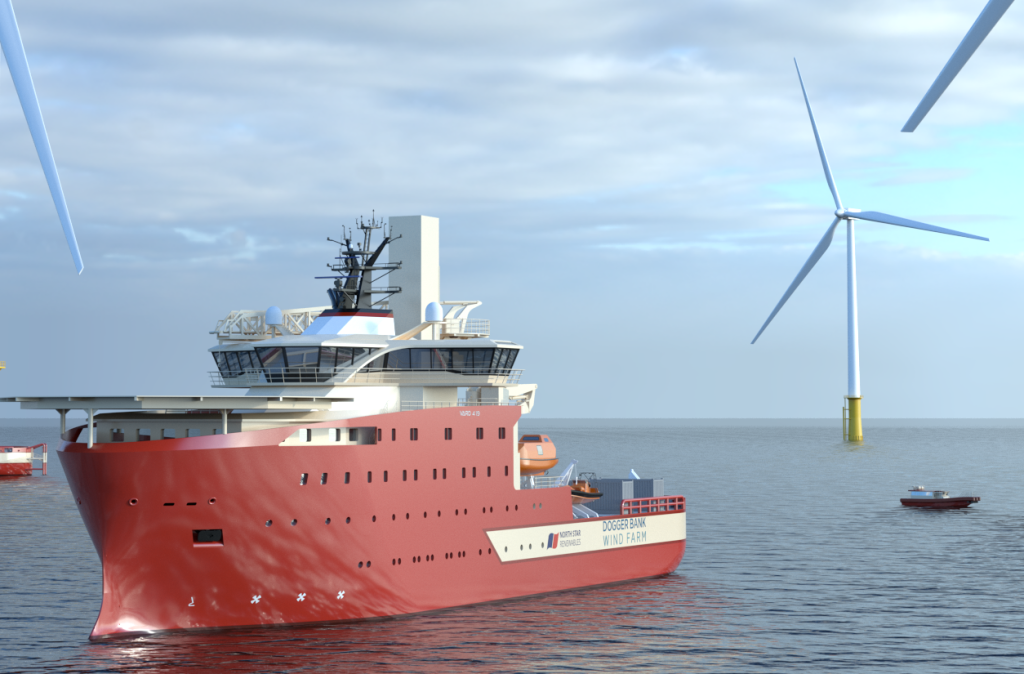
    With long term charter contracts, single port operations and fixed time at sea Service Operation Vessels (SOV) are ideally suited for powering by liquid hydrogen. There is little available space so installing liquid tanks below will be a challenge but this is what the new European project consortium led by ArianeGroup, intends to tackle. Last year a similar concept was revealed by Louis Dreyfus Armateurs and Salt Ship Design.

    The Project Scope

    The recently announced NAVHYS project brings together key industry players, research institutions, and shipbuilders to explore the technical and economic feasibility of an liquid hydrogen-fueled SOV design. The primary objective is to provide a concept for a below-deck LH2 storage and fuel system for an SOV to propose a fully decarbonised maintenance solution for wind energy providers.

    Source: North Star

    The consortium will address several critical aspects:

    • Fuel Storage & Safety – Developing safe and efficient LH2 storage solutions on board.
    • Power System Integration – Assessing how fuel cells and hydrogen combustion engines can be optimized for vessel propulsion.
    • Regulatory Compliance – Ensuring that the design adheres to evolving maritime safety and environmental regulations.
    • Operational Feasibility – Evaluating how LH2 can meet the energy demands of an SOV during offshore wind farm operations.

    Why Liquid Hydrogen?

    Hydrogen has long been considered a promising alternative to fossil fuels, but its adoption in shipping faces challenges related to storage, energy density, and infrastructure. LH2 offers significant advantages over compressed hydrogen due to its higher energy density per unit volume, making it more suitable for long-duration offshore operations. Additionally, it eliminates the need for complex high-pressure storage systems, a key concern for vessel integration.

    However, LH2 presents unique challenges, including:

    • The need for cryogenic storage at -253°C.
    • Potential boil-off losses during long voyages.
    • Limited bunkering infrastructure compared to conventional fuels.

    Despite these hurdles, the industry sees LH2 as a crucial component in the future of zero-emission offshore operations.

    Implications for the Offshore Wind Sector

    SOVs are the backbone of offshore wind farm operations, transporting technicians and equipment to wind turbines. As the demand for offshore wind energy grows, reducing the carbon footprint of support vessels becomes increasingly important. Hydrogen-fueled SOVs could significantly cut emissions, reduce reliance on fossil fuels, and demonstrate the viability of LH2 as a marine fuel in real-world applications.

    Furthermore, this initiative sets a precedent for future hydrogen-powered vessel designs, potentially influencing developments in other segments of the maritime industry, such as platform supply vessels (PSVs) and crew transfer vessels (CTVs).

    Stay tuned for further updates as the project progresses toward making hydrogen-powered SOVs a reality.

  • Energy Observer 2 – Fuel EU Maritime

    In my previous post I explained how the Energy Observer 2 is a new milestone for hydrogen powered vessels. This post analyzes a typical operation for such vessel across European ports in an assumed schedule and evaluates its potential benefits from Fuel EU Maritime.

    Operational Snapshot

    The vessel operates between key European ports on the west coast:

    PortDistance (nautical miles)Port MovesWaiting Time (hours)Maneuvering Time (hours)
    Hamburg40560022
    Antwerp25250022
    Le Havre46340022
    La Rochelle10320022
    Bordeaux99650022
    Total2,2192,2001010
    Overview of EO2 trade route

    Speed, Time, and Energy Calculations

    The vessel operates at a service speed of 12 knots for regular operations. The journey duration and corresponding energy consumption were calculated as follows:

    • Total sailing days: 7.70 (12 knots)
    • Energy consumption during sailing: 554,750 kWh
    • Port energy consumption: 20,000 kWh (port waiting and maneuvering energy combined)

    Based on the following assumed power ratings:

    • Sailing: 3,000 kW
    • Maneuvering: 1,500 kW
    • Port operations: 500 kW

    Hydrogen Fuel Usage and Emissions

    With a typical consumption rate of 60 grams of LH2 per kWh for fuel cells and no further losses assumed, the vessel’s total hydrogen fuel usage per journey is 34.5 tons. Annually, considering regular operations of one round-trip every two weeks, the vessel consumes 897 tons of liquid hydrogen, or 2.5 tons per day.

    Fuel EU Maritime

    The Fuel EU Maritime regulations that came into force this year is meant to enforce the adoption of renewable fuels and to reward early adopters. When we consider the above amount of RFNBO hydrogen in Fuel EU maritime it demonstrates a strong over-compliance compared to requirements in 2029. This can be verified in any free online calculate like provided here

    Moreover, this over-compliance can be traded at marketplaces which came into operation this year (for example here and here). If we assume a rate of €320 per ton CO2-eq – half of the penalty rate – this give a value of €2.55 million. Or €2.85 per kilo LH2. Whether this amount itself justifies to cost of sailing on liquid hydrogen is doubtful but at least it reduced the operational cost of doing so.

    A Path Forward

    This analysis showcases the potential effect of Fuel EU maritime on hydrogen-powered ships across European shipping routes. As port infrastructure evolves to support hydrogen refueling, this mode of operation will become increasingly viable.

    The hydrogen shipping revolution is just beginning—charting the way toward a sustainable and efficient future.

    What’s your take on hydrogen-powered shipping? Share your thoughts below!

  • EU grants hydrogen vessels

    Very pleased to see the EU Innovation fund specifically supporting three projects developing vessels operating on hydrogen. Ponant enables environmental friendly cruising with a very interesting mix of technologies. Samskip continues their venture into hydrogen vessels after already ordering the Sea Shuttles. While the original Energy Observer get is much larger container-carrying sister.

    In November 2023, the European Commission announced the recipients of the EU Innovation Fund 2023, dedicating substantial grants to pioneering projects aimed at decarbonizing the maritime industry. Among the notable beneficiaries are:

    Ponant’s SWAP2ZERO Project

    • Grant Amount: Not publicly disclosed.
    • Project Overview: Ponant, a French luxury cruise operator, is developing the world’s first transoceanic vessel targeting carbon neutrality.
    • Key Features:
      • Wind Propulsion: A sail power system providing up to 50% of the vessel’s propulsion energy.
      • Solar Energy: Approximately 1,000 square meters of eco-friendly photovoltaic panels.
      • Fuel Cells: Integration of both low-temperature and high-temperature fuel cells for propulsion and hotel load needs.
      • Carbon Capture: Onboard technology to capture and reuse CO₂ emissions.
    • Operational Target: Aiming for zero CO₂ emissions during operation with one month of autonomy.
    • Planned Launch: The vessel is expected to be operational by 2030.

    Samskip’s HydroShuttles

    • Grant Amount: Funding details not publicly disclosed.
    • Project Overview: Samskip, a leading logistics company, is developing hydrogen-powered short-sea vessels designed for efficient, clean coastal transport.
    • Key Features:
      • Hydrogen Fuel Cells: Utilization of advanced fuel cell technology for propulsion.
      • Scalable Hydrogen Storage: Innovative storage solutions to support extended operations.
    • Impact: Aiming to reduce emissions in regional trade routes, showcasing the viability of hydrogen for short-sea shipping applications.

    Energy Observer 2 (EO2)

    • Grant Amount: €40 million from the EU Innovation Fund.
    • Project Overview: Building upon the success of the original Energy Observer, EO2 is a 160-meter liquid hydrogen-powered container ship.
    • Key Features:
      • Fuel Cell Capacity: Equipped with 4.8 MW of fuel cells developed by EODev in partnership with Toyota.
      • Cargo Capacity: Capable of carrying up to 1,100 TEU containers.
      • Range: Designed for a 1,600 nautical mile route over 14 days.
    • Operational Target: Scheduled for commercial operation by 2029 on Europe’s Atlantic and Channel coasts.
    • Environmental Impact: Projected to reduce CO₂ emissions by 112,250 tonnes over ten years, equivalent to the annual absorption of 190,000 mature trees.

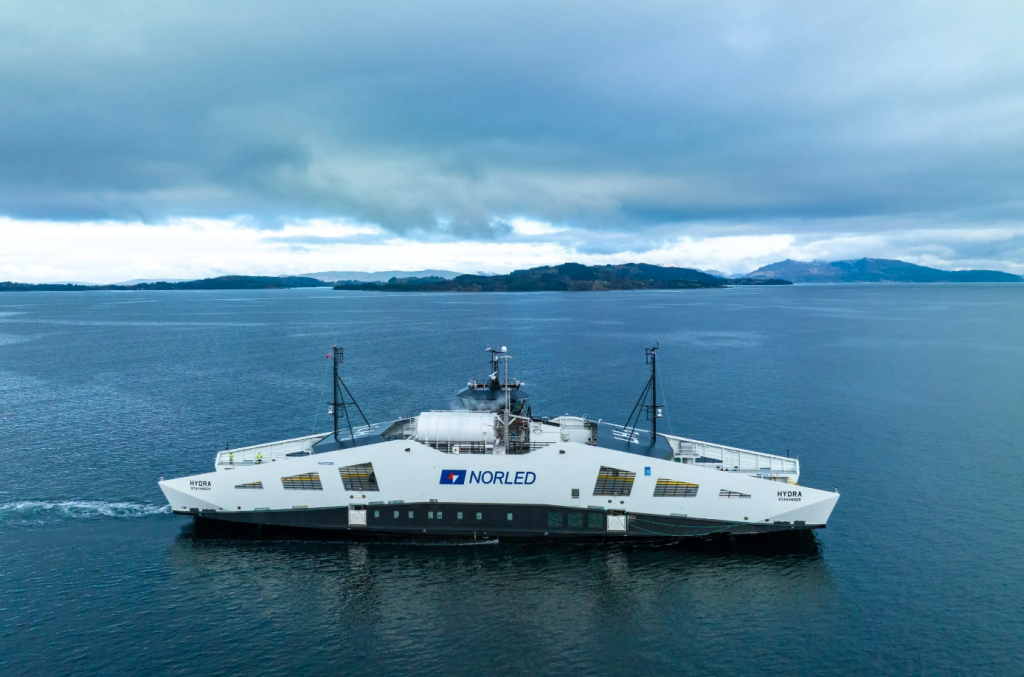
  • Ferry Hydra pioneering LH2

    a pioneering zero-emission passenger ferry powered by liquid hydrogen.

    Delivery

    In June 2021, the ferry Hydra was delivered from Westcon Yards AS to Norled AS in Stavanger, Norway. Designed by LMG Marine AS, Hydra is the world’s first passenger ferry capable of using hydrogen as fuel. It operates alongside the battery-powered ferry Nesvik on the Hjelmeland–Nesvik–Skipavik route.

    Norled's MF Hydra

    Fuel cells and batteries

    Hydra utilizes liquid hydrogen stored on board to power two hydrogen fuel cells, which continuously charge a large battery pack. The batteries can also be charged dockside at Hjelmeland and Nesvik. The ferry is designed to operate on fuel cells driven by liquid hydrogen for at least 50% of its operating time. Additionally, two diesel generators are installed as backup power sources.

    Norwegian party

    The construction of Hydra involved significant contributions from Norwegian suppliers, including LMG Marin in Bergen, Vestnes Ocean in Florø, Westcon Power & Automation in Haugesund, and AF Aeronmollier in Flekkefjord/Stavanger. In total, 18 Norwegian suppliers and exporters participated in the project, enhancing domestic value creation and supporting the maritime export industry. Export Financing Norway provided guarantees totaling up to 460 million NOK for these environmentally friendly ferry projects.

    Hydra is classified by DNV GL with the following notations: 1A Car Ferry B Battery (Power) E0 LC R4(Nor). The propulsion system features Schottel’s Rudder Propeller SRE 340 L FP. Main generators are Scania DI16 75M models, with Stamford HCM634G2 generators (480-553 kW), all supplied by Nogva Motorfabrikk. Westcon Power & Automation provided and installed the battery system.

    Deck equipment includes anchor winches and capstans from Adria Winch, a Marine Evacuation System (MES) and liferafts from Survitec, and an RSQ 450 G MOB boat from Palfinger. Lighting solutions, including searchlights, floodlights, navigation lights, and both exterior and interior technical lighting, were supplied by Glamox.

    Additional systems comprise ventilation and air conditioning from Novenco, comprehensive e-SEAmatic Blue system integration (including EMS, integrated bridge, IAS, and EPMS) by Westcon Power & Automation, navigation equipment installed by Vico, and CCTV provided by Ocean Electronics.

    Milestone

    The delivery of Hydra marks a significant milestone in the advancement of zero-emission maritime transport, showcasing innovative use of hydrogen fuel technology in passenger ferry operations.

  • Superyacht 821 on LH2

    Superyachts often waste engineering resources on gadgets like underwater elevators and mobile helidecks. It provides bragging rights to the owners but does nothing to advance the shipbuilding industry. Not so for Project 821. Building a multi-megawatt fuel cell system with liquid hydrogen storage in a closed environment is relevant for the entire shipbuilding industry. An engineering feat to be proud of.

    Project 821 is a groundbreaking superyacht launched by Dutch shipyard Feadship on May 4, 2024. Spanning 118.8 meters, it holds the distinction of being the world’s first hydrogen fuel cell-powered superyacht, marking a significant advancement in sustainable shipbuilding since the delivery of the first LH2-fuelled ferry Hydra.

    feadship project 821 launched

    Innovative Green Technology

    Project 821 employs green hydrogen to generate emission-free power for both propulsion and onboard amenities. This zero-diesel approach allows the yacht to operate silently and without emissions for up to a week while at anchor or cruising at 10 knots, significantly reducing its environmental impact.

    A key challenge in the yacht’s development was the safe storage of liquid hydrogen at extremely low temperatures (-253°C). Feadship addressed this by installing a double-walled cryogenic storage tank capable of holding approximately 4 tons of hydrogen. Additionally, the fuel cells can utilize methanol, offering flexibility in fuel sources.

    Design and Luxury Features

    Designed by British studio RWD, Project 821 seamlessly integrates luxury with cutting-edge technology. The yacht features five decks above water and two below, with 14 deploying balconies, five shell doors, and seven significant opening platforms—the most hull openings of any Feadship to date. These elements create a harmonious indoor-outdoor experience for guests.

    Liquid hydrogen installation

    MAN Cryo, a division of MAN Energy Solutions, supplied the liquid-hydrogen gas-fuel supply system, marking the first installation of such technology on a superyacht. Their scope encompassed the 92 cubic meter vacuum-insulated type C tank, a tank connection space with essential process equipment like vaporizers and control valves, a bunker station for shore-to-ship bunkering, control and automation systems , a vent mast, and interconnecting hydrogen piping.

    This innovative system stores hydrogen in liquid form, then evaporates and heats it to supply gaseous hydrogen to the fuel cell system, enabling the vessel’s zero-emission propulsion. MAN Cryo collaborated with Lloyd’s Register to develop a risk-assessment-based design approved for below-deck placement—a pioneering achievement in marine liquid-hydrogen projects.

    Technical Specifications

    • Length Overall: 118.8 meters (389’9″)
    • Beam: 19 meters (62’4″)
    • Draft: 5.25 meters (17’3″)
    • Propulsion: 2 x 3,200 kW ABB azimuthing thrusters
    • Power Supply:
    • 2 x 900 kW MTU generators
    • 3 x 2,500 kW MTU generators
    • 16 x 185 kW PowerCell hydrogen generators (fuel cells)
    • Tank: 92 m3 C-type
    • Range: 6,500 nautical miles at 14 knots
    • Accommodation: Up to 30 guests in 12 staterooms, with additional cabins for 44 crew members and 2 staff members

    Market Availability

    Shortly after its launch, Project 821 was listed for sale through yacht brokerage Edmiston. While there have been rumors linking the yacht to Microsoft co-founder Bill Gates, Feadship has not confirmed any details regarding ownership or pricing.