HydrogenShipbuilding.com

click to database

Hydrogen news

  • Sydrogen Achieves Key Certification for Maritime Fuel Cell

    Another maritime fuel cell supplier achieves Approval in Principle as a first step toward commercialization for maritime applications. The recent flurry of announcements regarding fuel cell approvals is a good sign. More competition is required in this space.

    A Milestone for Maritime Decarbonization

    Singapore-based innovator Sydrogen Energy has achieved a significant breakthrough, securing crucial certification milestones for its maritime hydrogen fuel cell technology. Sydrogen’s Maritime Fuel Cell, the SydroPOWER MZ250N, recently received a Basic Design Assessment (BDA) Statement and Approval in Principle (AiP)from Bureau Veritas Marine & Offshore (BV). The statements mark a vital step toward commercializing advanced hydrogen-based energy solutions in maritime operations.
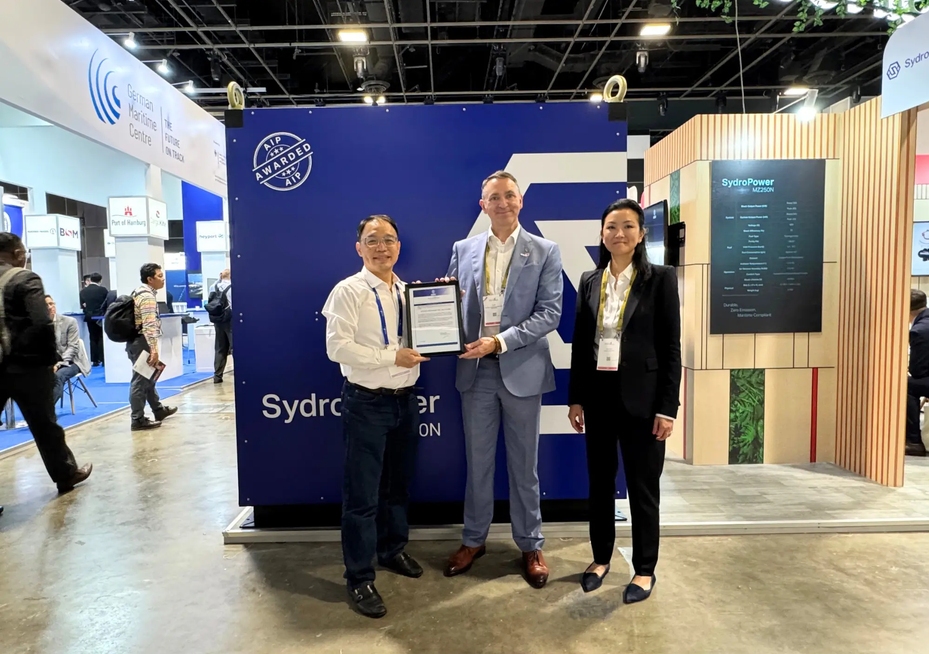
    Source: Sydrogen

    Advanced Fuel Cell Technology

    The SydroPOWER MZ250N incorporates proven automotive hydrogen fuel cell technology from Sydrogen’s partner, Shanghai Hydrogen Propulsion Technology (SHPT). Designed specifically for maritime environments, this fuel cell system promises reliable and efficient power for various applications, including commercial vessels and offshore platforms. The system significantly reduces greenhouse gas emissions and pollutants, contributing directly to global climate goals and cleaner oceans.

    Rigorous Certification and Validation

    The BDA Statement from Bureau Veritas confirms that the SydroPOWER MZ250N meets stringent safety, performance, and reliability standards. This rigorous evaluation process reinforces Sydrogen’s commitment to excellence and highlights the reliability of their technology. This certification demonstrates the industry’s increasing acceptance and readiness for hydrogen-based maritime solutions.

    Industry Leaders Voice Support

    Teo Eng Dih, Chief Executive of the Maritime and Port Authority of Singapore, praised Sydrogen’s milestone, stating, “We welcome the efforts by Sydrogen and its partners in advancing hydrogen fuel cell technology for maritime use. The Basic Design Assessment is an encouraging milestone that reflects momentum across the industry to explore cleaner energy solutions.”

    Gian Yi-Hsen, CEO of Sydrogen, emphasized the impact of this achievement, noting, “Receiving this Basic Design Assessment Statement from Bureau Veritas marks a transformative moment for Sydrogen Energy. This achievement is not just a validation of our technology’s safety and reliability; it represents a significant step forward in our mission to revolutionize maritime energy solutions.”

    Moving Forward with Sustainable Maritime Energy

    With the certification milestone achieved, Sydrogen is now positioned to accelerate deployment of the SydroPOWER MZ250N. The company is actively engaging with potential customers and industry partners to launch pilot projects and commercial installations. These efforts will help drive maritime operations toward a sustainable, zero-emission future.

    This certification highlights not only Sydrogen’s innovative approach but also underscores the broader maritime industry’s commitment to sustainable and environmentally friendly solutions.
  • France Strikes White Hydrogen Gold

    France has recently unveiled a significant deposit of natural hydrogen, often referred to as “white hydrogen,” in the Lorraine region. With all the recent struggles of green hydrogen, white hydrogen feels like a dream scenario that could boost world-wide adoption of hydrogen in all applications including shipping. In my view the potential is so great, it should become a European moonshot approach: get white hydrogen out of the ground at industrial scale by 2035.

    Understanding White Hydrogen

    White hydrogen is naturally occurring molecular hydrogen found in the Earth’s crust, formed through various geological processes. Unlike green hydrogen, which is produced via electrolysis using renewable energy, or gray hydrogen, derived from natural gas, white hydrogen is extracted directly from underground deposits. This direct extraction can lead to lower production costs and reduced environmental impact.

    Details of the French Discovery

    In the Lorraine region, researchers have identified a substantial reservoir of natural hydrogen. Estimates suggest this deposit could contain up to 250 million tonnes of hydrogen, sufficient to meet current global demand for over two years. This finding not only underscores France’s potential in the clean energy sector but also highlights the country’s commitment to innovative energy solutions.

    Cost Implications of White Hydrogen Production

    One of the most compelling aspects of white hydrogen is its cost-effectiveness. Current extraction costs range between $0.50 to $1 per kilogram, depending on factors like deposit depth and purity. This positions white hydrogen as a competitive alternative to both gray and green hydrogen:

    • Gray Hydrogen: Produced from natural gas, its costs have risen due to fluctuating gas prices, now averaging around €6 per kilogram.
    • Green Hydrogen: Produced via electrolysis using renewable energy, it remains relatively expensive, with costs ranging from $6 to $12 per kilogram.

    Implications for the Future

    The discovery of white hydrogen in France could significantly influence the global energy market by providing a more affordable and cleaner energy source. If harnessed effectively, it has the potential to reduce reliance on fossil fuels, decrease greenhouse gas emissions, and accelerate the transition to a sustainable energy future.

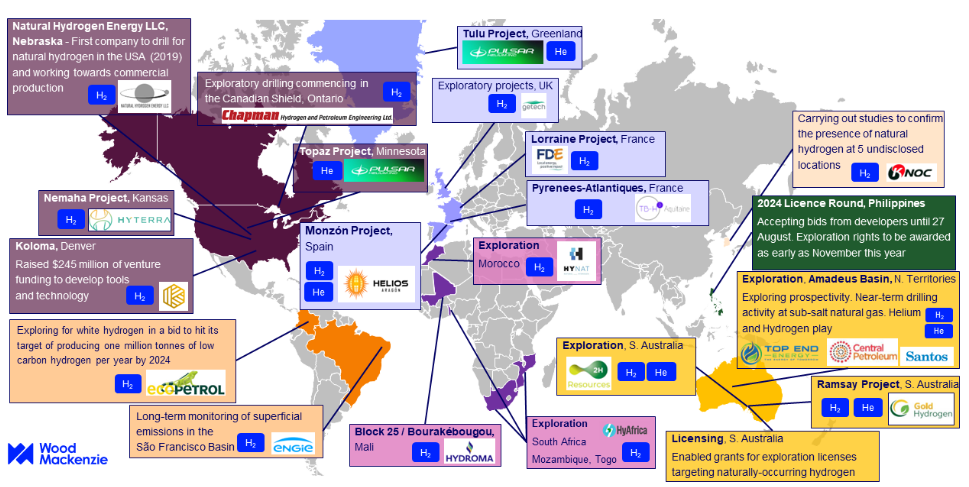
    France’s search for white hydrogen is not an isolated occurrence, as the map below shows. More details available here.

    Source: Wood Mackenzie

    In conclusion, France’s recent discovery of white hydrogen not only highlights the country’s potential in the renewable energy sector but also offers a glimpse into a future where clean, cost-effective energy is accessible on a global scale.

  • Comparing LT-PEM Hydrogen Fuel Cells for Maritime Use

    Over the last months several fuel cells have reached approval milestones from classification societies. This is very encouraging to see as this clear a large hurdle to maritime applications. This article compares the LT-PEM fuel cells currently available for maritime use.

    LT-PEM fuel cells

    Hydrogen fuel cells are becoming the go-to technology for zero-emission maritime propulsion. Among these, low-temperature proton exchange membrane (LT-PEM) fuel cells are particularly suited to shipping. They’re compact, modular, and efficient.

    Below table gives an overview of the relevant fuel cells for maritime applications.

    ManufacturerModelRated PowerDimensions (L×W×H)Inlet Hydrogen PressureClass ApprovalCommercial Use StatusNotable Projects
    Ballard Power (Canada)FCwave™200 kW (modular)1209×741×2195 mm3.5–6.5 bar(g)DNV, LR, ABS (Type Approval)In operationNorled MF Hydra, H₂ Barge 2, Zulu06
    Vinssen (S. Korea)60 kW Stack (120 kW system)60 kW per stack (120 kW system)Compact (N/A)Low-pressure (N/A)RINA (Type Approval)Approved, demo ongoingVinssen demo vessel, KR AiP tug
    Hanwha Aerospace (S. Korea)200 kW Marine PEMFC200 kWN/A (prototype)5–7 bar (expected)DNV/KR (AiP)AiP granted, not yet deployedIntegration with Hanwha Ocean
    TECO 2030 (Norway)FCM400400 kW per moduleContainerized (N/A)5–8 barDNV (AiP)AiP grantedHyEkoTank, ZEAS projects
    PowerCell SwedenMarine System 225225 kW1200×900×2000 mm3–8 bar(g)DNV/LR compliance (pending Type Approval)Deliveries underwayItalian shipbuilder, cruise ships
    Nedstack PemGen 300 (Netherlands)PemGen® 300~825 kW (3×275 kW)Installed in vessel hold (N/A)0.3–6 bar(g)Lloyd’s RegisterIn operationH₂ Barge 1 (Rotterdam-Antwerp)
    Nedstack PemGen 600 (Netherlands)PemGen® 600600 kW (740 kW peak)6060×2440×2900 mm (20′ container)0.3–6 bar(g)BV (AiP)AiP grantedAvailable for inland/coastal vessels
    Cummins/Hydrogenics (USA)Hydrogenics HD360 kW totalInstalled onboard (N/A)Regulated from 350 barUS Coast Guard approvedIn operationSea Change ferry (California)
    EODev (France)REXH₂®70 kW per module1710×1060×1020 mm5–7 bar(g)BV (Type Approval)Type Approved, deployments upcomingPROMETEO catamaran, Energy Observer
    Corvus Energy (Norway)Pelican Fuel Cell340 kW (4×85 kW)2160×1427×2320 mm5.4–14 bar(g)DNV (Type Approval)Type Approved, prototype phaseShort-sea vessels, ferries (planned)
    EH-Group (Swiss)EH TRACE-M250250 kWCompact (N/A)Low-pressure (N/A)DNV (AiP)AiP grantedMaritime applications
    Genevos (France)HPM-250250 kW1400×800×1800 mm>2.5 bar(a)BV (AiP)AiP grantedNordics ferry project, workboats

    Let’s take a closer look at some of the leading LT-PEM hydrogen fuel cell solutions available for maritime applications.

    Proven and In-Service Solutions

    Several manufacturers already have fuel cells operating commercially at sea.

    Ballard Power Systems leads with its FCwave™, a 200 kW module scalable to megawatt levels. The FCwave™ received type approval from DNV, Lloyd’s Register, and ABS. It’s in active use aboard vessels like the Norled MF Hydra, the world’s first liquid hydrogen ferry. Other deployments include H₂ Barge 2 and the Zulu06 inland vessel.

    Nedstack from the Netherlands offers the PemGen® 300, delivering around 825 kW through multiple stacks. It powers the H₂ Barge 1, an inland container vessel servicing Rotterdam and Antwerp since 2023. Nedstack’s modular approach provides flexibility for retrofitting existing vessels. After running in financial difficulties in 2024 Nedstack was taken over by German Freudenberg.

    Cummins (Hydrogenics), with its 360 kW system, powers the Sea Change ferry in California. The system secured approval from the U.S. Coast Guard, highlighting its reliability for passenger transport.

    Fuel Cells with Type Approvals

    Other fuel cell systems have gained recent class approvals, signaling readiness for commercial deployment.

    South Korea’s Vinssen earned RINA type approval in 2025 for its 60 kW stacks (assembled into 120 kW systems). Vinssen’s systems are ideal for smaller vessels, harbor tugs, and ferries. A demonstration vessel is already underway.

    Norway’s Corvus Energy developed the 340 kW Pelican fuel cell pack, based on Toyota modules. It achieved DNV type approval in 2024. Corvus targets short-sea shipping and ferries, promising rapid adoption in Northern Europe.

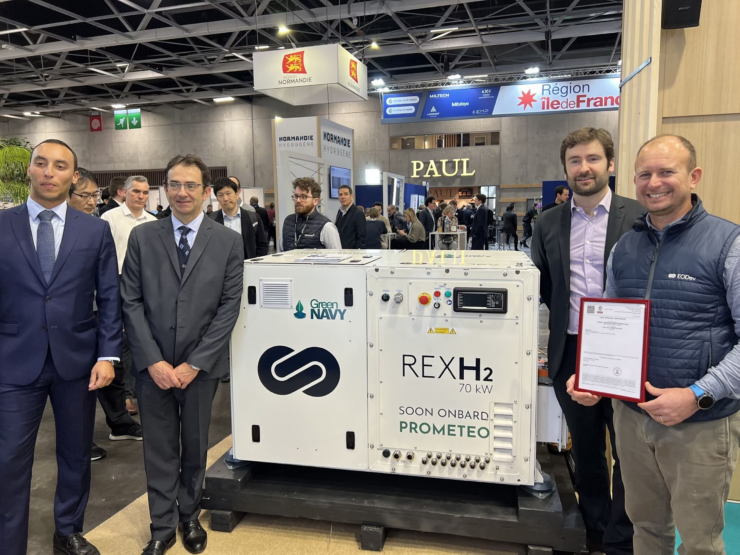
    France’s EODev secured Bureau Veritas type approval for its modular 70 kW REXH₂® unit. The system’s first marine installation is set for the PROMETEO catamaran, emphasizing flexibility and scalability.

    Systems Nearing Commercial Deployment

    Other players hold Approval in Principle (AiP) from classification societies, signaling they’re close to commercial rollout.

    Hanwha Aerospace from South Korea holds AiP from DNV and Korean Register for its 200 kW marine PEMFC. Hanwha targets larger commercial vessels and integration with ammonia-to-hydrogen solutions.

    TECO 2030 of Norway has DNV AiP for its powerful 400 kW FCM400 module. Unfortunately current status of this development is unclear due to the filing for bankruptcy of the company.

    PowerCell Sweden developed the Marine System 225, optimized at 225 kW per module. Already selected for cruise ships and commercial orders, full type approval is expected soon.

    Genevos from France has an AiP for its compact 250 kW HPM-250. Its modular design suits smaller workboats, ferries, and offshore vessels.

    EH-Group from Swiss has an AiP from DNV for the 250 kW EH-Trace-M250 unit since 2024. The unit has a high power density which makes it well-suited for multi-MW applications.

    Why It Matters

    LT-PEM fuel cells are a critical piece of maritime decarbonization. With type approvals and commercial projects expanding, these systems offer proven, certified solutions. Shipowners can now confidently adopt hydrogen propulsion technology.

    In the coming years, expect rapid growth in zero-emission maritime vessels. LT-PEM fuel cells are leading this charge, delivering reliable, scalable, and emission-free energy at sea.

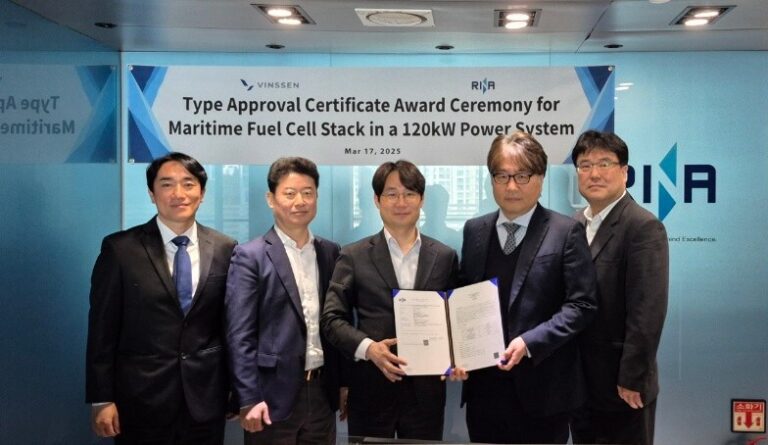
  • Vinssen Earns RINA Type Approval for Marine Fuel Cell

    After Hanwha last week, there is news from South Korean companies reaching an important milestone for their fuel cell technology. We need these developments to increase uptake of hydrogen in shipping.

    Vinssen reaches milestone

    South Korea’s Vinssen just reached a big milestone. Their 60 kW hydrogen fuel cell system received type approval from classification society RINA. This brings the company one step closer to the commercialization of their 120 kW maritime fuel cell.

    Compact, Clean, and Certified

    The system runs on proton exchange membrane (PEM) fuel cell technology. Vinssen developed it with Bumhan Fuel Cell. It’s compact, modular, and built for marine use.

    Source: Vinssen

    RINA’s approval confirms the system meets safety and performance standards. That opens the door for use in small commercial vessels, ferries, and harbor craft.

    Proven Tech from a Hydrogen Pioneer

    Vinssen already made headlines with Hydrogenia, South Korea’s first hydrogen-electric vessel. Now, with this certification, the company can scale up its clean energy push.

    The RINA stamp also gives shipowners more confidence. It shows that hydrogen tech from Asia is gaining serious ground in a global market.

    Specs at a Glance

    • Fuel Cell Type: PEM
    • Rated Output: 60 kW
    • Fuel: Compressed hydrogen
    • Cooling: Liquid-cooled
    • Setup: Modular, scalable
    • Target Use: Small vessels, ferries, harbor craft
    • Approval: RINA, March 2025

    Why This Matters

    Modular fuel cells like this are key to maritime decarbonization. They’re clean, quiet, and easy to install in smaller hulls. As regulations tighten, certified systems will drive adoption.

    Vinssen’s 60 kW unit might be small. But it’s a smart step toward a bigger, cleaner future on the water.

  • Hydrogen as Marine Fuel: Progress and Challenges

    One challenge of working on hydrogen as marine fuel is that while the technology is ready and successfully applied on board, while regulations are not there yet. The new DNV white paper outlines these issues and provides a roadmap for approval and implementation. The report is recommended reading. Here is a summary.

    Current Status of Hydrogen as Ship Fuel

    • Hydrogen is already used in many industries, but its maritime application is still developing.
    • The first hydrogen-powered vessels, such as the MF Hydra ferry and Project 821, have entered service.
    • Most hydrogen ships today are small or experimental. Larger deep-sea vessels face storage and safety hurdles.

    Safety Challenges

    • Hydrogen is highly flammable, prone to leakage, and has a wide explosive range.
    • Cryogenic storage (-253°C) requires advanced insulation to prevent boil-off and structural embrittlement.
    • High-pressure hydrogen tanks pose additional risks, including spontaneous ignition during leaks.

    Regulatory Landscape

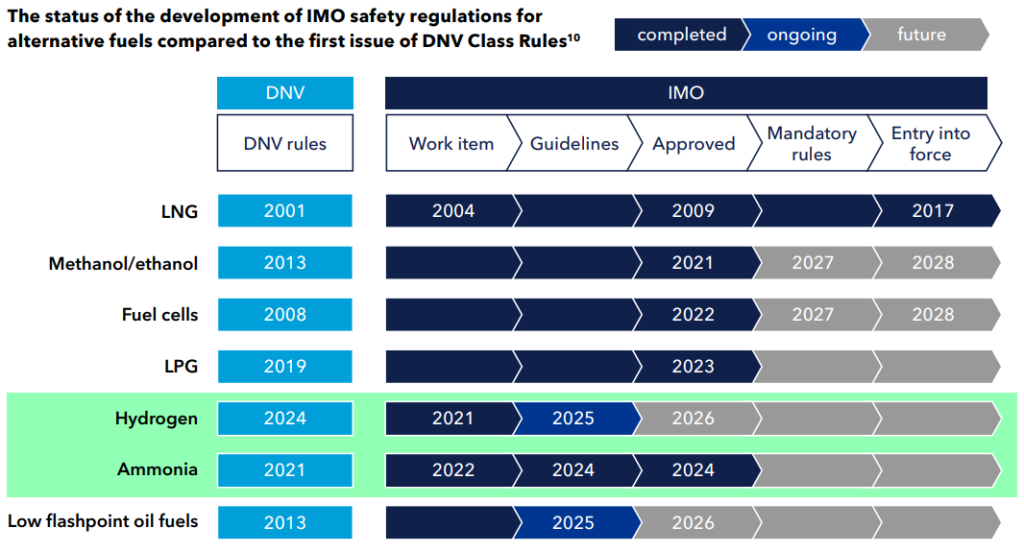
    No detailed IMO regulations currently exist for hydrogen-fueled ships.

    The IGF Code only includes prescriptive rules for natural gas.

    The IMO aims to develop hydrogen-specific regulations by 2028.

    Until then, hydrogen-fueled ships require approval through the Alternative Design Approval (ADA) process.

    Source: DNV

    Timeline for Hydrogen Fuel Adoption

    1. 2021 – IMO starts developing hydrogen safety guidelines.
    2. 2023 – First commercial hydrogen ferry (MF Hydra) enters service.
    3. 2024 – DNV publishes hydrogen ship classification rules.
    4. 2025 – Further regulatory advancements expected.
    5. 2028 – Earliest possible adoption of mandatory IMO hydrogen fuel regulations.

    Ship Design Considerations

    • Hydrogen requires more space than conventional fuels, impacting ship layout.
    • Safe integration includes double-walled pipes, specialized ventilation, and explosion-proof compartments.
    • Fuel cells are preferred for efficiency and safety, but hydrogen combustion engines are under development.

    Future Outlook

    • The transition to hydrogen-fueled ships depends on regulatory support and technological advancements.
    • Collaboration among shipowners, designers, regulators, and fuel suppliers is essential.
    • The industry must develop bunkering infrastructure and crew training to ensure safe operations.

    Key Diagram

    The development spiral shows the path from introducing hydrogen as a new marine fuel to widespread adoption. This requires iterative improvements in technology, regulation, and ship design.

    These advancements position hydrogen as a key player in the future of sustainable shipping. The transition is complex, but with innovation and regulatory backing, hydrogen can lead the industry toward zero emissions.

  • Hanwha Aerospace Gains DNV Approval for Marine Fuel Cells

    It is very obvious that more class approved fuel cells are needed to develop hydrogen-powered ships. Currently the number of available maritime fuel cells is very limited. Therefore this milestone by Hanwha Aerospace is a step in the right direction. This follows on news of another type approval earlier this year.

    Certification

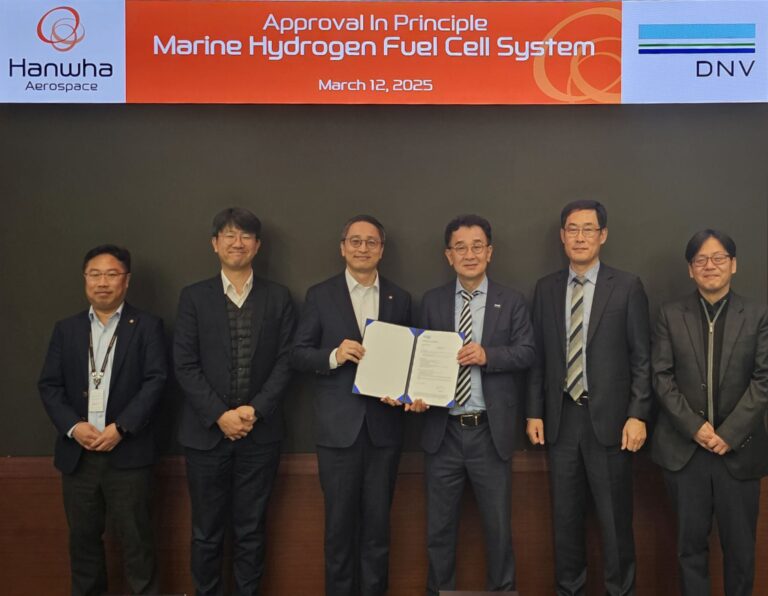
    Hanwha Aerospace has achieved a significant milestone. The company received Approval in Principle (AIP) from DNV for its 200 kW hydrogen fuel cell system designed for maritime use.

    This certification confirms the system’s safety and compliance with international regulations during the basic design phase. It builds upon a previous approval from the Korean Register of Shipping (KR).

    Source; Hanwha Aerospace via Linkedin

    Dong-jo Oh, Executive Director of Hanwha Aerospace, stated that this certification validates their hydrogen fuel cell technology at the highest global standards for safety and performance. He emphasized the company’s commitment to collaborating with Hanwha Ocean to target the global zero-carbon vessel market and help the maritime industry reduce carbon emissions.

    Full scale marketing

    With this approval, Hanwha Aerospace is set to begin full-scale marketing and sales of its maritime hydrogen fuel cells. The company also aims to secure type approval for its polymer electrolyte membrane fuel cell (PEMFC) technology, enhancing its competitiveness in the zero-carbon propulsion systems market. Plans are underway to further develop and commercialize this solution for various marine vessels, from commercial ships to specialized maritime applications.

    Ammonia

    In June 2024, Hanwha Aerospace, Hanwha Ocean, KR, and ammonia power solutions company Amogy signed a memorandum of understanding (MoU). This agreement focuses on technical collaboration and certification for applying ammonia reformers and ammonia fuel cell systems to ships. Previously, Hanwha Ocean agreed to purchase Amogy’s ammonia-to-electrical power system, which includes Hanwha Aerospace’s hydrogen fuel cell system.

    These developments position Hanwha Aerospace at the forefront of eco-friendly marine solutions. The company’s efforts contribute significantly to the maritime industry’s goal of achieving zero-carbon emissions.

  • European Project Advances Liquid Hydrogen-Powered SOV Design

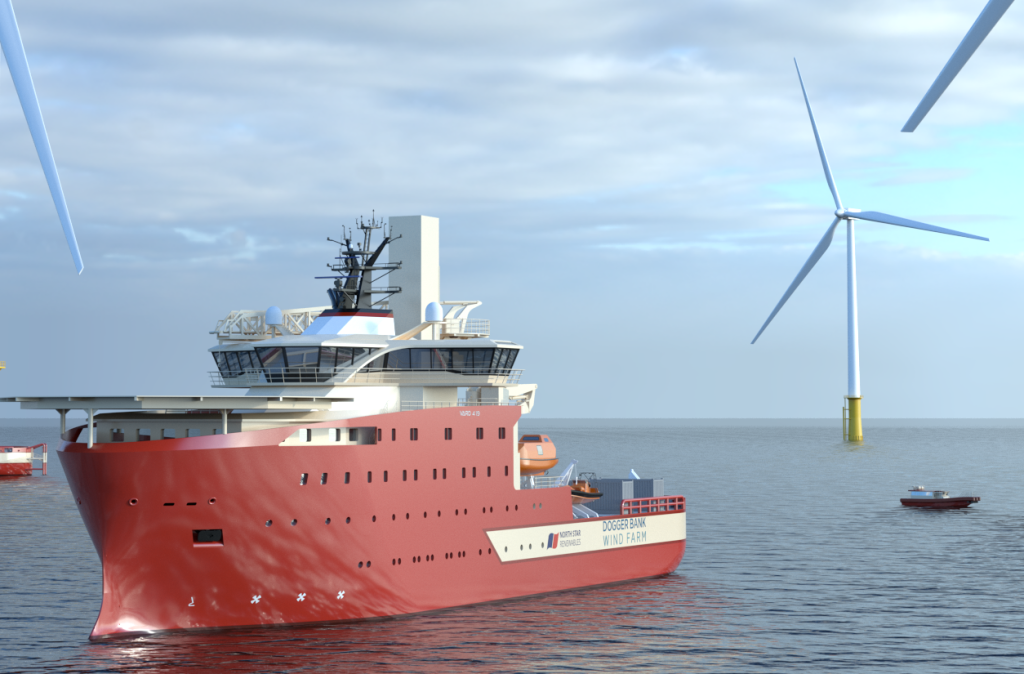
    With long term charter contracts, single port operations and fixed time at sea Service Operation Vessels (SOV) are ideally suited for powering by liquid hydrogen. There is little available space so installing liquid tanks below will be a challenge but this is what the new European project consortium led by ArianeGroup, intends to tackle. Last year a similar concept was revealed by Louis Dreyfus Armateurs and Salt Ship Design.

    The Project Scope

    The recently announced NAVHYS project brings together key industry players, research institutions, and shipbuilders to explore the technical and economic feasibility of an liquid hydrogen-fueled SOV design. The primary objective is to provide a concept for a below-deck LH2 storage and fuel system for an SOV to propose a fully decarbonised maintenance solution for wind energy providers.

    Source: North Star

    The consortium will address several critical aspects:

    • Fuel Storage & Safety – Developing safe and efficient LH2 storage solutions on board.
    • Power System Integration – Assessing how fuel cells and hydrogen combustion engines can be optimized for vessel propulsion.
    • Regulatory Compliance – Ensuring that the design adheres to evolving maritime safety and environmental regulations.
    • Operational Feasibility – Evaluating how LH2 can meet the energy demands of an SOV during offshore wind farm operations.

    Why Liquid Hydrogen?

    Hydrogen has long been considered a promising alternative to fossil fuels, but its adoption in shipping faces challenges related to storage, energy density, and infrastructure. LH2 offers significant advantages over compressed hydrogen due to its higher energy density per unit volume, making it more suitable for long-duration offshore operations. Additionally, it eliminates the need for complex high-pressure storage systems, a key concern for vessel integration.

    However, LH2 presents unique challenges, including:

    • The need for cryogenic storage at -253°C.
    • Potential boil-off losses during long voyages.
    • Limited bunkering infrastructure compared to conventional fuels.

    Despite these hurdles, the industry sees LH2 as a crucial component in the future of zero-emission offshore operations.

    Implications for the Offshore Wind Sector

    SOVs are the backbone of offshore wind farm operations, transporting technicians and equipment to wind turbines. As the demand for offshore wind energy grows, reducing the carbon footprint of support vessels becomes increasingly important. Hydrogen-fueled SOVs could significantly cut emissions, reduce reliance on fossil fuels, and demonstrate the viability of LH2 as a marine fuel in real-world applications.

    Furthermore, this initiative sets a precedent for future hydrogen-powered vessel designs, potentially influencing developments in other segments of the maritime industry, such as platform supply vessels (PSVs) and crew transfer vessels (CTVs).

    Stay tuned for further updates as the project progresses toward making hydrogen-powered SOVs a reality.

  • EODEV Achieves Industry Milestone with Type Approval for REXH2 Fuel Cell System

    In order to develop hydrogen powered ships we need more development in the different building blocks like the fuel cells. Earlier this month I reported about the Ricardo fuel cell system achieving almost 400 kW output. Now it is great to see that EODEV has obtained Type Approval for its REXH2 fuel cell system. This development fits nicely with EO’s container ship project. The platform is based on the Toyota fuel cell technology. Personally, I have concerns about using automotive technology in shipping, however EODEV surely has taken this into consideration.

    A Major Step for Maritime Hydrogen Adoption

    The REXH2 fuel cell system, developed by Energy Observer Developments (EODEV), has now achieved Type Approval from Bureau Veritas, a leading classification society. This certification validates the system’s compliance with international safety and performance standards, making it easier for shipbuilders and operators to integrate hydrogen propulsion into new and existing vessels.

    Source: eo-dev.com

    Type Approval is a critical process that ensures maritime systems meet stringent regulations before deployment. This milestone means that the REXH2 is recognized as a safe and reliable solution for zero-emission marine power, significantly reducing regulatory hurdles for adoption in commercial shipping, passenger ferries, and even superyachts.

    The REXH2: A Proven Solution for Clean Marine Power

    The REXH2 is a modular hydrogen fuel cell system designed for maritime applications, offering a scalable and efficient alternative to diesel generators. It has been rigorously tested in real-world conditions aboard the Energy Observer, a pioneering hydrogen-powered vessel that has demonstrated the viability of fuel cell propulsion on long-distance journeys.

    Key features of the REXH2 include:

    • Modularity – The system can be configured to meet various power demands, making it suitable for different vessel types.
    • Zero Emissions – Producing only water and heat as byproducts, the REXH2 aligns with global decarbonization goals.
    • Compliance with IMO Regulations – The certification supports the International Maritime Organization’s (IMO) strategy to reduce greenhouse gas (GHG) emissions in shipping.

    Implications for the Hydrogen-Powered Shipping Industry

    The certification of the REXH2 represents a major leap forward for hydrogen-powered vessels. Until now, the maritime industry has faced significant challenges in adopting hydrogen fuel cells due to regulatory uncertainties and a lack of standardized certification frameworks. With this approval, shipowners and naval architects can integrate hydrogen propulsion with greater confidence, accelerating the transition to clean energy.

    This achievement also reinforces EODEV’s position as a leader in maritime hydrogen technology. By securing Type Approval, the company has set a benchmark for other hydrogen fuel cell manufacturers, fostering innovation and investment in the sector.

    Future Prospects

    For naval architects, shipbuilders, and operators exploring zero-emission solutions, the REXH2 is now a certified and viable option. With increasing pressure to meet sustainability targets, this certification is a game-changer for the future of maritime hydrogen propulsion.

  • Global Financial Support for Zero-Emission Ships

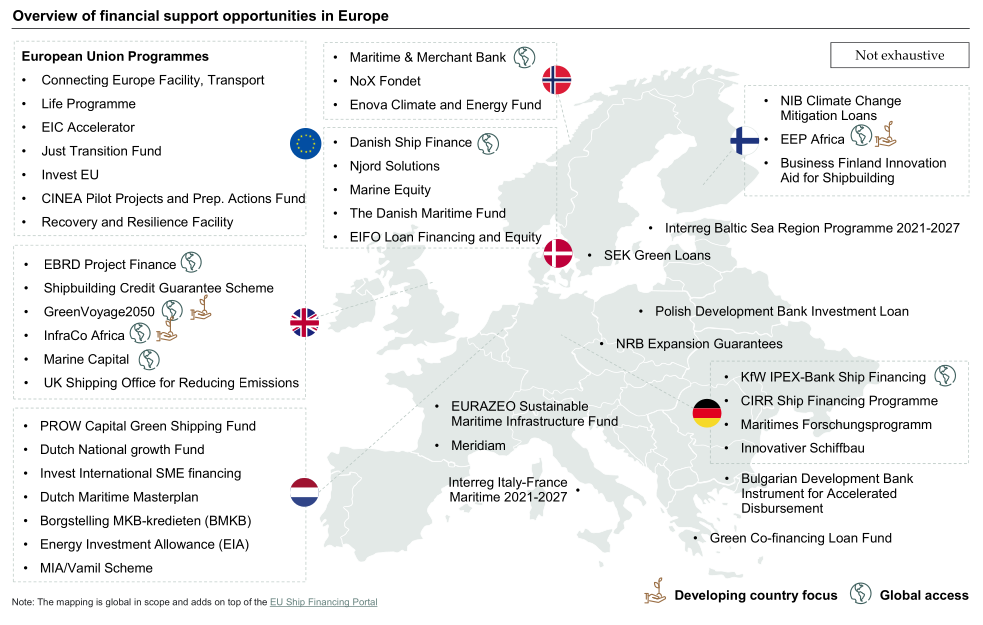
    The technology for zero emission shipping exists. However, securing financial support for zero-emission shipping remains a major global challenge, especially for smaller shipowners and those in developing regions. With an estimated USD 28 billion required annually for vessel construction and operations by 2050, navigating the fragmented funding landscape is no easy task. In this post, I break down key financial support opportunities and practical ways shipowners can access funding for a greener future. The report can be found here. I reported earlier about examples of financial support schemes in Norway and The Netherlands.

    The Need for Financial Support

    Despite advancements in zero-emission technologies such as green hydrogen, ammonia, and energy-efficient retrofits, access to financing remains a significant barrier. Traditional bank lending has become more restrictive due to regulatory constraints, risk perceptions, and market uncertainties. As a result, alternative financing mechanisms such as grants, green loans, leasing, and OPEX-based schemes are gaining traction as viable funding solutions.

    Mapping Global Financial Support Opportunities

    A recent study identified over 70 financial support programs worldwide, ranging from government grants and sustainability-linked loans to private equity investments and carbon credit revenue schemes. These opportunities span multiple funding sources, including:

    • Public Initiatives: National and supranational programs (e.g., the European Union’s Just Transition Fund, GreenVoyage2050, and the Clean Ports Program in the U.S.)
    • Development Banks: Entities such as the European Investment Bank (EIB) and the African Development Bank offer funding for sustainable transport projects.
    • Private Financing: Sustainability-focused private equity funds like EURAZEO Sustainable Maritime Infrastructure Fund and Breakthrough Energy Ventures support innovative ship decarbonization projects.

    Regional Disparities in Support

    Financial support is predominantly concentrated in regions with stringent environmental regulations and strong economic capacity. Europe leads the way, accounting for 63% of the identified financial support programs, followed by North America (15%) and the Asia-Pacific region (13%).

    Financial support opportunities in Europe
    Source: Mapping Global Financial Support Opportunities for Zero‐Emission and Energy‐Efficient Ships

    Latin America and Africa lag behind, with limited maritime-specific funding available, although international mechanisms such as the Green Climate Fund and the Global Environment Facility aim to bridge these gaps.

    Challenges for Shipowners

    While the number of financial support programs is growing, shipowners still face obstacles, including:

    • Complex Application Processes: Many funding programs require extensive documentation, making access difficult for smaller players.
    • Eligibility Barriers: Some programs prioritize government partnerships or large-scale projects, leaving individual shipowners at a disadvantage.
    • Limited OPEX Support: Most funding mechanisms focus on capital expenditures (CAPEX) for new builds and retrofits, with fewer options available for operational cost reductions associated with low-emission fuels.

    Recommendations for Shipowners

    To navigate the financial landscape effectively, shipowners should:

    1. Monitor Emerging Pilot Programs: Initiatives like the Zero Emission Shipping Fund and the Pay-As-You-Save (PAYS) Scheme for retrofits offer promising models for future funding.
    2. Leverage Global Development Programs: Accessing grants and concessional loans from organizations like the Climate Investment Funds (CIF) and the Green Climate Fund (GCF) can help mitigate financial barriers.
    3. Explore Private Equity and Blended Financing: Combining grants with equity investments or green leasing options can reduce upfront capital requirements.
    4. Form Strategic Partnerships: Collaborating with technology providers, policymakers, and larger operators can improve funding eligibility and facilitate access to financial support.
    5. Stay Informed on Regulatory Changes: As financial support mechanisms evolve, staying up-to-date on new funding opportunities and compliance requirements will be crucial for long-term sustainability.

    The Path Forward

    The transition to zero-emission shipping is not just a technological challenge but also a financial one. While a growing number of financial support mechanisms are emerging, ensuring equitable access to funding will be critical to accelerating the industry’s decarbonization. By strategically leveraging available resources and adopting innovative financing models, shipowners can contribute to a greener and more sustainable maritime future.

  • China’s Green Hydrogen Leap

    As a maritime enthusiast for hydrogen in shipping, I have lately been disappointed about news related to hydrogen production. lately. China’s recent green hydrogen leap in production, as highlighted by Rystad Energy, are not just national milestones—they have profound implications for the global maritime industry as green hydrogen is required to transition. So next to hydrogen ships, China is also developing here rapidly.

    China’s Accelerated Green Hydrogen Production

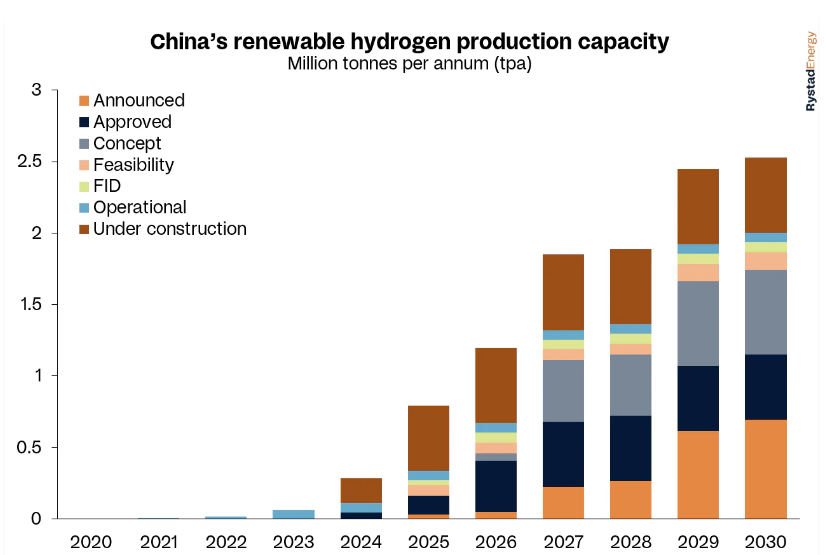
    China is set to surpass its 2025 green hydrogen production target by the end of this year, achieving an annual output of 220,000 tonnes. This rapid advancement is primarily driven by significant investments in electrolyzer capacity and the development of extensive hydrogen infrastructure. Below graph indicates that plans to ramp up production.

    China's renewable hydrogen production capacity between 2020 and 2030
    Source: Rystad Energy

    Relevance to the Maritime Industry

    For the shipping sector transitioning to cleaner fuels is imperative, and green hydrogen emerges as a promising solution. In fact it is the basis for other fuels like green ammonia and methanol. Hydrogen can be directly used in fuel cells to power vessels with zero emissions, producing only water as a byproduct. This technology is especially viable for short-sea shipping and port operations, where refueling infrastructure can be more readily established.

    China’s Role in Maritime Decarbonization

    China’s leadership in green hydrogen production can significantly influence the maritime industry’s decarbonization efforts. Increased hydrogen availability can reduce costs and encourage the adoption of hydrogen-powered vessels. Moreover, China’s development of hydrogen pipelines, such as the 400-kilometer project by Sinopec, facilitates efficient distribution, potentially supporting maritime refueling stations.

    Challenges and the Path Forward

    While the prospects are promising, challenges persist. Hydrogen’s low energy density requires larger storage solutions, impacting vessel design. Additionally, establishing a comprehensive refueling infrastructure is crucial for widespread adoption. Collaborative efforts between energy producers, maritime stakeholders, and policymakers are essential to address these hurdles and promote standardization.