HydrogenShipbuilding.com

click to database

Hydrogen news

  • Samskip selects Norwegian Hydrogen as preferred supplier of liquid green hydrogen

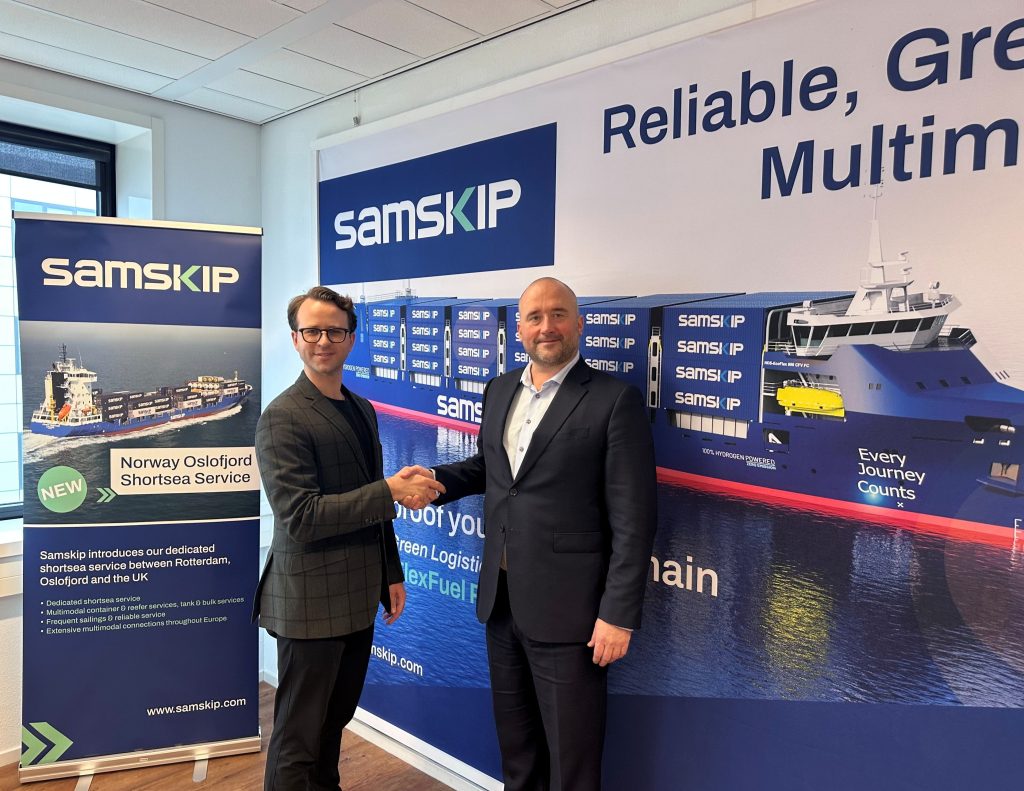
    European logistics company Samskip has selected Norwegian Hydrogen as its preferred supplier of liquid green hydrogen for two SeaShuttle container vessels currently under construction. The vessels will operate the world’s first hydrogen-powered container shipping route between Rotterdam and Oslo, breaking the classic “chicken-and-egg” deadlock that has constrained the hydrogen economy. With Norwegian Hydrogen’s Rjukan plant securing EUR 31.5 million from the EU Innovation Fund and NOK 100 million in domestic support, hydrogen deliveries are expected to begin in 2028.
    World’s First Hydrogen Container Ships Find Their Fuel Source

    The Memorandum of Understanding signed on December 5, 2025, resolves a critical uncertainty for Samskip’s pioneering SeaShuttle vessels: where the hydrogen will come from. While shipbuilders can construct hydrogen-powered vessels and classification societies can certify them, the infrastructure for producing, liquefying, storing, and bunkering hydrogen at scale has lagged behind ship development. This agreement synchronizes vessel delivery with fuel supply readiness—both targeting operational capability by 2028.

    Samskip’s investment reflects its ambitious climate commitments. The company recently achieved verification of its “Net-Zero by 2040” target from the Science-Based Targets initiative and received the EcoVadis Platinum medal, ranking in the top 1% for sustainability performance in 2024. The SeaShuttle hydrogen conversion, supported by a grant from Norway’s Enova Fund, demonstrates the company’s willingness to accept first-mover risks to achieve deep decarbonization.

    The Rotterdam-Oslo Route

    The SeaShuttle vessels will operate Samskip’s established Rotterdam-Oslo service, a strategic choice for several reasons. This route exemplifies short-sea shipping—distances where hydrogen’s energy density disadvantages matter less than for transoceanic voyages. The approximately 1,200 km route allows for manageable tank sizes and regular refueling opportunities.

    Both Rotterdam and Oslo offer favorable conditions for hydrogen infrastructure development. Rotterdam, Europe’s largest port, has committed to becoming a hydrogen import hub, with multiple projects underway. Oslo, as Norway’s capital and a center of green shipping initiatives, provides supportive regulatory frameworks and public awareness. The route’s predictable schedule—critical for early-stage technology validation—enables systematic data collection on hydrogen consumption, refueling procedures, and operational costs.

    Container shipping on this route also serves diverse commercial customers, demonstrating hydrogen’s viability for mainstream logistics rather than niche applications. Success here could accelerate adoption across Samskip’s broader European network.

    Norwegian Hydrogen’s Rjukan Facility

    The hydrogen supply will come from Norwegian Hydrogen’s liquid hydrogen production plant in Rjukan, Norway—a location with deep historical connections to industrial chemistry and, ironically, to early 20th-century hydrogen production for ammonia synthesis.

    Strategic Location

    Rjukan sits in Telemark county, a region with abundant hydroelectric power resources. The plant will operate under a long-term power purchase agreement with Tinn Energi & Fiber, ensuring access to renewable electricity—the fundamental requirement for green hydrogen production. Norway’s hydroelectric generation, with exceptionally low carbon intensity (typically <10 g CO2e/kWh), provides one of the world's cleanest electricity sources for electrolysis.

    The required grid connection has been secured, and municipal authorities have approved the zoning plan. Norwegian Hydrogen reports being in final phases of selecting suppliers for key equipment, components, and services, suggesting construction will commence shortly.

    Funding Structure

    The project has assembled substantial financial support from multiple sources:

    • EUR 31.5 million from the 2025 EU Innovation Fund – Supporting establishment of the complete value chain for production, distribution, and bunkering of liquefied hydrogen
    • EUR 13.2 million from the EU Hydrogen Auction – Covering operating costs, reducing delivered hydrogen prices during the early commercial phase
    • NOK 100 million (~EUR 8.5 million) from Innovation Norway – Combination of grants and green loans for project development

    This funding diversification—combining capital grants, operational subsidies, and concessional financing—addresses different risk categories. Capital grants reduce upfront investment requirements, operational subsidies enable competitive pricing during market development, and green loans provide flexible financing for working capital and contingencies.

    The total support package approaches EUR 53 million (approximately USD 58 million), representing substantial public investment in establishing Norway’s first complete maritime liquid hydrogen value chain.

    Production Capacity and Technology

    While Norwegian Hydrogen hasn’t disclosed precise production capacity, the project is described as “right-sized” for early adopters. Industry sources suggest the facility will likely produce 5-10 tonnes of liquid hydrogen per day initially, sufficient to supply multiple vessels including the two Samskip SeaShuttles while allowing for additional customers in maritime, industrial, and other sectors.

    Hydrogen production will use water electrolysis powered by renewable electricity. The plant will include liquefaction capability—a critical and energy-intensive step consuming approximately 30-35% of hydrogen’s energy content but essential for marine applications where volumetric energy density matters. On-site liquefaction eliminates transportation logistics for gaseous hydrogen and enables direct loading onto vessels.

    Breaking the Chicken-and-Egg Deadlock

    The agreement addresses what Norwegian Hydrogen CEO Jens Berge calls the hydrogen economy’s “classic chicken-and-egg dilemma”: lack of demand hinders investment in production, while lack of supply discourages demand creation.

    Samskip’s commitment provides Norwegian Hydrogen with demand certainty, enabling final investment decisions. Conversely, Norwegian Hydrogen’s secured funding and advanced project status gives Samskip confidence their vessels won’t face fuel supply disruptions. The MoU formalizes this mutual dependency, allowing both parties to proceed with substantial capital commitments.

    This dynamic mirrors successful infrastructure transitions historically. Natural gas vehicle adoption accelerated when fleet operators and fuel suppliers coordinated investments. Electric vehicle deployment required simultaneous buildout of charging networks and vehicle production. Hydrogen shipping faces similar coordination challenges, but at higher stakes given the specialized infrastructure requirements.

    Why This Matters

    Why This Matters

    For Short-Sea Shipping Decarbonization: Container shipping accounts for significant European maritime emissions. If Samskip successfully demonstrates hydrogen-powered container operations, it validates the technology for dozens of similar routes across Europe. The North Sea, Baltic Sea, and Mediterranean all feature short-sea routes where hydrogen could compete effectively with diesel or LNG.

    For Hydrogen Infrastructure Development: The Rjukan facility creates a template for maritime hydrogen production combining optimal renewable electricity access, liquefaction capability, and multi-modal distribution. Success here could accelerate similar projects in other hydropower-rich regions: Canada, Iceland, Scotland, New Zealand, or South America’s Patagonia region.

    For First-Mover Advantage: Samskip’s commitment positions the company to capture premium pricing from environmentally conscious shippers, potentially securing long-term contracts with customers facing supply chain emission reduction mandates. As EU carbon regulations tighten, zero-emission shipping capacity will command premium rates.

    For Risk Mitigation Strategy: Securing a preferred supplier relationship, rather than depending on spot markets, protects Samskip from potential hydrogen price volatility and supply constraints as the market develops. The MoU likely includes provisions ensuring supply continuity and price certainty.

    For Norway’s Hydrogen Strategy: This project anchors Norway’s position as a European hydrogen exporter, leveraging abundant renewable electricity and existing maritime expertise. Success could spawn additional facilities, creating an export industry complementing Norway’s traditional oil and gas sector as it declines.

    Broader Implications

    This agreement exists within a broader European hydrogen ecosystem rapidly taking shape:

    • Multiple shipping companies are developing hydrogen vessel projects: ferry operators in Scandinavia, offshore service vessels in Norway, and passenger vessels across Europe
    • Port authorities in Rotterdam, Oslo, Hamburg, Antwerp, and elsewhere are planning hydrogen infrastructure as part of decarbonization strategies
    • Equipment manufacturers are scaling production of electrolyzers, fuel cells, cryogenic systems, and bunkering equipment
    • Energy companies are developing renewable electricity projects explicitly dedicated to hydrogen production
    • Classification societies have published rules and guidelines for hydrogen-fueled vessels, enabling design approvals

    The Samskip-Norwegian Hydrogen agreement demonstrates that these parallel developments are converging toward operational systems. Each successful project reduces risk perceptions, generates operational data, and builds confidence for subsequent investments.

    Quotes from Leadership

    “Our partnership with Norwegian Hydrogen marks an important step on our journey towards Net-Zero emissions by 2040,” stated Ólafur Orri Ólafsson, CEO of Samskip. “Hydrogen is a critical enabler for deep decarbonization in short-sea shipping, and Norwegian Hydrogen has demonstrated the capability and commitment needed to support our ambition. Together, we are not only preparing the energy supply for our SeaShuttle vessels, we are also helping accelerate the transition to sustainable logistics across Europe.”

    “We are deeply grateful for Samskip’s support and first-mover determination, leading the way in decarbonising short-sea container shipping,” responded Jens Berge, CEO of Norwegian Hydrogen. “It is reassuring to see that our efforts to create a project that meets Samskip’s requirements are now yielding tangible results, enabling Samskip to proceed exclusively with us from this point. Right-sized and with all critical elements in place, the Rjukan LH2 project is ideally positioned for delivery of liquid green hydrogen to early adopters within maritime, industry, and other sectors, covering a large geographical area at a highly attractive price point.”

    Project Summary

    Element Details
    Customer Samskip (European logistics company)
    Supplier Norwegian Hydrogen AS
    Vessels Two SeaShuttle container vessels (under construction)
    Route Rotterdam, Netherlands ↔ Oslo, Norway (~1,200 km)
    Fuel Type Liquid green hydrogen (LH2) from renewable electrolysis
    Production Site Rjukan, Telemark, Norway
    Power Source Norwegian hydroelectricity (Tinn Energi & Fiber)
    EU Innovation Fund EUR 31.5 million (value chain development)
    EU Hydrogen Auction EUR 13.2 million (operating costs)
    Innovation Norway NOK 100 million (~EUR 8.5 million, grants + green loans)
    Norwegian Enova Fund Grant supporting vessel conversion (amount not disclosed)
    Expected Operations 2028
    Status MoU signed December 5, 2025; exclusive supplier relationship

    Looking Ahead

    The Samskip-Norwegian Hydrogen partnership represents more than two companies agreeing to a fuel supply contract. It demonstrates that the maritime hydrogen economy is transitioning from concept to implementation, with real vessels, real production facilities, and real commercial operations approaching.

    Success will depend on execution—building plants on schedule and budget, commissioning vessels successfully, establishing safe and efficient bunkering procedures, and demonstrating acceptable operational economics. But the fundamentals appear sound: strong corporate commitments backed by substantial public funding, favorable renewable electricity access, suitable routes for early adoption, and supportive regulatory frameworks.

    If the SeaShuttles operate successfully from 2028 onward, expect announcements of additional hydrogen container vessels, expansion of production capacity at Rjukan and other sites, and growing confidence among shipowners and fuel suppliers that hydrogen shipping has moved from possibility to reality.

    The chicken-and-egg deadlock is breaking. Now comes the harder part: proving it works.

    Sources

    • Norwegian Hydrogen AS. (2026). “Samskip moves forward with Norwegian Hydrogen as its preferred supplier of liquid green hydrogen.” Press release, January 7, 2026.
    • Norwegian Hydrogen AS. (2025). “More support for Rjukan liquid hydrogen project with EUR 31.5 million grant from EU Innovation Fund.” Press release, November 3, 2025.
    • Norwegian Hydrogen AS. (2025). “Double win for Norwegian Hydrogen at Rjukan with funding offers from both the EU Hydrogen Bank and Innovation Norway.” Press release, May 20, 2025.
    • Samskip corporate communications, December 2025.
  • Kawasaki Heavy Industries to Build World’s Largest Liquefied Hydrogen Carrier

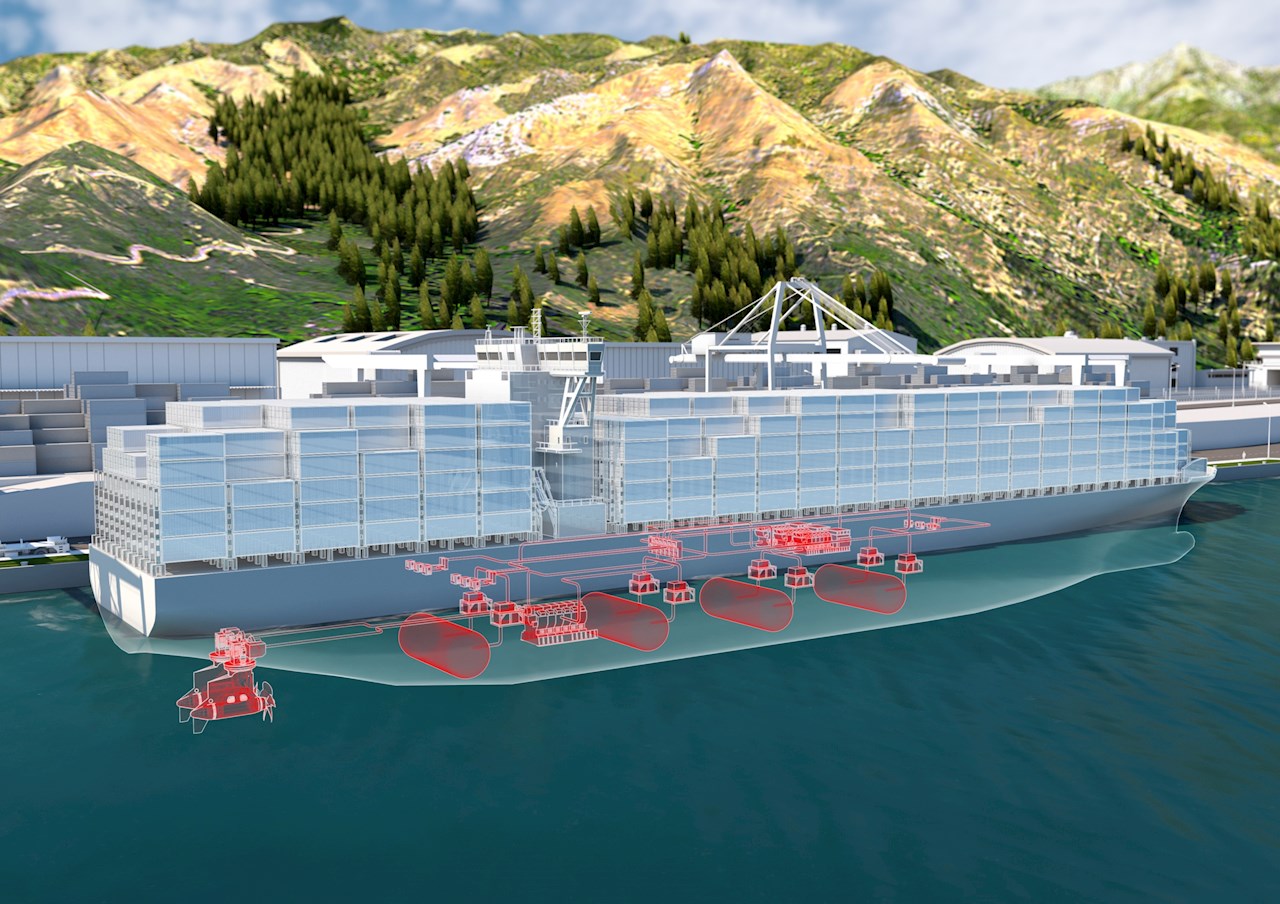
    Kawasaki Heavy Industries has signed a contract with Japan Suiso Energy to construct the world’s largest liquefied hydrogen carrier, featuring a cargo capacity of 40,000 cubic meters. This vessel represents a 32-fold increase over the company’s pioneering Suiso Frontier, marking a critical transition from demonstration projects to commercial-scale hydrogen transport. Scheduled for ocean trials by 2030, the carrier will demonstrate the technical and economic feasibility of large-scale hydrogen shipping as Japan advances toward its carbon-neutral goals.

    Kawasaki's 40,000 m3 liquefied hydrogen carrier concept

    Source: Kawasaki Heavy Industries

    From Demonstration to Commercial Scale

    The leap from Kawasaki’s 1,250-cubic-meter Suiso Frontier—completed in 2021 as the world’s first liquefied hydrogen carrier—to this 40,000-cubic-meter vessel demonstrates the rapid progression of hydrogen shipping technology. This new carrier will be built at Kawasaki Heavy Industries’ Sakaide Works in Kagawa Prefecture as part of Japan’s New Energy and Industrial Technology Development Organization (NEDO) Green Innovation Fund Project.

    Japan Suiso Energy, serving as project operator for NEDO, aims to conduct comprehensive demonstrations of ship-to-shore loading and unloading operations by fiscal year 2030. The project will test operational performance, safety, durability, reliability, and crucially, economic feasibility for large-scale hydrogen transport—information essential for establishing commercial viability.

    Technical Innovation for Cryogenic Cargo

    Transporting liquefied hydrogen presents unique engineering challenges. At -253°C, liquid hydrogen requires specialized containment systems and handling procedures far more demanding than conventional cryogenic cargoes like LNG.

    Cargo Containment System

    The vessel’s cargo tanks total approximately 40,000 cubic meters and incorporate high-performance insulation systems designed to minimize boil-off gas generated by natural heat ingress. Managing boil-off is critical for long-distance transport—hydrogen’s extremely low boiling point means even minimal heat transfer causes evaporation. The insulation system must maintain cryogenic temperatures throughout voyages potentially lasting weeks.

    Unlike LNG carriers where boil-off rates of 0.10-0.15% per day are standard, liquid hydrogen faces steeper challenges. The Suiso Frontier demonstrated boil-off rates around 0.2-0.3% per day, and this larger vessel aims to improve on these figures through advanced vacuum-jacketed tank technology.

    Dual-Fuel Propulsion

    The carrier will feature a diesel and hydrogen-fueled electric propulsion system, combining hydrogen- and oil-based dual-fuel generator engines with conventional oil-fired generators. This hybrid approach offers operational flexibility while reducing carbon emissions.

    Significantly, boil-off gas from the cargo tanks can be compressed, heated, and reused as fuel for propulsion. This not only reduces CO2 emissions but also addresses the economic and environmental cost of venting hydrogen—a solution that transforms a liability into an asset. This capability is particularly relevant given hydrogen’s global warming potential (11.6 kg CO2e per kg H2 over 100 years), making venting environmentally undesirable.

    Cargo Handling Infrastructure

    The vessel will be equipped with a cargo handling system capable of loading and unloading large volumes of liquefied hydrogen using double-wall vacuum-jacketed piping. These transfer systems maintain extremely low temperatures during operations between shore facilities and onboard tanks, preventing heat ingress that would cause excessive boil-off.

    The carrier will operate in conjunction with a liquefied hydrogen terminal under construction at Ogishima in Kawasaki City, forming an integrated supply chain infrastructure for demonstration purposes.

    Optimized for Hydrogen’s Unique Properties

    Liquid hydrogen’s extremely low density—approximately 71 kg/m³ compared to LNG’s 450 kg/m³—fundamentally affects vessel design. The hull form and draft have been specifically optimized to reflect this characteristic, improving propulsion efficiency and reducing power requirements.

    This density difference means that for equivalent energy content, hydrogen requires significantly more volume than other marine fuels. The 40,000 m³ capacity translates to approximately 2,840 tonnes of liquid hydrogen—roughly equivalent in energy terms to 7,800 tonnes of LNG, yet requiring more than five times the volume.

    Safety and Risk Management

    Hydrogen’s wide flammability range (4-75% in air, compared to 5-15% for natural gas) and low ignition energy demand rigorous safety protocols. The vessel’s hydrogen fuel, supply, and cargo handling systems have undergone comprehensive risk assessment, with multiple safety measures incorporated to protect crew, environment, and vessel structure.

    ClassNK, the classification society, will oversee compliance with safety standards. The vessel will be registered in Japan, operating under Japanese maritime regulations for hydrogen transport—a regulatory framework still evolving as the technology matures.

    Specifications at a Glance

    • Length Overall: Approximately 250 meters
    • Molded Breadth: 35 meters
    • Fully Loaded Draft: 8.5 meters (summer)
    • Cargo Capacity: 40,000 cubic meters (~2,840 tonnes liquid hydrogen)
    • Service Speed: Approximately 18 knots
    • Propulsion: Diesel and hydrogen dual-fuel electric system
    • Cargo Containment: High-performance insulated cryogenic tanks
    • Classification: ClassNK
    • Flag: Japan
    • Builder: Kawasaki Heavy Industries, Sakaide Works
    • Expected Completion: By fiscal year 2030 (demonstration trials)

    Strategic Context: Japan’s Hydrogen Economy

    This carrier serves as a cornerstone for Japan’s hydrogen strategy, which anticipates significant global hydrogen demand in the 2030s. Japan has committed to achieving carbon neutrality by 2050 and views hydrogen as essential for decarbonizing power generation, mobility, and industrial sectors—applications where electrification faces technical or economic limitations.

    The vessel enables what Japan cannot produce domestically at sufficient scale: low-cost renewable hydrogen. By importing hydrogen produced using abundant renewable electricity from regions like Australia, the Middle East, or potentially Europe, Japan can access competitively priced clean energy despite limited domestic renewable resources.

    This strategy aligns with findings from recent European Commission research showing that shipping liquid hydrogen emerges as one of the most cost-effective and environmentally sustainable options for long-distance hydrogen transport, particularly compared to chemical carriers like ammonia or methanol which require energy-intensive conversion processes.

    Economic Viability Questions

    While technical feasibility has been demonstrated through the Suiso Frontier project, economic viability remains uncertain. Key cost drivers include:

    • Liquefaction costs: Consuming approximately 30-35% of hydrogen’s energy content
    • Specialized infrastructure: Cryogenic storage, handling equipment, and dedicated terminals
    • Boil-off losses: Even with improved insulation, some hydrogen will be lost
    • Vessel capital costs: Specialized materials and systems increase construction costs
    • Scale requirements: Economic efficiency improves dramatically with larger vessels and higher utilization

    The 2030 demonstration will provide critical data on these factors. Current estimates suggest delivered hydrogen costs could range from €4-6 per kilogram for long-distance shipping, depending on production costs, utilization rates, and infrastructure amortization.

    Why This Matters

    Why This Matters

    For Global Hydrogen Markets: This vessel demonstrates that liquid hydrogen shipping can scale to commercial volumes. The 40,000 m³ capacity—sufficient to transport approximately 2,840 tonnes per voyage—enables economically viable international trade. Multiple such vessels could deliver millions of tonnes annually, matching planned production and demand scenarios for the 2030s.

    For Maritime Decarbonization: The dual-fuel propulsion system showcasing hydrogen as a marine fuel validates one pathway for shipping’s own decarbonization. By 2030, this carrier will provide operational data on hydrogen’s performance, reliability, and safety as a marine fuel under commercial conditions—information crucial for wider adoption.

    For Energy Security: Countries lacking domestic renewable resources can access global hydrogen markets, diversifying energy supply and reducing dependence on fossil fuel imports. Japan’s investment in this infrastructure reflects a strategic bet on hydrogen as a pillar of future energy security.

    For Industrial Decarbonization: Heavy industries—steel, chemicals, cement—require high-temperature heat and chemical reducing agents that electricity cannot easily provide. Large-scale hydrogen imports make decarbonization of these sectors technically and economically feasible in regions without domestic production capacity.

    For Innovation Spillover: Technologies developed for liquid hydrogen shipping—ultra-high-performance insulation, cryogenic handling systems, dual-fuel engines—have applications across the broader cryogenic industry, from LNG to industrial gases.

    Challenges Ahead

    Despite this progress, significant hurdles remain:

    Infrastructure Development: Establishing a commercial hydrogen supply chain requires coordinated investment in production facilities, liquefaction plants, storage terminals, and distribution networks—a chicken-and-egg challenge requiring billions in capital before revenue flows.

    Cost Competitiveness: Hydrogen must compete with established energy carriers. Even with carbon pricing, delivered costs need to decline substantially to be economically attractive for most applications.

    Regulatory Framework: International regulations for hydrogen shipping remain under development. The International Maritime Organization (IMO) aims to finalize hydrogen-specific regulations by 2028, but gaps persist regarding classification, port state control, and emergency response protocols.

    Safety Perception: Public and industry acceptance of hydrogen transport through populated port areas requires demonstrating robust safety records and incident response capabilities.

    Scale-Up Timeline: Even successful 2030 demonstrations won’t immediately translate to commercial deployment. Building fleets, establishing supply chains, and achieving operational optimization will require years of additional investment and learning.

    Competitive Landscape

    Kawasaki’s leadership position faces potential competition. European shipbuilders are exploring similar technologies, and China has announced plans for large-scale hydrogen carriers. However, Kawasaki’s first-mover advantage—demonstrated through the Suiso Frontier—provides valuable operational experience and intellectual property.

    The vessel also competes with alternative hydrogen carriers. Ammonia shipping benefits from existing infrastructure and lower containment costs, though it requires energy-intensive conversion at both ends. LOHCs (Liquid Organic Hydrogen Carriers) offer ambient-temperature handling but face even higher conversion energy penalties. Compressed hydrogen pipelines remain competitive for shorter distances within continental regions.

    Recent European research suggests liquid hydrogen shipping and compressed hydrogen pipelines offer the best balance of cost and environmental performance for long-distance transport, supporting Kawasaki’s strategic direction.

    Timeline and Next Steps

    Construction at Sakaide Works will occur over the next several years, with ocean-going trials scheduled by fiscal year 2030. The demonstration phase will evaluate:

    • Loading and unloading procedures at commercial scale
    • Boil-off management during extended voyages
    • Dual-fuel propulsion system performance and reliability
    • Maintenance requirements and operational costs
    • Safety protocols and emergency procedures
    • Environmental performance including CO2 emissions reduction

    Success in these demonstrations could trigger orders for commercial vessels in the early 2030s, with full-scale deployment potentially beginning mid-decade. Japan Suiso Energy and NEDO will share findings with industry stakeholders to accelerate commercialization.

    Conclusion

    Kawasaki’s 40,000 cubic meter liquefied hydrogen carrier marks a pivotal moment in maritime hydrogen transport. While technical challenges remain and economic viability requires demonstration, the project represents the most ambitious effort yet to establish commercial-scale hydrogen shipping infrastructure.

    The vessel’s success or failure will significantly influence global hydrogen strategies. Positive results could accelerate international hydrogen trade, enabling countries to access competitively priced renewable hydrogen regardless of domestic resource constraints. Challenges or cost overruns might redirect investment toward alternative carriers or regional pipeline networks.

    What’s certain is that large-scale hydrogen transport will be essential for global decarbonization. Whether liquid hydrogen shipping emerges as the dominant pathway depends largely on how well vessels like this perform when the real testing begins in 2030.

    Sources

    • Maritime Activity Reports, Inc. (2026). “Kawasaki Heavy Industries to Build World’s Largest Liquefied Hydrogen Carrier.” Marine Link, January 6, 2026.
    • Kawasaki Heavy Industries official announcement, January 2026.
    • Japan Suiso Energy / NEDO Green Innovation Fund Project documentation.
    • Arrigoni, A., D’Agostini, T., Dolci, F., & Weidner, E. (2025). “Techno-economic and life-cycle assessment comparisons of hydrogen delivery options.” Frontiers in Energy, 19(6): 1129-1142.
  • Gen2Energy secures 195 MW grid capacity at Nesbruket

    Gen2 Energy has received confirmation of a total capacity reservation of 195 MW for its green hydrogen production project at Nesbruket in Vefsn municipality, Norway. This grid connection represents one of the largest capacity allocations for hydrogen production in Norway and positions the facility to produce approximately 42 tons of green hydrogen daily when fully operational. The project has already received its general building permit—the largest hydrogen plant to achieve this milestone in Norway—and is progressing toward final investment decision for construction start in 2026.

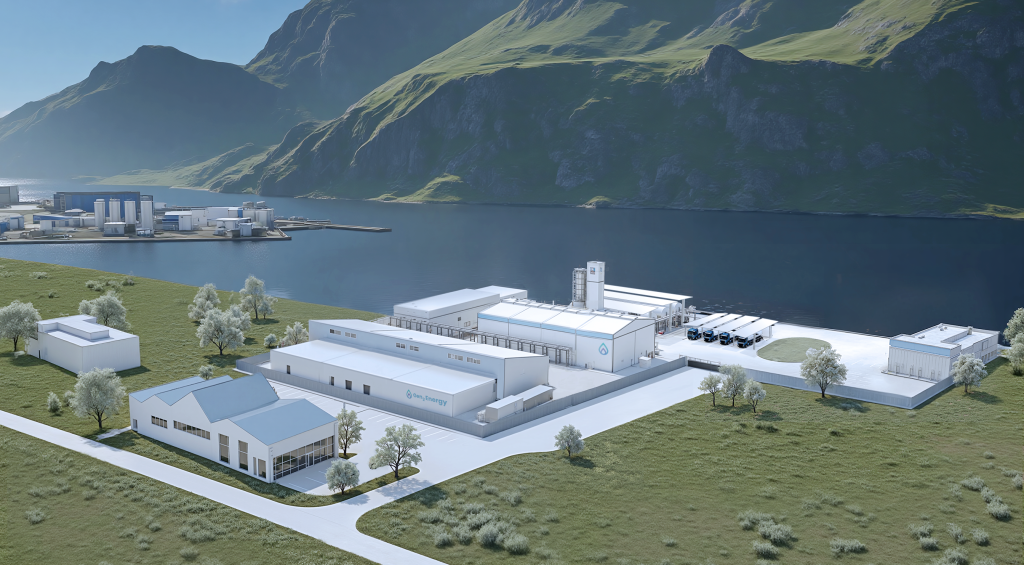
    Gen2 Energy hydrogen facility
    Illustration of the hydrogen plant at Nesbruket (Source: Gen2 Energy)

    Strategic Location in Norway’s Hydrogen Heartland

    The Nesbruket facility sits adjacent to Alcoa’s aluminum smelter in Mosjøen, at the end of the 48-kilometer Vefsnfjorden in the Helgeland region. This location is no accident—Mosjøen is positioned in the heart of Norway’s largest hydropower resources, with massive amounts of trapped renewable energy that can power large-scale electrolysis operations cost-effectively.

    The 195 MW capacity reservation from the grid operator represents the electrical infrastructure foundation necessary to produce hydrogen at commercial scale. This isn’t just paperwork—it’s the difference between a hydrogen project that remains on drawing boards and one that can actually operate profitably.

    Project Specifications

    The Nesbruket plant represents Gen2 Energy’s first phase in a broader Mosjøen hydrogen hub strategy that could eventually encompass 695 MW of total production capacity across two sites.

    Nesbruket Plant 1 key features:

    • Grid Capacity: 195 MW reserved
    • Production Capacity: Approximately 42 tons of green hydrogen per day
    • Technology: Water electrolysis powered by renewable hydroelectric energy
    • Export Method: Compressed hydrogen in 40-foot ISO containers
    • Target Markets: European industrial customers and maritime applications
    • Port Access: Deep-water quay facilities via Port of Helgeland
    • Planned Start: Production targeted for 2027

    Gen2 Energy is also developing Nesbruket Plant 2 adjacent to the first facility, which will supply hydrogen “over the fence” to neighboring company Norsk e-Fuel for sustainable aviation fuel (SAF) production. Additionally, a 500 MW facility is planned for Holandsvika, further along the Vefsnfjord.

    The Grid Capacity Bottleneck

    Securing 195 MW of grid capacity might sound like administrative procedure, but it represents one of the most critical bottlenecks in the hydrogen economy. Large-scale electrolysis requires massive amounts of electricity—current estimates suggest power costs account for 60-80% of green hydrogen’s operational expenses.

    Without sufficient grid connection capacity, even the best-designed hydrogen plant cannot operate. Grid operators must carefully balance total demand across all users, and reserving 195 MW for a single facility requires coordination with transmission system operators, load forecasts, and infrastructure upgrades.

    Norway’s hydropower advantage provides both abundant renewable electricity and—critically—baseload renewable power. Unlike solar or wind which produce intermittently, hydropower can provide steady output, allowing electrolyzers to run at high capacity factors. This operational consistency directly impacts project economics and hydrogen production costs.

    Why This Matters

    Grid capacity reservations like Gen2 Energy’s 195 MW allocation are the unsexy infrastructure reality that determines whether hydrogen projects move from PowerPoint to production. Europe’s hydrogen strategy targets 10 million tons of domestic production by 2030—requiring approximately 120 GW of electrolyzer capacity. But electrolyzers are useless without grid connections to power them. Norway’s combination of cheap hydropower, available grid capacity, and proximity to European markets positions projects like Nesbruket to produce cost-competitive green hydrogen while competitors in other regions struggle with expensive renewable electricity and grid connection delays stretching years. More importantly, the “over the fence” hydrogen supply to Norsk e-Fuel demonstrates how hydrogen hubs create industrial ecosystems where production facilities, export operations, and local consumers co-locate to minimize logistics costs and maximize infrastructure utilization—a model that could be replicated across Norway and Europe.

    Economics of Scale

    The economics of green hydrogen production hinge on three primary factors: electricity cost, electrolyzer capital cost, and capacity factor (how much of the time the system operates). Gen2 Energy’s Nesbruket location optimizes all three.

    Norway’s hydropower provides electricity costs significantly below European averages. The Norwegian government estimates current green hydrogen production costs around €5.20 per kilogram, with power and grid connection representing approximately 60% of total costs. As electrolyzer costs decline through mass production and the facility operates at high capacity factors enabled by steady hydropower, production costs should trend toward the €3-4/kg range by the late 2020s.

    This pricing trajectory is critical. Grey hydrogen produced from natural gas costs roughly €1-2/kg today. Green hydrogen needs to approach €3/kg to compete in industrial applications without subsidies. The combination of cheap Norwegian power, high utilization rates, and economies of scale at 195 MW capacity positions Nesbruket to reach competitive pricing faster than projects relying on more expensive electricity or intermittent renewable sources.

    Partnership with Norsk e-Fuel

    Gen2 Energy’s partnership with Norsk e-Fuel illustrates the hydrogen hub model’s potential. Norsk e-Fuel is developing a sustainable aviation fuel (SAF) facility on neighboring land at Nesbruket. Rather than building separate hydrogen production, Norsk e-Fuel will receive hydrogen “over the fence” directly from Gen2 Energy’s Nesbruket Plant 2.

    This arrangement optimizes capital efficiency—one large hydrogen production facility serving multiple customers achieves better economies of scale than several smaller dedicated plants. It also minimizes hydrogen transportation costs and energy losses, since the hydrogen moves via short pipelines rather than compression, storage, and trucking.

    Lars Bjørn Larsen, CCO of Norsk e-Fuel, emphasized the partnership’s strategic value: “Through strategic partnerships such as the one with Gen2 Energy, based on a shared commitment to innovation and efficient use of power and other resources, our collaboration not only facilitates the exchange of expertise, but also drives sustainable land use optimization and promotes cost efficiency.”

    Andreas Ekker, SVP Global Sales at Gen2 Energy, noted: “The short distance supply of hydrogen from our Nesbruket plant 2 to our neighbour Norsk e-Fuel is cost-efficient for both parties and represents a significant steppingstone towards the realization of the industrial ambitions in Vefsn municipality.”

    Norway’s Broader Hydrogen Strategy

    Gen2 Energy’s Nesbruket development aligns with Norway’s national hydrogen strategy, which targets hydrogen as a central pillar in the country’s transition to becoming a low-emission society by 2050. The government’s 2020 hydrogen strategy recognizes that achieving 90-95% emissions reductions compared to 1990 levels requires decarbonizing sectors where direct electrification proves challenging.

    Norway has committed significant public funding to accelerate hydrogen development. Enova, the Norwegian state enterprise managing climate and energy transition investments, allocated NOK 777 million (approximately €65 million) in November 2024 to support five green hydrogen production facilities targeting maritime applications. These investments complement private sector projects like Gen2 Energy’s Nesbruket plant.

    The country’s abundant hydropower resources—Norway generates approximately 95% of its electricity from hydropower—provide the clean energy foundation for large-scale hydrogen production without requiring massive solar or wind buildouts. However, Norway’s electrolyzer manufacturing capacity remains limited, with most equipment being imported from suppliers like Nel Hydrogen, thyssenkrupp nucera, and international competitors.

    Competitive Landscape

    Gen2 Energy faces competition from several Norwegian hydrogen developers. Norwegian Hydrogen is developing a 270 MW facility at Ørskog in Ålesund municipality, targeting 40,000 tons of annual production. Greenstat has begun constructing a 20 MW facility at Fiskå in Rogaland County as part of the Agder Hydrogen Hub in Kristiansand.

    However, Gen2 Energy’s 195 MW capacity at Nesbruket—potentially expanding to 695 MW across Mosjøen facilities—positions the company among Norway’s largest hydrogen producers. The early building permit, secured grid capacity, and partnership with Norsk e-Fuel provide competitive advantages in a sector where many projects remain in earlier development stages.

    Internationally, Norway competes with countries like Chile and Morocco that benefit from extremely cheap solar power for electrolysis. A 2024 academic study estimated Norwegian green hydrogen costs at €5.18-7.25/kg compared to potentially lower costs in sunnier regions. However, Norway’s advantages lie in proximity to European markets, established energy infrastructure, political stability, and existing industrial ecosystems—factors that matter as much as production cost alone.

    Looking Ahead

    With grid capacity secured and permits in hand, Gen2 Energy approaches the critical final investment decision phase. The company has completed FEED work with Wood, engaged equipment suppliers, and established customer relationships through partnerships like Norsk e-Fuel and commitments to European export customers.

    The 195 MW grid capacity reservation transforms Nesbruket from hydrogen project to hydrogen reality—a critical step in Norway’s ambition to become a major European hydrogen supplier and prove that green hydrogen can compete economically with fossil fuel alternatives.


    Sources

    • Gen2 Energy – “Gen2 Energy AS and Vefsn municipality have signed agreements on green hydrogen” (September 2021)
    • Gen2 Energy – “Agreement on the planning and design of the quay entered and application for general building permit delivered” (July 2023)
    • Gen2 Energy – “General building permit for the hydrogen plant in Mosjøen in place” (September 2023)
    • Gen2 Energy – “Gen2 Energy and Norsk e-Fuel partner on green hydrogen for production of sustainable aviation fuel” (January 2024)
    • Gen2 Energy – Production Sites information (gen2energy.com)
    • Wood – “Wood secures FEED for first large-scale green hydrogen production facility in Mosjøen in Norway” (May 2022)
    • Offshore Energy – “Gen2 Energy, Vefsn municipality sign green hydrogen deal” (September 2021)
    • CMS Law – “Hydrogen law and regulation in Norway” (November 2024)
    • Green Hydrogen Organisation – “Norway Country Profile” (2024)
    • ScienceDirect – “The competitive edge of Norway’s hydrogen by 2030: Socio-environmental considerations” (August 2024)
  • Bureau Veritas granted AiP for CSSC Jiangnan Shipyard Hydrogen carrier

    Bureau Veritas has granted Approval in Principle (AIP) certification to CSSC Jiangnan Shipyard for a 20,000 m³ liquid hydrogen carrier designed for long-distance green hydrogen transport between East Asia, the Middle East, and Australia.

    Hydrogen Carrier Design Certified

    The vessel features Jiangnan Shipyard’s proprietary ultra-low-temperature cargo containment system, enabling safe hydrogen transport while significantly reducing boil-off rate. The AIP certification validates the technical feasibility and safety of the design, paving the way for construction of what would be one of the world’s largest liquid hydrogen carriers.

    Long-distance hydrogen shipping requires maintaining cargo at -253°C throughout voyages potentially spanning thousands of nautical miles. The reduced boil-off rate is critical for commercial viability, as hydrogen loss during transport directly impacts the economics of international green hydrogen trade.

    Supporting Infrastructure Development

    The certified design targets emerging hydrogen export routes from Australia and the Middle East—regions developing large-scale green hydrogen production capacity—to energy-importing nations in East Asia. This aligns with Japan and South Korea’s strategies to import significant volumes of hydrogen as part of their decarbonization pathways.

    Why This Matters

    AIP certification for a 20,000 m³ hydrogen carrier marks a critical step toward establishing international hydrogen shipping routes. While smaller demonstration vessels have proven the concept, commercial-scale hydrogen trade requires purpose-built carriers with capacities sufficient to make long-distance transport economically viable. The vessel’s focus on East Asia-Middle East-Australia routes directly addresses the anticipated major hydrogen trade corridors of the 2030s, where resource-rich exporters will supply demand centers lacking domestic renewable energy capacity. Bureau Veritas’s independent technical validation reduces investment risk for shipowners and charterers planning to participate in the emerging hydrogen shipping market.

    Additional Green Ship Certifications

    Bureau Veritas also granted AIP certification to three other Jiangnan Shipyard projects supporting maritime decarbonization:

    • 200,000 m³ ULAC-FSRU: Ultra-large ammonia carrier with regasification capability for direct pipeline supply
    • 175,000 m³ MARK III Flex LNG Carrier: Optimized design reducing carbon emissions and methane slip
    • JINAGAS Ammonia Fuel Supply System: Zero-carbon fuel solution compliant with IMO interim guidelines for ammonia as fuel

    The certifications strengthen cooperation between Bureau Veritas and Jiangnan Shipyard, supporting practical deployment of green shipping technologies across multiple alternative fuel pathways.


    Source: Bureau Veritas Marine & Offshore – “BV Grants AIP Certification to Four Jiangnan Shipyard Projects” (December 29, 2025)

  • ABB and HDF Energy to Develop Megawatt-Scale Fuel Cells for Large Ships

    ABB and HDF Energy to Develop Megawatt-Scale Fuel Cells for Large Ships

    ABB and HDF Energy have signed a joint development agreement to create high-power fuel cell units enabling megawatt-scale hydrogen installations on large seagoing vessels, including container feeder ships and liquefied hydrogen carriers, marking a significant step toward scaling fuel cell technology beyond small vessel applications.

    Timeline and Commercial Viability

    The agreement foresees pilot installations in 2028-2029 and serial production from 2030, representing a major advancement in developing fuel cells as a commercially viable option for maritime decarbonization. The project builds on an earlier Memorandum of Understanding signed between ABB and HDF Energy in 2020.

    Technology Partnership

    The collaboration combines complementary expertise from both companies. France-based HDF will provide the fuel cell technology, while ABB will supply power converters, power management, and electrical and control integration, with the two parties collaborating on specifications, conceptual design, and commercial opportunities. Note that ABB already has relevant experience from an earlier

    The high-power fuel cell unit will enable reducing maritime emissions by facilitating the construction of large hydrogen-electric vessels and allowing diesel auxiliary gensets to be replaced with hydrogen fuel cell units on board existing ships. Where the fuel cells utilize green hydrogen, the decarbonization impact will be particularly significant.

    System Integration

    ABB’s Onboard DC Grid power system will ensure the unit can be integrated seamlessly with other power sources and subsystems such as battery energy storage, where the fuel cells will maximize the operational range and flexibility of the hybrid power system.

    Beyond propulsion applications, the unit has potential to accelerate marine electrification as an auxiliary power source for shore-power and charging infrastructure in ports, supporting peak power demands when grid capacity is limited.

    Scaling Beyond Small Vessels

    While fuel cell systems have been demonstrated on smaller vessels such as tugs, they have yet to see commercial-scale deployment on large ships. This development represents a critical step in scaling the technology to larger vessel applications where power requirements are substantially higher.

    Why This Matters

    This partnership addresses one of the most critical barriers to hydrogen adoption in deep-sea shipping: the lack of megawatt-scale fuel cell systems. While smaller vessels have successfully demonstrated fuel cell technology, larger ships require power outputs that existing marine fuel cells simply cannot deliver. By targeting megawatt-scale installations, ABB and HDF Energy are tackling the power density challenge that has kept fuel cells confined to harbor craft and short-sea applications. The 2028-2029 pilot timeline is aggressive but realistic, giving shipowners planning hydrogen vessels for early-2030s delivery a viable propulsion option. More significantly, the hybrid integration approach—combining fuel cells with ABB’s DC Grid and battery storage—offers operational flexibility that pure fuel cell systems lack, potentially making this the first commercially scalable solution for hydrogen propulsion on container feeders and other medium-to-large vessels.

    Industry Response

    “We at HDF are very excited to combine our fuel cell knowledge with ABB’s marine systems integration expertise to provide a practical means of decarbonizing the maritime industry,” said Hanane El Hamraoui, CEO of HDF Energy.

    “ABB and HDF have been collaborating for several years, making significant progress toward a viable solution for decarbonizing larger vessels,” said Rune Braastad, President of ABB’s Marine & Ports division. “We at ABB remain fully committed to developing technologies that accelerate maritime decarbonization, and this new agreement with HDF reflects another important step forward.”

    Target Applications

    The technology targets several vessel categories that could benefit from megawatt-scale fuel cell power. Container feeder ships operating on regional routes represent an ideal application, as their shorter voyage distances align with current hydrogen storage capabilities while their power requirements demand the megawatt-scale units this partnership aims to deliver.

    Liquefied hydrogen carriers present another logical application, as these vessels would have ready access to their cargo for fuel, though technical challenges around boil-off management and fuel handling would need resolution.

    Hybrid System Advantages

    The integration with ABB’s DC Grid platform enables fuel cells to operate alongside batteries and other power sources, providing operational flexibility that single-fuel systems cannot match. This hybrid approach allows vessels to optimize between fuel cell efficiency during steady-state operations and battery power for peak demands or maneuvering.

    Key system components:

    • Fuel Cells: Megawatt-scale units for primary power generation
    • Power Converters: ABB-supplied systems for electrical integration
    • DC Grid Integration: Seamless operation with other power sources
    • Battery Storage: Support for peak power demands
    • Shore Power Capability: Auxiliary power for port infrastructure

    The system’s potential use as auxiliary power for shore-side infrastructure could accelerate adoption by providing additional revenue streams and use cases beyond vessel propulsion.

    Development Timeline

    The joint development agreement establishes a clear roadmap:

    • 2025-2027: Design and engineering phase
    • 2028-2029: Pilot installations on test vessels
    • 2030 onwards: Serial production and commercial deployment

    This timeline positions the technology to support the wave of hydrogen vessel orders expected in the late 2020s as shipping companies work to meet IMO 2050 decarbonization targets.


    Sources

    • ABB Press Release (December 15, 2025)
    • The Maritime Executive

  • Norway supports liquid hydrogen fleet

    Norway’s state-owned Enova has awarded substantial funding for six hydrogen-powered bulk carriers, marking a significant acceleration in the deployment of zero-emission maritime technology. The latest round brings the total number of liquid hydrogen bulk carriers to four, demonstrating growing confidence in hydrogen as a viable marine fuel.

    Expanding the Liquid Hydrogen Fleet

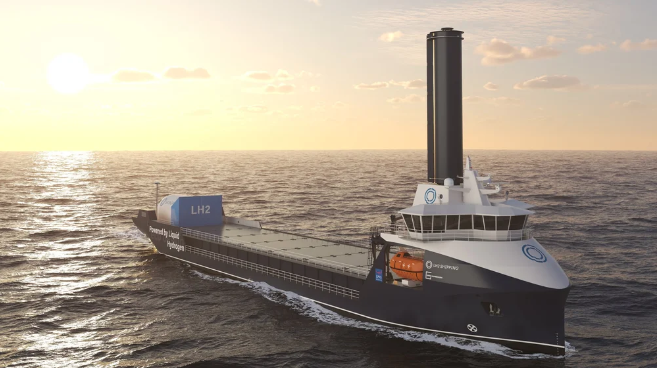
    LH2 Shipping, in partnership with Strand Shipping Bergen (part of the Vertom Group), received approximately $29 million in additional funding from Enova to construct two more liquid hydrogen-powered bulk carriers. This award follows an earlier grant of $23.5 million secured in the spring for the first two vessels, bringing the total number of hydrogen-powered ships in the project to four.

    Source: LH2 Shipping

    The expanded funding represents more than NOK 536 million ($52.5 million) in total state support for this single project—a clear signal of Norway’s commitment to maritime decarbonization.

    Technical Specifications

    The four vessels, branded under the “NordBulk” project, will be 7,700 dwt bulk carriers designed for short sea shipping. Each 108-meter (353-foot) vessel will transport bulk and general cargo between northern Norway, the Baltic region, and mainland Europe.

    Key technical features:

    • LH₂ Storage: 17 tonnes liquid hydrogen capacity per vessel
    • Power Generation: 3.5 MW PEM fuel cells
    • Battery Support: 1.5 MWh battery pack to support fuel cell operation
    • Shore Power: Equipped for shore power connection during loading/unloading
    • Backup System: Standby diesel/biodiesel generator for operational redundancy

    The onboard hydrogen systems consist of C-type vacuum-insulated tanks storing liquid hydrogen at -253°C. This proven technology builds directly on the experience gained from Norled’s MF Hydra ferry, which has been operating successfully on liquid hydrogen since 2023.

    Coastal Hydrogen Operations

    In addition to the liquid hydrogen bulk carriers, GMI Rederi received funding to construct two coastal bulk carriers powered by compressed hydrogen. These vessels will combine multiple zero-emission technologies:

    • Fuel cells running on compressed hydrogen
    • Battery energy storage systems
    • Wind-assisted propulsion technology

    The ships will operate along the Norwegian coast, transporting asphalt and construction materials—applications where the shorter range and established coastal infrastructure make compressed hydrogen a practical choice.

    Building the Supply Chain

    A critical component of these projects is the parallel development of hydrogen production and bunkering infrastructure. In November 2024, Enova awarded over NOK 777 million ($70.9 million) to five hydrogen production projects along the Norwegian coast, from Slagentangen in the southeast to Bodø in the north.

    These production facilities will provide:

    • Total capacity: 120 MW
    • Daily production: Approximately 40 tons of hydrogen
    • Coverage: Strategic locations along major shipping routes

    Nils Kristian Nakstad, CEO of Enova, stated: “The projects that receive support will be part of a network of hydrogen producers along the Norwegian coastline. This will make hydrogen more accessible to those who want to invest in sustainable shipping.”

    The Economics of Hydrogen Shipping

    The business case for hydrogen vessels is improving rapidly due to several factors:

    Regulatory Drivers:

    • EU Emissions Trading System (ETS) now includes maritime transport
    • FuelEU Maritime regulations mandate gradual emissions reductions
    • IMO’s 2050 net-zero target creates long-term regulatory certainty

    Cost Competitiveness:
    With carbon pricing mechanisms in place, the cost gap between fossil fuels and hydrogen is narrowing. After 2030, when CO₂ emission fees increase further under EU regulations, zero-emission vessels are expected to achieve operational cost parity with conventional ships on many routes.

    The Enova grants cover up to 80% of the additional costs associated with hydrogen technology—a significant increase from the previous 40% support level. This enhanced support reflects Norway’s strategic goal to establish first-mover advantage in zero-emission shipping technologies.

    Environmental Impact

    The six hydrogen-powered bulk carriers receiving funding in this round will collectively contribute to:

    • Annual CO₂ reduction: Significant emissions cuts in short-sea shipping
    • Zero local emissions: No NOx, SOx, or particulate matter during fuel cell operation
    • Scalable model: Demonstration of commercially viable hydrogen operations

    Enova emphasizes that supporting these pioneer vessels creates the foundation for broader adoption. As Andreas Bjelland Eriksen, Norway’s Minister for Climate and Environment, stated: “Norway must be at the forefront of the transition at sea.”

    Timeline and Next Steps

    The vessels are expected to enter service between 2026 and 2029, with construction beginning in 2025. Shipyard selection is underway, with Norwegian and European yards competing for the contracts.

    Enova has announced it will continue its support programs, with additional funding rounds planned for 2025 and 2026. The organization reports receiving 31 applications in the latest round, indicating strong industry interest in hydrogen and ammonia propulsion.

    Industry Significance

    This latest funding announcement positions Norway as the clear leader in hydrogen shipping deployment. The country’s comprehensive approach—supporting vessels, production facilities, and infrastructure simultaneously—creates the conditions for a functioning hydrogen maritime ecosystem.

    For the global shipping industry, Norway’s hydrogen program provides crucial real-world data on:

    • Operational costs of hydrogen vs. conventional fuel
    • Reliability of liquid vs. compressed hydrogen systems
    • Integration challenges in existing shipping operations
    • Bunkering procedures and infrastructure requirements

    As the maritime industry faces increasing pressure to decarbonize, Norway’s hydrogen pioneers are demonstrating that zero-emission bulk shipping is not just technically feasible—it’s becoming economically viable.

    Looking Ahead

    With four liquid hydrogen bulk carriers and two compressed hydrogen coastal vessels now funded and under development, Norway is creating a critical mass of hydrogen shipping operations. When these vessels enter service, they will provide the operational experience needed to scale hydrogen technology across larger ships and longer routes.

    The success of these projects will be closely watched by shipowners worldwide, particularly in Europe where emissions regulations are tightening rapidly. If the NordBulk vessels demonstrate reliable, cost-competitive operations, they may catalyze a broader shift toward hydrogen in the short-sea shipping segment.


    This article is based on reports from Maritime Executive, Ship & Bunker, Clean Shipping International, Norwegian Hydrogen, Hellenic Shipping News, and official Enova communications.

  • South Korea Charts New Course with Launch of First Hydrogen Fuel-Cell Vessel

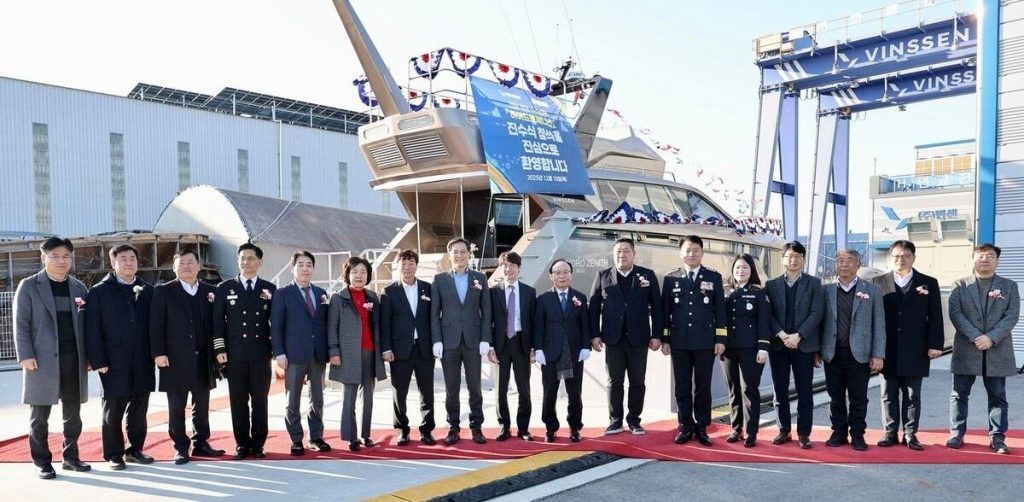
    December 18, 2024 marked a watershed moment for maritime decarbonization as VINSSEN, a South Korean clean technology firm, launched the Hydro Zenith — the nation’s first hydrogen fuel-cell powered vessel built in full compliance with official safety standards.

    Source: Vinssen

    The launch ceremony at VINSSEN’s Yeongam facility drew over 100 attendees, including government officials from Jeollanam-do Province and Yeongam County, industry partners, and research institutions. This milestone represents more than just a technological achievement; it signals South Korea’s serious commitment to transforming its maritime sector toward zero-emission operations.

    A Vessel Built on New Standards

    What sets Hydro Zenith apart is its development under the Ministry of Oceans and Fisheries’ Interim Standards, established in 2023 specifically for hydrogen fuel-cell propulsion vessels. These regulations provide a clear framework for design, equipment configuration, and inspection procedures, enabling hydrogen-powered ships to be built and certified within existing ship safety laws.

    The leisure vessel showcases impressive technical specifications. Its hybrid propulsion system combines two 100 kW hydrogen fuel cells with four 92 kWh battery packs, delivering speeds up to 20 knots (approximately 37 km/h) while producing zero emissions. The hydrogen fuel cell technology operates by creating an electrochemical reaction between hydrogen and oxygen at the anode and cathode, generating direct current electricity along with only heat and water as byproducts.

    Smart Technology Meets Clean Energy

    Beyond its clean propulsion system, Hydro Zenith integrates sophisticated digital monitoring capabilities that track vessel performance and energy consumption in real-time. This data-driven approach enables predictive maintenance and optimized operations — essential features as the maritime industry transitions toward digital management systems.

    The vessel’s hydrogen fuel cell system has undergone rigorous safety verification through pre-certification by the Korea Marine Traffic Safety Authority (KOMSA), demonstrating that it can be deployed without requiring regulatory exemptions. This achievement is particularly significant as it proves hydrogen technology can meet stringent maritime safety requirements.

    Public-Private Collaboration at Work

    The Hydro Zenith project exemplifies effective public-private partnership, with joint funding from Jeollanam-do Province, Yeongam County, and VINSSEN, supported by leading Korean research institutions including JNTP, KOMERI, and KITECH. Each partner brought specialized expertise: technical and regulatory support, hull stability assessment, fuel cell system performance evaluation, and advanced welding technology.

    VINSSEN CEO Chil Han Lee emphasized the project’s broader significance, noting it represents an essential step toward achieving carbon neutrality and improving Korea’s maritime environment. The company, which holds over 50 patents related to electric propulsion and hydrogen fuel cell systems, aims to convert diesel-powered vessels into eco-friendly alternatives.

    The Path Forward: Sea Trials and Beyond

    With the launch complete, Hydro Zenith will now undergo comprehensive real-sea trials to validate hydrogen vessel safety standards and demonstrate operational viability. These trials will provide critical data to accelerate the commercialization of zero-emission marine mobility solutions.

    VINSSEN isn’t stopping here. The company recently showcased its 100 kW and 250 kW marine hydrogen fuel cell systems, both currently undergoing type approval processes. In March 2025, VINSSEN also secured Approval in Principle from Korean Register for what would be South Korea’s first hydrogen fuel-cell powered tugboat, featuring a robust 2,700 kW system.

    The company has already received international recognition as well, including Type Approval from Italian classification society RINA for its 60 kW maritime fuel cell stack, and project-based approval from Bureau Veritas for trials conducted in Singapore with partners including Shell, Seatrium Limited, and Air Liquide.

    Korea’s Hydrogen Maritime Vision

    The Hydro Zenith launch fits into South Korea’s ambitious national hydrogen strategy. The country has positioned itself as a global hydrogen frontrunner, with Hyundai Motor launching the world’s first commercial fuel cell electric vehicle back in 2013. The government’s Hydrogen Economy Roadmap sets aggressive targets: producing 6.2 million fuel cell electric vehicles by 2040 and establishing 15 gigawatts of fuel cell power generation capacity.

    While fuel cell systems have been demonstrated on smaller vessels for shorter routes, commercial-scale deployment on large ships remains an ongoing challenge. However, projects like Hydro Zenith provide essential proof-of-concept and regulatory frameworks that could pave the way for broader adoption.

    The Bigger Picture

    As the maritime industry faces mounting pressure to reduce its carbon footprint, hydrogen fuel cells offer a promising pathway forward. Unlike battery-electric systems limited by weight and range constraints, hydrogen can provide the energy density needed for longer voyages while producing zero emissions at the point of use.

    The success of Hydro Zenith demonstrates that hydrogen marine technology is moving from experimental concept to regulatory-compliant reality. With proper safety frameworks, technological innovation, and collaborative partnerships, hydrogen-powered vessels could become a significant part of the maritime decarbonization puzzle.

    VINSSEN’s achievement also highlights South Korea’s strategic approach to building a complete hydrogen ecosystem — from production facilities and refueling infrastructure to end-use applications across automotive, industrial, and now maritime sectors.

    As Hydro Zenith prepares for its sea trials in 2025, the maritime industry will be watching closely. The data and operational experience gained from this pioneering vessel could help chart the course for hydrogen’s role in achieving the sector’s ambitious climate goals.


    The Hydro Zenith represents not just a technological milestone, but a tangible step toward reimagining marine transportation for a zero-emission future. As countries worldwide seek pathways to maritime decarbonization, South Korea’s integrated approach — combining regulatory frameworks, public-private partnerships, and technological innovation — offers valuable lessons for the global shipping industry.

  • Yanmar’s Hydrogen Fuel Cell System Earns DNV Approval

    Another milestone in fuel cell development for maritime, after reporting on earlier developments. This time for a very well known Japanese brand in propulsion: Yanmar. If they can apply the same rigor in their fuel cell offering as their engines this is a very promising development. Finally ship owners can choose fuel cells from a well-known maritime supplier.

    Pioneering Sustainable Maritime Solutions

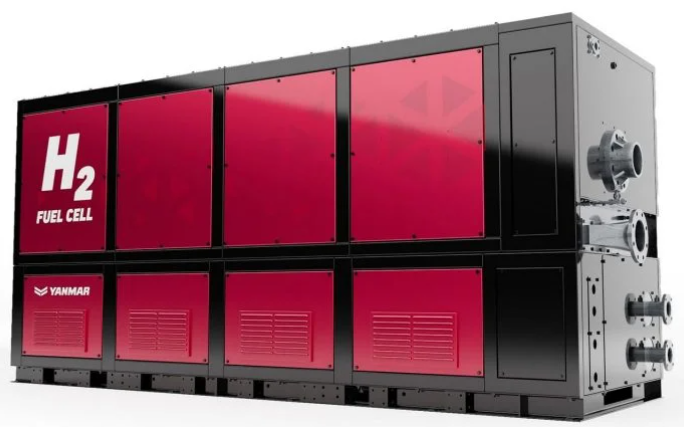
    Yanmar Power Technology has achieved a significant milestone. Their GH320FC Maritime Hydrogen Fuel Cell System received Approval in Principle (AiP) from DNV, a leading classification society.

    Source: Yanmar

    Modular design

    The GH320FC is designed for easy installation across various vessels. Its modular design allows multiple units to connect in parallel, meeting diverse power needs. This flexibility makes it ideal for coastal ferries, inland cargo ships, and port service vessels, especially in Europe’s low-emission zones.

    The power output is 300 kW which bring the fuel cell into the larger segment, which is required for shipping’s multi-megawatt.

    European decarbonization

    Eric Tigelaar, Yanmar Europe’s Commercial Marine Department Manager, emphasized the system’s role in providing sustainable energy solutions. Masaru Hirose, General Manager at Yanmar Power Technology, highlighted its contribution to European decarbonization goals, building on successful deployments in Japan.

    DNV’s Olaf Drews praised the system’s potential in achieving zero-emission operations. He noted that fuel cells with renewable fuels offer efficient, scalable power solutions for the maritime industry’s future.

    This approval marks a pivotal step toward cleaner maritime operations. Yanmar’s innovation aligns with global efforts to reduce emissions and promote sustainable energy in marine transport.

  • Viking Libra: A step Towards Zero-Emission Cruising

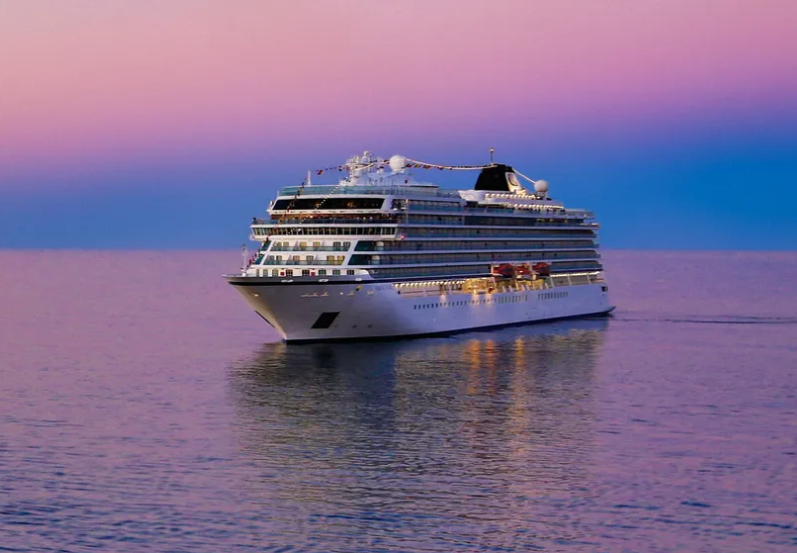
    In a groundbreaking development for the maritime industry, Italian shipbuilder Fincantieri and Swiss cruise line Viking have unveiled the world’s first cruise ship powered by liquid hydrogen stored onboard. This pioneering vessel, named Viking Libra, is currently under construction at Fincantieri’s Ancona shipyard, with delivery anticipated in late 2026. This has been long in the making but very good to see this public announcement. It is another confirmation of the role liquid hydrogen can play in maritime transport.

    Source: Viking cruises

    The Viking Libra represents a significant advancement in sustainable maritime technology. With a gross tonnage of approximately 54,300 tons and a length of 239 meters, the ship is engineered to operate with zero emissions. Its state-of-the-art hydrogen propulsion system, combined with advanced fuel cell technology, is capable of generating up to 6 megawatts of power.

    A notable feature of the Viking Libra is its innovative approach to hydrogen storage and utilization. The vessel will incorporate a containerized system designed to load and store hydrogen directly onboard, effectively addressing existing supply chain challenges. This hydrogen will fuel a polymer electrolyte membrane (PEM) fuel cell system, specifically optimized for cruise operations and developed by Isotta Fraschini Motori (IFM), a subsidiary of Fincantieri specializing in advanced fuel cell technology.

    Torstein Hagen, Chairman and CEO of Viking, expressed pride in this environmental milestone:

    “From the outset, we have designed our river and ocean ships thoughtfully to reduce their fuel consumption, and we are very proud that the Viking Libra and the Viking Astrea will be even more environmentally friendly. Viking made the principled decision to invest in hydrogen, which offers a true zero-emission solution. We look forward to welcoming the world’s first hydrogen-powered cruise ship to our fleet in 2026.”

    Expanding the Fincantieri-Viking Partnership

    In addition to the Viking Libra, Fincantieri is constructing the Viking Astrea, another hydrogen-powered vessel scheduled for delivery in 2027. This initiative underscores Viking’s commitment to sustainable cruising and marks a significant step toward reducing the environmental impact of maritime travel.

    Further strengthening their collaboration, Fincantieri and Viking have signed an agreement for the construction of two additional cruise ships, set for delivery in 2031. This contract includes an option for two more vessels and is based on the successful design features of previous units built by Fincantieri for Viking. These new ships will comply with the latest environmental regulations and incorporate modern safety systems. Positioned in the small cruise ship segment, each will have a gross tonnage of about 54,300 tons and accommodate 998 passengers across 499 cabins.

    Pierroberto Folgiero, CEO and Managing Director of Fincantieri, highlighted the significance of this partnership:

    “With the Viking Libra, we are not only delivering the world’s first cruise ship powered by hydrogen stored on board, but we are also reinforcing our commitment to shaping the future of sustainable maritime transportation. Furthermore, we are thrilled about Viking’s decision to expand its fleet with the order of two additional ships, which reaffirms the strength of our partnership and the trust placed in our expertise.”

    Pioneering Sustainable Maritime Transportation

    The launch of the Viking Libra signifies a pivotal moment in the cruise industry’s journey toward sustainability. By integrating hydrogen fuel technology, Viking and Fincantieri are setting new standards for eco-friendly maritime operations, paving the way for a future where zero-emission cruising becomes the norm.

    As the maritime sector continues to seek innovative solutions to reduce its environmental footprint, collaborations like that of Fincantieri and Viking exemplify the transformative potential of embracing green technologies. The Viking Libra and its sister ships stand as beacons of progress, heralding a new era in sustainable sea travel.

  • H2ESTIA Project: Liquid Hydrogen-Powered General Cargo Ship

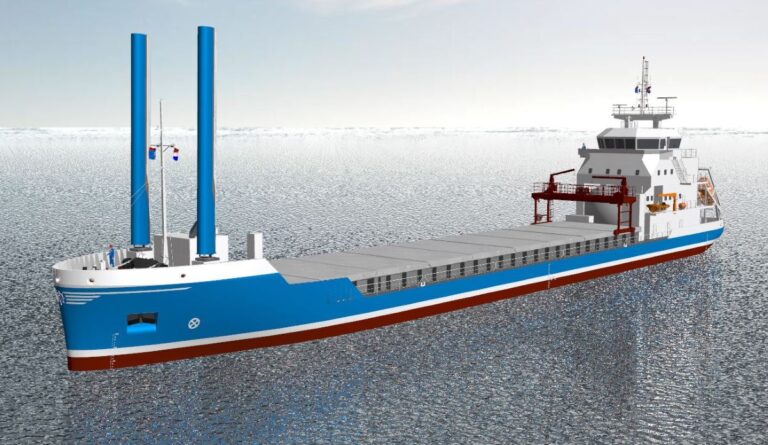
    In February this site already reported on five Dutch hydrogen ships winning subsidy. Now the general public is introduced to one of those vessels: the H2ESTIA Project. Spearheaded by the Nederlandse Innovatie Maatschappij (NIM), this project aims to develop the world’s first zero-emission general cargo ship powered by liquid hydrogen, marking a significant milestone in the quest for greener shipping solutions.

    Project Overview

    The H2ESTIA Project focuses on the design, construction, and demonstration of a hydrogen-powered cargo vessel intended for operations in the North Sea and beyond. Managed by Van Dam Shipping, a family-run short-sea and inland shipping company, the vessel is designed to transport bulk goods without emitting harmful pollutants, thereby redefining sustainable maritime logistics.

    Source: NIM

    Innovative Technological Integration

    Central to the project’s innovation is its integrated approach to hydrogen propulsion. The vessel will feature a newly designed cryogenic hydrogen storage and bunkering system, ensuring the safe handling and storage of liquid hydrogen at extremely low temperatures. Propulsion will be achieved through a hydrogen fuel cell system complemented by batteries, delivering clean and efficient power.

    To enhance energy efficiency further, the ship will incorporate:

    • Wind-Assisted Propulsion: Utilizing wind power to reduce reliance on hydrogen fuel.
    • Waste Heat Recovery Systems: Capturing and reusing excess heat to improve overall energy utilization.

    Additionally, the implementation of digital twin technology will create a virtual model of the ship, allowing for real-time monitoring, operational optimization, and enhanced safety measures.

    Collaborative Effort

    The H2ESTIA Project is supported by a consortium of leading maritime and technology organizations, including TNO, MARIN, the University of Twente, Cryovat, EnginX, Encontech, and classification society RINA. This collaborative effort is further backed by the Dutch Ministry of Infrastructure and Water Management, highlighting the project’s national significance in advancing sustainable shipping practices.

    Statements from Key Stakeholders

    Sander Roosjen, CTO at NIM, emphasized the project’s groundbreaking nature: “H2ESTIA is a flagship project for commercial shipping. By integrating hydrogen technology with digital innovation, we are proving that zero-emission shipping is not just a vision—it is an achievable reality.”

    Jan van Dam, CEO of Van Dam Shipping, highlighted the importance of collaborative efforts: “Parallel to the H2ESTIA Project, we are working on securing the supply, as well as the necessary bunkering and logistics. This is a combined effort, as a single ship alone does not generate sufficient demand. Collaboration at this stage is what transforms our ambitions into reality.”

    Implications for the Maritime Industry

    The H2ESTIA Project aims to demonstrate both the technological readiness and economic viability of hydrogen-powered cargo vessels, paving the way for their commercial deployment. By addressing challenges such as hydrogen system certification, risk management, and crew training, the project sets a precedent for the safe integration of hydrogen technology into maritime operations.

    As the maritime industry continues to seek sustainable alternatives to traditional fossil fuels, initiatives like H2ESTIA exemplify the potential of hydrogen as a clean energy source, offering a promising pathway toward achieving zero-emission shipping in the near future.