Hydrogen news

  • Hydrogen as Marine Fuel: Progress and Challenges

    One challenge of working on hydrogen as marine fuel is that while the technology is ready and successfully applied on board, while regulations are not there yet. The new DNV white paper outlines these issues and provides a roadmap for approval and implementation. The report is recommended reading. Here is a summary.

    Current Status of Hydrogen as Ship Fuel

    • Hydrogen is already used in many industries, but its maritime application is still developing.
    • The first hydrogen-powered vessels, such as the MF Hydra ferry and Project 821, have entered service.
    • Most hydrogen ships today are small or experimental. Larger deep-sea vessels face storage and safety hurdles.

    Safety Challenges

    • Hydrogen is highly flammable, prone to leakage, and has a wide explosive range.
    • Cryogenic storage (-253°C) requires advanced insulation to prevent boil-off and structural embrittlement.
    • High-pressure hydrogen tanks pose additional risks, including spontaneous ignition during leaks.

    Regulatory Landscape

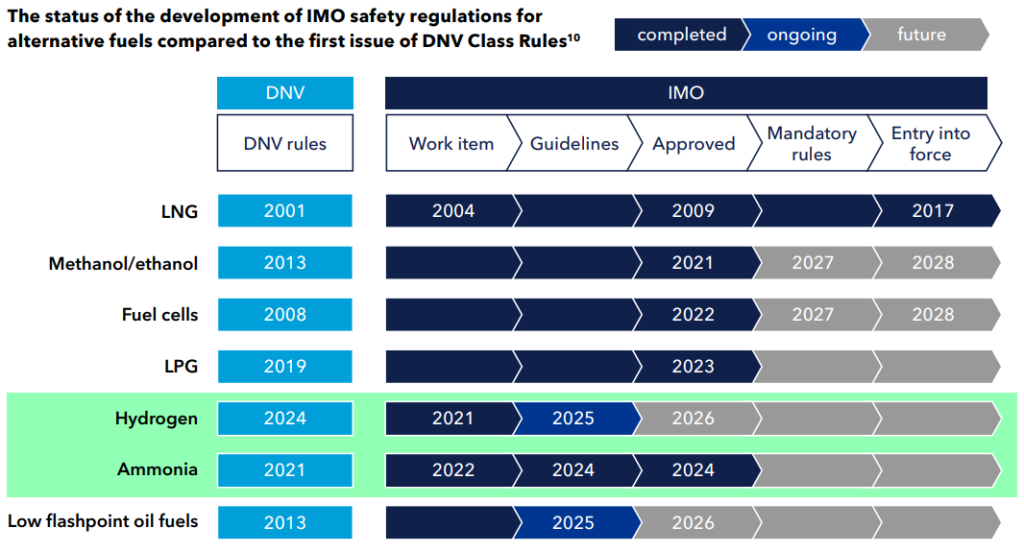
    No detailed IMO regulations currently exist for hydrogen-fueled ships.

    The IGF Code only includes prescriptive rules for natural gas.

    The IMO aims to develop hydrogen-specific regulations by 2028.

    Until then, hydrogen-fueled ships require approval through the Alternative Design Approval (ADA) process.
    Source: DNV

    Timeline for Hydrogen Fuel Adoption

    1. 2021 – IMO starts developing hydrogen safety guidelines.
    2. 2023 – First commercial hydrogen ferry (MF Hydra) enters service.
    3. 2024 – DNV publishes hydrogen ship classification rules.
    4. 2025 – Further regulatory advancements expected.
    5. 2028 – Earliest possible adoption of mandatory IMO hydrogen fuel regulations.

    Ship Design Considerations

    • Hydrogen requires more space than conventional fuels, impacting ship layout.
    • Safe integration includes double-walled pipes, specialized ventilation, and explosion-proof compartments.
    • Fuel cells are preferred for efficiency and safety, but hydrogen combustion engines are under development.

    Future Outlook

    • The transition to hydrogen-fueled ships depends on regulatory support and technological advancements.
    • Collaboration among shipowners, designers, regulators, and fuel suppliers is essential.
    • The industry must develop bunkering infrastructure and crew training to ensure safe operations.

    Key Diagram

    The development spiral shows the path from introducing hydrogen as a new marine fuel to widespread adoption. This requires iterative improvements in technology, regulation, and ship design.

    These advancements position hydrogen as a key player in the future of sustainable shipping. The transition is complex, but with innovation and regulatory backing, hydrogen can lead the industry toward zero emissions.
  • Hanwha Aerospace Gains DNV Approval for Marine Fuel Cells

    It is very obvious that more class approved fuel cells are needed to develop hydrogen-powered ships. Currently the number of available maritime fuel cells is very limited. Therefore this milestone by Hanwha Aerospace is a step in the right direction. This follows on news of another type approval earlier this year.

    Certification

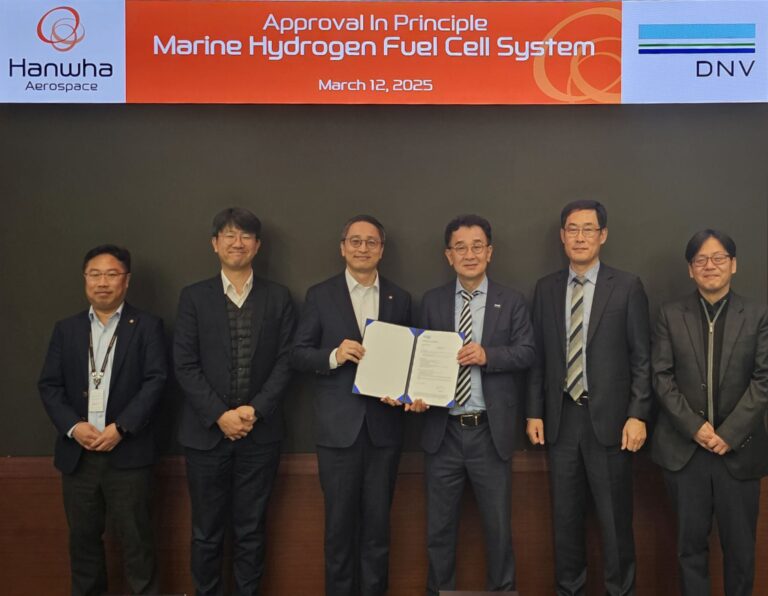
    Hanwha Aerospace has achieved a significant milestone. The company received Approval in Principle (AIP) from DNV for its 200 kW hydrogen fuel cell system designed for maritime use.

    This certification confirms the system’s safety and compliance with international regulations during the basic design phase. It builds upon a previous approval from the Korean Register of Shipping (KR).

    Source; Hanwha Aerospace via Linkedin

    Dong-jo Oh, Executive Director of Hanwha Aerospace, stated that this certification validates their hydrogen fuel cell technology at the highest global standards for safety and performance. He emphasized the company’s commitment to collaborating with Hanwha Ocean to target the global zero-carbon vessel market and help the maritime industry reduce carbon emissions.

    Full scale marketing

    With this approval, Hanwha Aerospace is set to begin full-scale marketing and sales of its maritime hydrogen fuel cells. The company also aims to secure type approval for its polymer electrolyte membrane fuel cell (PEMFC) technology, enhancing its competitiveness in the zero-carbon propulsion systems market. Plans are underway to further develop and commercialize this solution for various marine vessels, from commercial ships to specialized maritime applications.

    Ammonia

    In June 2024, Hanwha Aerospace, Hanwha Ocean, KR, and ammonia power solutions company Amogy signed a memorandum of understanding (MoU). This agreement focuses on technical collaboration and certification for applying ammonia reformers and ammonia fuel cell systems to ships. Previously, Hanwha Ocean agreed to purchase Amogy’s ammonia-to-electrical power system, which includes Hanwha Aerospace’s hydrogen fuel cell system.

    These developments position Hanwha Aerospace at the forefront of eco-friendly marine solutions. The company’s efforts contribute significantly to the maritime industry’s goal of achieving zero-carbon emissions.

  • European Project Advances Liquid Hydrogen-Powered SOV Design

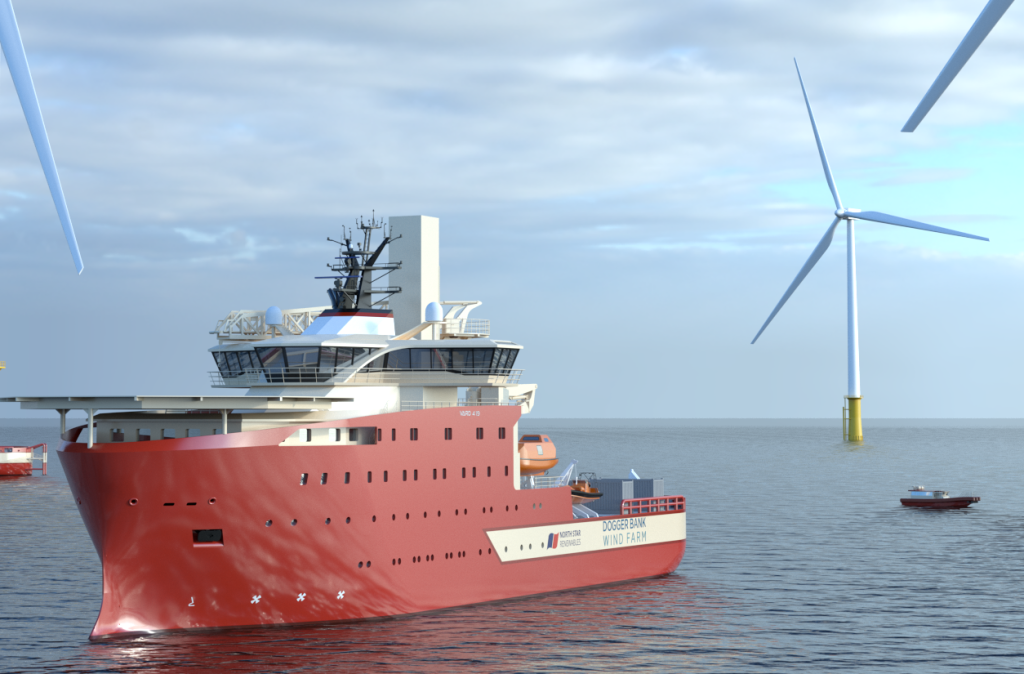
    With long term charter contracts, single port operations and fixed time at sea Service Operation Vessels (SOV) are ideally suited for powering by liquid hydrogen. There is little available space so installing liquid tanks below will be a challenge but this is what the new European project consortium led by ArianeGroup, intends to tackle. Last year a similar concept was revealed by Louis Dreyfus Armateurs and Salt Ship Design.

    The Project Scope

    The recently announced NAVHYS project brings together key industry players, research institutions, and shipbuilders to explore the technical and economic feasibility of an liquid hydrogen-fueled SOV design. The primary objective is to provide a concept for a below-deck LH2 storage and fuel system for an SOV to propose a fully decarbonised maintenance solution for wind energy providers.

    Source: North Star

    The consortium will address several critical aspects:

    • Fuel Storage & Safety – Developing safe and efficient LH2 storage solutions on board.
    • Power System Integration – Assessing how fuel cells and hydrogen combustion engines can be optimized for vessel propulsion.
    • Regulatory Compliance – Ensuring that the design adheres to evolving maritime safety and environmental regulations.
    • Operational Feasibility – Evaluating how LH2 can meet the energy demands of an SOV during offshore wind farm operations.

    Why Liquid Hydrogen?

    Hydrogen has long been considered a promising alternative to fossil fuels, but its adoption in shipping faces challenges related to storage, energy density, and infrastructure. LH2 offers significant advantages over compressed hydrogen due to its higher energy density per unit volume, making it more suitable for long-duration offshore operations. Additionally, it eliminates the need for complex high-pressure storage systems, a key concern for vessel integration.

    However, LH2 presents unique challenges, including:

    • The need for cryogenic storage at -253°C.
    • Potential boil-off losses during long voyages.
    • Limited bunkering infrastructure compared to conventional fuels.

    Despite these hurdles, the industry sees LH2 as a crucial component in the future of zero-emission offshore operations.

    Implications for the Offshore Wind Sector

    SOVs are the backbone of offshore wind farm operations, transporting technicians and equipment to wind turbines. As the demand for offshore wind energy grows, reducing the carbon footprint of support vessels becomes increasingly important. Hydrogen-fueled SOVs could significantly cut emissions, reduce reliance on fossil fuels, and demonstrate the viability of LH2 as a marine fuel in real-world applications.

    Furthermore, this initiative sets a precedent for future hydrogen-powered vessel designs, potentially influencing developments in other segments of the maritime industry, such as platform supply vessels (PSVs) and crew transfer vessels (CTVs).

    Stay tuned for further updates as the project progresses toward making hydrogen-powered SOVs a reality.

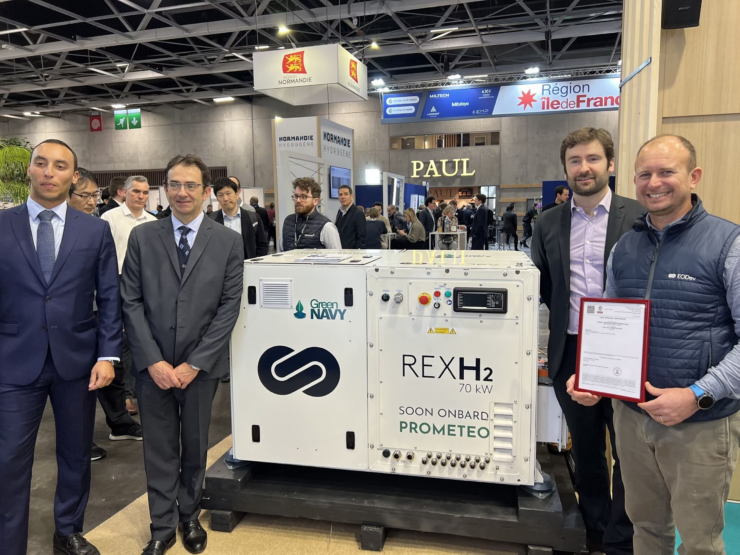
  • EODEV Achieves Industry Milestone with Type Approval for REXH2 Fuel Cell System

    In order to develop hydrogen powered ships we need more development in the different building blocks like the fuel cells. Earlier this month I reported about the Ricardo fuel cell system achieving almost 400 kW output. Now it is great to see that EODEV has obtained Type Approval for its REXH2 fuel cell system. This development fits nicely with EO’s container ship project. The platform is based on the Toyota fuel cell technology. Personally, I have concerns about using automotive technology in shipping, however EODEV surely has taken this into consideration.

    A Major Step for Maritime Hydrogen Adoption

    The REXH2 fuel cell system, developed by Energy Observer Developments (EODEV), has now achieved Type Approval from Bureau Veritas, a leading classification society. This certification validates the system’s compliance with international safety and performance standards, making it easier for shipbuilders and operators to integrate hydrogen propulsion into new and existing vessels.

    Source: eo-dev.com

    Type Approval is a critical process that ensures maritime systems meet stringent regulations before deployment. This milestone means that the REXH2 is recognized as a safe and reliable solution for zero-emission marine power, significantly reducing regulatory hurdles for adoption in commercial shipping, passenger ferries, and even superyachts.

    The REXH2: A Proven Solution for Clean Marine Power

    The REXH2 is a modular hydrogen fuel cell system designed for maritime applications, offering a scalable and efficient alternative to diesel generators. It has been rigorously tested in real-world conditions aboard the Energy Observer, a pioneering hydrogen-powered vessel that has demonstrated the viability of fuel cell propulsion on long-distance journeys.

    Key features of the REXH2 include:

    • Modularity – The system can be configured to meet various power demands, making it suitable for different vessel types.
    • Zero Emissions – Producing only water and heat as byproducts, the REXH2 aligns with global decarbonization goals.
    • Compliance with IMO Regulations – The certification supports the International Maritime Organization’s (IMO) strategy to reduce greenhouse gas (GHG) emissions in shipping.

    Implications for the Hydrogen-Powered Shipping Industry

    The certification of the REXH2 represents a major leap forward for hydrogen-powered vessels. Until now, the maritime industry has faced significant challenges in adopting hydrogen fuel cells due to regulatory uncertainties and a lack of standardized certification frameworks. With this approval, shipowners and naval architects can integrate hydrogen propulsion with greater confidence, accelerating the transition to clean energy.

    This achievement also reinforces EODEV’s position as a leader in maritime hydrogen technology. By securing Type Approval, the company has set a benchmark for other hydrogen fuel cell manufacturers, fostering innovation and investment in the sector.

    Future Prospects

    For naval architects, shipbuilders, and operators exploring zero-emission solutions, the REXH2 is now a certified and viable option. With increasing pressure to meet sustainability targets, this certification is a game-changer for the future of maritime hydrogen propulsion.

  • Global Financial Support for Zero-Emission Ships

    The technology for zero emission shipping exists. However, securing financial support for zero-emission shipping remains a major global challenge, especially for smaller shipowners and those in developing regions. With an estimated USD 28 billion required annually for vessel construction and operations by 2050, navigating the fragmented funding landscape is no easy task. In this post, I break down key financial support opportunities and practical ways shipowners can access funding for a greener future. The report can be found here. I reported earlier about examples of financial support schemes in Norway and The Netherlands.

    The Need for Financial Support

    Despite advancements in zero-emission technologies such as green hydrogen, ammonia, and energy-efficient retrofits, access to financing remains a significant barrier. Traditional bank lending has become more restrictive due to regulatory constraints, risk perceptions, and market uncertainties. As a result, alternative financing mechanisms such as grants, green loans, leasing, and OPEX-based schemes are gaining traction as viable funding solutions.

    Mapping Global Financial Support Opportunities

    A recent study identified over 70 financial support programs worldwide, ranging from government grants and sustainability-linked loans to private equity investments and carbon credit revenue schemes. These opportunities span multiple funding sources, including:

    • Public Initiatives: National and supranational programs (e.g., the European Union’s Just Transition Fund, GreenVoyage2050, and the Clean Ports Program in the U.S.)
    • Development Banks: Entities such as the European Investment Bank (EIB) and the African Development Bank offer funding for sustainable transport projects.
    • Private Financing: Sustainability-focused private equity funds like EURAZEO Sustainable Maritime Infrastructure Fund and Breakthrough Energy Ventures support innovative ship decarbonization projects.

    Regional Disparities in Support

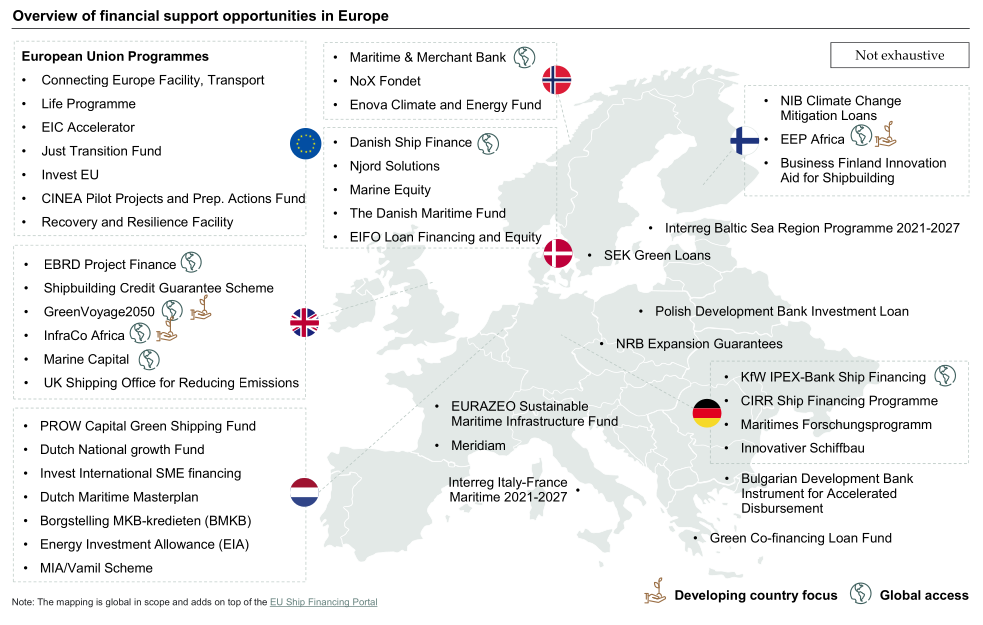
    Financial support is predominantly concentrated in regions with stringent environmental regulations and strong economic capacity. Europe leads the way, accounting for 63% of the identified financial support programs, followed by North America (15%) and the Asia-Pacific region (13%).

    Financial support opportunities in Europe
    Source: Mapping Global Financial Support Opportunities for Zero‐Emission and Energy‐Efficient Ships

    Latin America and Africa lag behind, with limited maritime-specific funding available, although international mechanisms such as the Green Climate Fund and the Global Environment Facility aim to bridge these gaps.

    Challenges for Shipowners

    While the number of financial support programs is growing, shipowners still face obstacles, including:

    • Complex Application Processes: Many funding programs require extensive documentation, making access difficult for smaller players.
    • Eligibility Barriers: Some programs prioritize government partnerships or large-scale projects, leaving individual shipowners at a disadvantage.
    • Limited OPEX Support: Most funding mechanisms focus on capital expenditures (CAPEX) for new builds and retrofits, with fewer options available for operational cost reductions associated with low-emission fuels.

    Recommendations for Shipowners

    To navigate the financial landscape effectively, shipowners should:

    1. Monitor Emerging Pilot Programs: Initiatives like the Zero Emission Shipping Fund and the Pay-As-You-Save (PAYS) Scheme for retrofits offer promising models for future funding.
    2. Leverage Global Development Programs: Accessing grants and concessional loans from organizations like the Climate Investment Funds (CIF) and the Green Climate Fund (GCF) can help mitigate financial barriers.
    3. Explore Private Equity and Blended Financing: Combining grants with equity investments or green leasing options can reduce upfront capital requirements.
    4. Form Strategic Partnerships: Collaborating with technology providers, policymakers, and larger operators can improve funding eligibility and facilitate access to financial support.
    5. Stay Informed on Regulatory Changes: As financial support mechanisms evolve, staying up-to-date on new funding opportunities and compliance requirements will be crucial for long-term sustainability.

    The Path Forward

    The transition to zero-emission shipping is not just a technological challenge but also a financial one. While a growing number of financial support mechanisms are emerging, ensuring equitable access to funding will be critical to accelerating the industry’s decarbonization. By strategically leveraging available resources and adopting innovative financing models, shipowners can contribute to a greener and more sustainable maritime future.

  • China’s Green Hydrogen Leap

    As a maritime enthusiast for hydrogen in shipping, I have lately been disappointed about news related to hydrogen production. lately. China’s recent green hydrogen leap in production, as highlighted by Rystad Energy, are not just national milestones—they have profound implications for the global maritime industry as green hydrogen is required to transition. So next to hydrogen ships, China is also developing here rapidly.

    China’s Accelerated Green Hydrogen Production

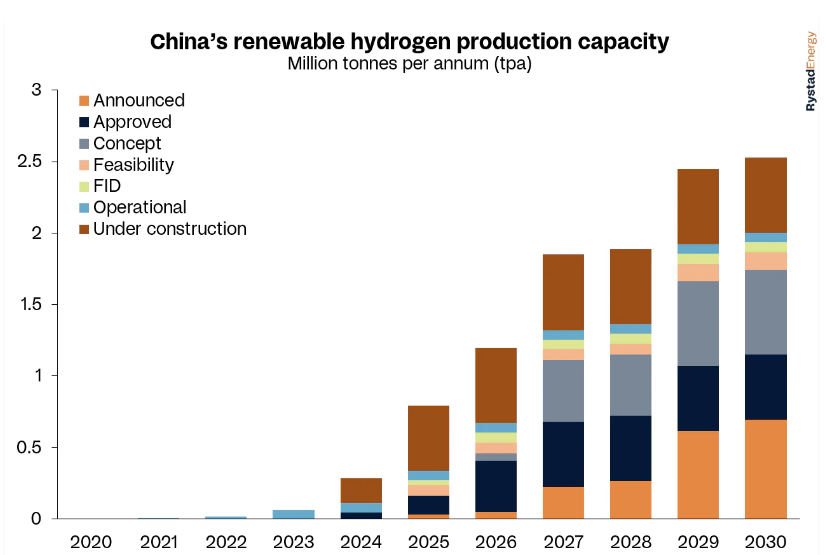
    China is set to surpass its 2025 green hydrogen production target by the end of this year, achieving an annual output of 220,000 tonnes. This rapid advancement is primarily driven by significant investments in electrolyzer capacity and the development of extensive hydrogen infrastructure. Below graph indicates that plans to ramp up production.

    China's renewable hydrogen production capacity between 2020 and 2030
    Source: Rystad Energy

    Relevance to the Maritime Industry

    For the shipping sector transitioning to cleaner fuels is imperative, and green hydrogen emerges as a promising solution. In fact it is the basis for other fuels like green ammonia and methanol. Hydrogen can be directly used in fuel cells to power vessels with zero emissions, producing only water as a byproduct. This technology is especially viable for short-sea shipping and port operations, where refueling infrastructure can be more readily established.

    China’s Role in Maritime Decarbonization

    China’s leadership in green hydrogen production can significantly influence the maritime industry’s decarbonization efforts. Increased hydrogen availability can reduce costs and encourage the adoption of hydrogen-powered vessels. Moreover, China’s development of hydrogen pipelines, such as the 400-kilometer project by Sinopec, facilitates efficient distribution, potentially supporting maritime refueling stations.

    Challenges and the Path Forward

    While the prospects are promising, challenges persist. Hydrogen’s low energy density requires larger storage solutions, impacting vessel design. Additionally, establishing a comprehensive refueling infrastructure is crucial for widespread adoption. Collaborative efforts between energy producers, maritime stakeholders, and policymakers are essential to address these hurdles and promote standardization.

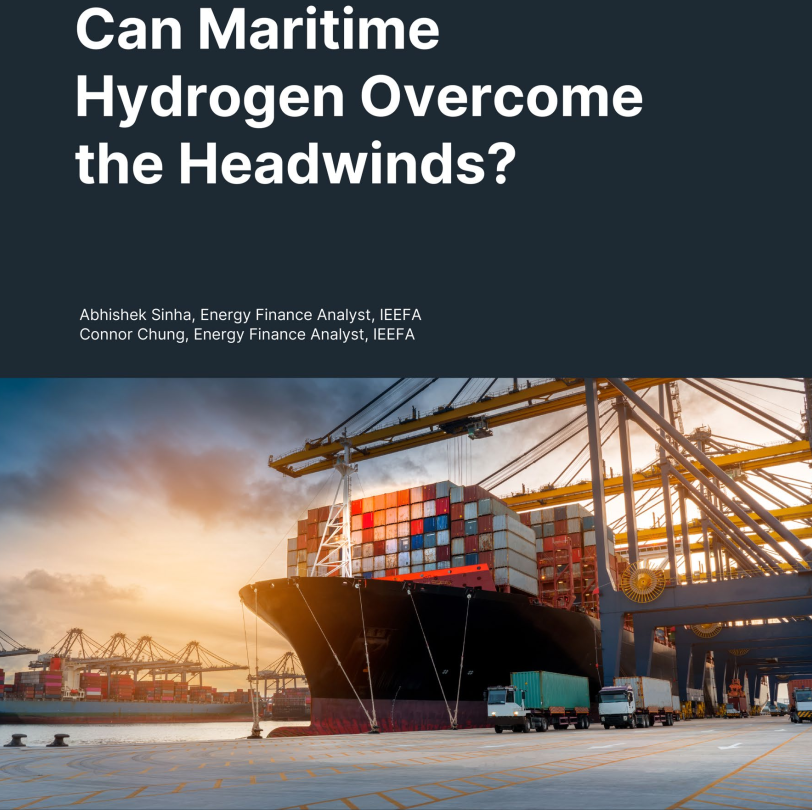
  • Can Maritime Hydrogen Overcome the Headwinds?

    When the Institute for Energy Econonomics and Financial Analysis writes a report about maritime hydrogen it is worth a read-through. Even tough they are somewhat underestimating hydrogen itself as fuel. Here is a summary. Find the full report here.

    The shipping industry is at a crossroads. It is responsible for over 700 million metric tons of CO₂ emissions every year, making it one of the world’s biggest polluters. With the International Maritime Organization (IMO) targeting net-zero emissions by 2050, the pressure is on to find cleaner alternatives to fossil fuels.

    Hydrogen-based fuels—hydrogen, ammonia, and methanol—are often discussed as solutions. But are they really viable? A recent report from IEEFA highlights the potential, challenges, and risks of these fuels. The key takeaway? Hydrogen won’t save shipping overnight.

    Hydrogen: Clean, But Costly and Complex

    Hydrogen offers a zero-carbon combustion process. In theory, it could power ships without emitting CO₂. But in practice, it faces major barriers.

    • Storage challenges: Hydrogen has low energy density, meaning ships need large storage tanks or frequent refueling.
    • Infrastructure gaps: Ports lack the bunkering and supply chains to support large-scale hydrogen use.
    • High costs: Green hydrogen costs between $4.50–$12/kg, while fossil-based hydrogen is much cheaper at $0.98–$2.93/kg.
    • Safety risks: Hydrogen is highly flammable and requires extreme pressure or cryogenic storage.

    For now, hydrogen is only viable for short-sea shipping or as a hybrid solution for auxiliary power.

    Ammonia: A Promising But Risky Alternative

    Ammonia is emerging as a potential maritime fuel, offering better storage and transport capabilities than hydrogen. However, it comes with serious downsides:

    • Highly toxic: Ammonia spills could be dangerous for marine life and crews.
    • Pollution risks: Without proper emission controls, ammonia combustion releases NOx and nitrous oxide (N₂O), a potent greenhouse gas.
    • Lower energy density: Ships using ammonia would need larger storage tanks or frequent refueling stops.

    Despite these challenges, engine prototypes for ammonia-powered ships are in development, and some companies are exploring its potential.

    Methanol: The Front-Runner for Now

    Methanol is currently the most practical option for green shipping. It is:

    Easier to store and transport than hydrogen or ammonia.
    Compatible with existing port infrastructure—120+ ports already handle methanol.
    Gaining traction—more than 200 new methanol-powered ships are on order.

    The downside? Feedstock constraints. Green methanol relies on renewable hydrogen and captured CO₂, which are not yet widely available.

    The Infrastructure & Cost Problem

    None of these fuels can succeed without major investments in infrastructure. Hydrogen and ammonia require new bunkering systems, specialized storage, and refueling networks. Even methanol, the most developed, needs expanded supply chains to meet demand.

    Additionally, green hydrogen is too expensive to compete with fossil fuels. Until costs drop, adoption will be slow. Government incentives and private investment are crucial to making these fuels viable.

    Regulations & Corporate Action

    • IMO Targets: The IMO aims for 30% CO₂ cuts by 2030, 80% by 2040, and net-zero by 2050. However, these are not yet legally binding.
    • EU Policies: The FuelEU Maritime Regulation enforces 80% lower greenhouse gas intensity by 2050.
    • Industry Commitment: Companies like Maersk, Amazon, and Unilever have pledged to use only zero-carbon ocean freight by 2040.

    Conclusion: A Long Road Ahead

    Hydrogen-based fuels are not a silver bullet. Methanol leads today, ammonia follows, and hydrogen lags behind. Cost, infrastructure, and safety challenges must be overcome before widespread adoption.

    The shipping industry must act now to avoid a dirty hydrogen lock-in—where fossil-based hydrogen becomes the norm. The future of green shipping will depend on policy, investment, and innovation.

    What do you think? Will hydrogen become the fuel of the future, or will other technologies take the lead? Let me know in the comments. 🚢💨

  • Gotlandsbolaget’s Hydrogen-Ready High-Speed Ferry

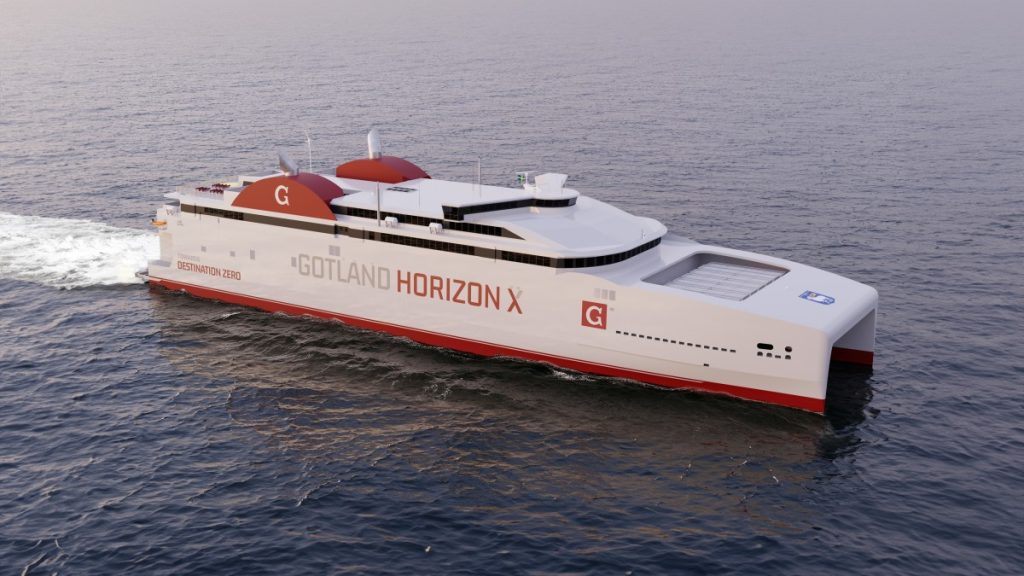
    I have to admit the hydrogen system of this vessel is not very clear yet. What means hydrogen ready? However we can see hydrogen storage containers at the bow open deck area. Therefore very good to see these kind of vessels being introduced with hydrogen as fuel.

    Austal Australasia

    Austal Australasia has secured a contract valued between A$265 and A$275 million to design and construct a 130-meter, hydrogen-ready high-speed ferry for Sweden’s Gotlandsbolaget. This vessel, part of the ‘Horizon X’ program, will be the largest ever built by Austal. It will feature a unique combined cycle propulsion system that includes both gas and steam turbines—a first for high-speed craft worldwide. The ferry will have the capacity to transport up to 1,500 passengers, 400 vehicles, and cargo. Construction is scheduled to begin in the first half of 2026 at Austal’s Philippines shipyard, utilizing ‘green aluminium’ produced through energy-efficient processes to reduce emissions. Completion is expected by mid-2028.

    Source: Austal

    Combined cycle propulsion system

    The combined cycle propulsion system enhances efficiency by repurposing engine exhaust to power steam turbines, reducing overall fuel consumption and emissions. This design allows for flexibility in fuel types, including hydrogen, aligning with global decarbonization efforts in maritime transport. The vessel’s hydrogen-ready configuration means it can transition to zero-emission operations as hydrogen fuel becomes more accessible. In October 2024, the project received approval in principle from the international classification society DNV, confirming compliance with regulations for gas-fueled ship installations and the International Code of Safety for Ships Using Gases or Other Low Flashpoint Fuels.

    Collaboration

    Austal and Gotland Tech Development have collaborated with global technology providers to refine the vessel’s propulsion system. This partnership has focused on selecting preferred equipment and defining system arrangements that repurpose engine exhaust to contribute to vessel propulsion, thereby reducing emissions. The use of ‘green aluminium’ in construction further underscores the project’s commitment to sustainability, as this material is produced using energy-efficient processes that result in lower carbon emissions.

    This project represents a significant advancement in sustainable maritime transport, combining innovative propulsion technology with environmentally friendly materials to set new standards in eco-friendly ferry design.

  • Five new hydrogen vessels receive Dutch subsidy

    On Thursday 06 February five new hydrogen vessels were granted a subsidy by the Dutch government under Maritime Masterplan program. Two methanol and two carbon capture projects received subsidy too. This first call included a total budget of €85 million of which €40 was allocated to hydrogen vessels. For those who missed out, a next call is planned for next year. Among this years winners are the following projects.

    H2ESTIA: A Zero-Emission Coaster

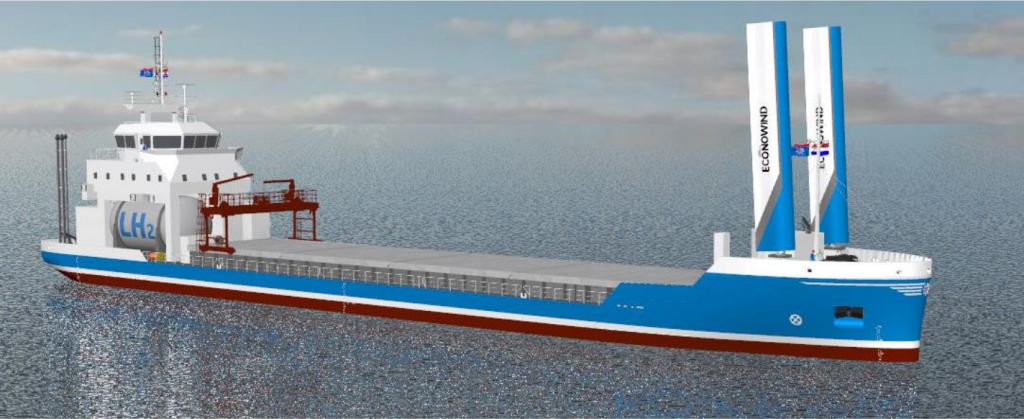
    H2ESTIA is a 5,000 DWT hydrogen-powered coaster, developed by a consortium led by NIM. It features a 1.5 MW LT-PEM fuel cell, a 1 MW battery, and electric propulsion. The ship carries 200m³ of liquid hydrogen (11 tons) and boasts a 1,700 NM range, assisted by e-sails and a waste heat recovery system. This project is a major step toward sustainable coastal shipping.

    Source: Maritiem Masterplan

    Hydrogen-Powered River Cruiser

    A hydrogen-powered river cruise vessel is under development for operations on the Rhine and Danube. It measures 110m x 11m and reaches speeds of up to 22 km/h. This project introduces hydrogen as a clean energy source for the river cruise industry, reducing emissions on inland waterways.

    Hybrid H2 ICE-FC Dredging Vessel

    The Gaasterland, a deep-suction dredger motor barge, is being upgraded with a hybrid hydrogen internal combustion engine (ICE) and fuel cell system. This retrofit aims to reduce emissions while maintaining operational efficiency. The project involves Mineralis B.V., NPS Driven B.V., TNO, and other industry leaders.

    Columbus Zero One: Hydrogen-Powered Inland Transport

    Columbus Zero One is a small, zero-emission hydrogen-powered barge designed for transporting construction materials between the IJsselmeer and Randstad. The ship operates on compressed hydrogen (350 bar), setting a benchmark for sustainable inland shipping.

    Hydro Navis: Liquid Hydrogen Transport

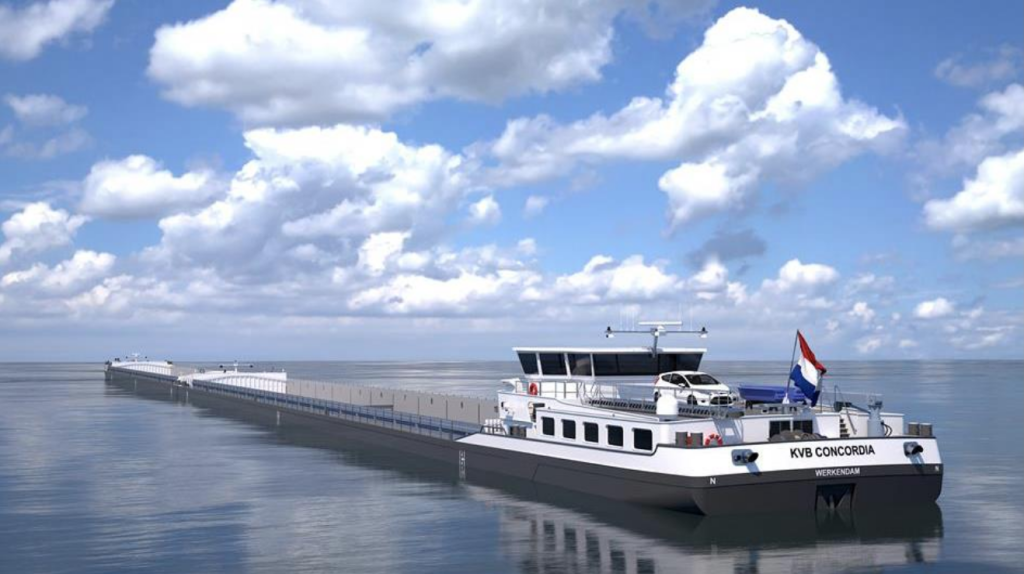
    Hydro Navis is a new zero-emission vessel designed for steel plate transport in wind farm construction. It features a cryogenic liquid hydrogen tank, ensuring efficient and clean operations. The project is supported by NPRC, Hydro-Nova, Marin, NIM, and Concordia Damen Shipyard.

    Source: Maritiem Masterplan

    MOBY NL: Methanol-Powered Bunkering Ship

    MOBY NL is a newly built bunkering vessel operating in the Amsterdam-Rotterdam-Antwerp (ARA) region. The 135m x 11.45m methanol tanker exceeds 6,000 GT and features a dual-fuel methanol propulsion system. The project is backed by Victrol, Shipping Technology, NIM, and other key partners.

    Methanorms: Geophysical Survey Vessel

    Methanorms is a DP-1 geophysical survey vessel designed for efficient execution and real-time monitoring. Its success lies in prior research, scalability, and regulatory compliance. It serves as a model for future survey vessels operating with lower environmental impact.

    BLUE HORIZON: Carbon Capture for LNG Tankers

    Coral Energy, an LNG tanker (115m x 22m, 13,501 GT), is being equipped with a carbon capture system to reduce CO₂ emissions. This project demonstrates how carbon capture can enhance the sustainability of LNG-powered vessels.

    ME2CC: Compact Carbon Capture for LNG Ships

    The Maritime Efficient & Easy Carbon Capture (ME2CC) project is focused on developing compact carbon capture systems for LNG-powered vessels. The first implementation will be on MV Kvitbjorn, a Samskip-operated ship. This technology could bridge the gap toward zero-emission shipping.

    A Step Toward a Cleaner Future

    These projects highlight the rapid advancements in hydrogen and alternative fuel shipping. It is good to see these projects receive capex support. This is the way to develop green hydrogen shipping. After Norway leading the way it is good to see the Dutch following and we can only hope for more.

  • Plug Power Introduces Industry-First Spot Pricing for Green Hydrogen

    In shipping port it is perfectly doable to order a quantity of fossil fuel oil for delivery the next day. Not so for hydrogen: first sign a decade long off-take agreement, then receive your hydrogen at predefined intervals and quantities. And pay if you do not take it. This needs to change to be suitable for a dynamic industry like shipping. Therefore Plug Power’s new initiative is worth the attention, even though not applicable to shipping (yet).

    The hydrogen sector just took a significant step forward with Plug Power’s announcement of the industry’s first spot pricing for green hydrogen. This move aims to bring a new level of transparency and flexibility to the market, addressing the demand for more dynamic and accessible hydrogen pricing.

    What Is Spot Pricing?

    Spot pricing allows buyers to purchase green hydrogen at current market rates instead of relying solely on long-term contracts. This model mirrors traditional commodity markets, such as natural gas and electricity, where prices fluctuate based on supply and demand. For industries transitioning to hydrogen, this innovation provides an opportunity to optimize costs and procurement strategies.

    Why This Matters

    For years, green hydrogen has faced challenges related to high production costs and market uncertainty. By introducing spot pricing, Plug Power is making hydrogen procurement more accessible and predictable. This shift is expected to encourage wider adoption, particularly for industries that require flexible purchasing options, such as transport, logistics, and manufacturing.

    From a broader perspective, spot pricing could also help stabilize hydrogen markets by allowing more buyers to enter without the long-term financial commitment typically associated with fixed-price contracts. This could accelerate the hydrogen economy’s growth, ensuring a more competitive landscape for renewable energy.

    Potential Impacts on the Hydrogen Market

    1. Increased Market Liquidity – By offering spot prices, Plug Power could attract new buyers who were previously hesitant to commit to long-term contracts.
    2. Price Discovery and Transparency – A more open pricing model enables businesses to better assess the true cost of hydrogen, potentially driving down prices as competition increases.
    3. Encouragement for Production Growth – If demand increases due to more flexible pricing, hydrogen producers may be incentivized to expand their capacity, leading to greater availability and lower costs over time.
    4. Facilitating the Energy Transition – Many industries looking to decarbonize will benefit from easier access to green hydrogen, making it a more viable alternative to fossil fuels.

    Challenges and Considerations

    Despite the potential benefits, the transition to a spot pricing model does come with risks. Hydrogen production and delivery still depend on infrastructure that is in its early stages of development. Market fluctuations may also introduce volatility, which some buyers might see as a disadvantage compared to fixed contracts.

    Additionally, for spot pricing to succeed, there must be sufficient supply and a competitive market environment. If hydrogen production remains constrained, spot pricing could lead to price spikes rather than stability.

    Final Thoughts

    Plug Power’s introduction of spot pricing for green hydrogen is a bold step toward creating a more flexible and transparent hydrogen economy. While challenges remain, this model has the potential to unlock new opportunities for buyers and producers alike. If successful, it could pave the way for broader hydrogen adoption and a more competitive clean energy landscape. And it is definitely something we wish we can have in shipping too.