HydrogenShipbuilding.com

click to database

Category: Technology

  • Vinssen Earns RINA Type Approval for Marine Fuel Cell

    After Hanwha last week, there is news from South Korean companies reaching an important milestone for their fuel cell technology. We need these developments to increase uptake of hydrogen in shipping.

    Vinssen reaches milestone

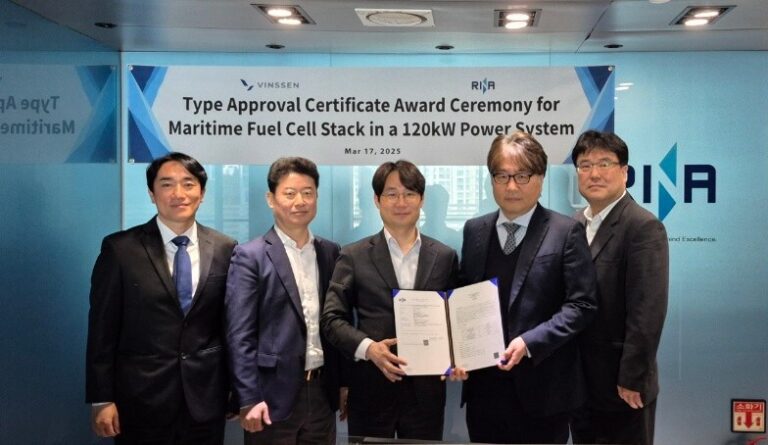
    South Korea’s Vinssen just reached a big milestone. Their 60 kW hydrogen fuel cell system received type approval from classification society RINA. This brings the company one step closer to the commercialization of their 120 kW maritime fuel cell.

    Compact, Clean, and Certified

    The system runs on proton exchange membrane (PEM) fuel cell technology. Vinssen developed it with Bumhan Fuel Cell. It’s compact, modular, and built for marine use.
    Source: Vinssen

    RINA’s approval confirms the system meets safety and performance standards. That opens the door for use in small commercial vessels, ferries, and harbor craft.

    Proven Tech from a Hydrogen Pioneer

    Vinssen already made headlines with Hydrogenia, South Korea’s first hydrogen-electric vessel. Now, with this certification, the company can scale up its clean energy push.

    The RINA stamp also gives shipowners more confidence. It shows that hydrogen tech from Asia is gaining serious ground in a global market.

    Specs at a Glance

    • Fuel Cell Type: PEM
    • Rated Output: 60 kW
    • Fuel: Compressed hydrogen
    • Cooling: Liquid-cooled
    • Setup: Modular, scalable
    • Target Use: Small vessels, ferries, harbor craft
    • Approval: RINA, March 2025

    Why This Matters

    Modular fuel cells like this are key to maritime decarbonization. They’re clean, quiet, and easy to install in smaller hulls. As regulations tighten, certified systems will drive adoption.

    Vinssen’s 60 kW unit might be small. But it’s a smart step toward a bigger, cleaner future on the water.
  • Hydrogen as Marine Fuel: Progress and Challenges

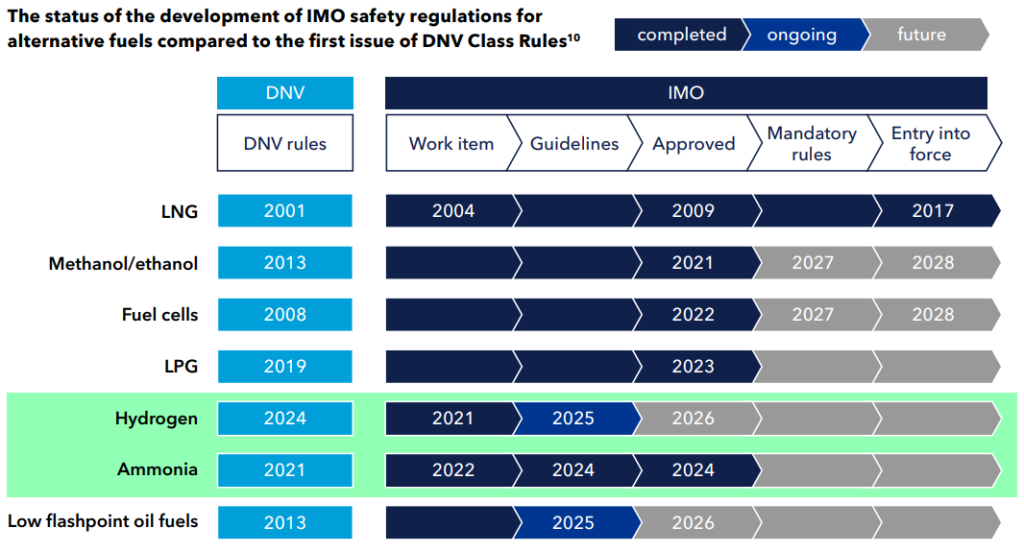
    One challenge of working on hydrogen as marine fuel is that while the technology is ready and successfully applied on board, while regulations are not there yet. The new DNV white paper outlines these issues and provides a roadmap for approval and implementation. The report is recommended reading. Here is a summary.

    Current Status of Hydrogen as Ship Fuel

    • Hydrogen is already used in many industries, but its maritime application is still developing.
    • The first hydrogen-powered vessels, such as the MF Hydra ferry and Project 821, have entered service.
    • Most hydrogen ships today are small or experimental. Larger deep-sea vessels face storage and safety hurdles.

    Safety Challenges

    • Hydrogen is highly flammable, prone to leakage, and has a wide explosive range.
    • Cryogenic storage (-253°C) requires advanced insulation to prevent boil-off and structural embrittlement.
    • High-pressure hydrogen tanks pose additional risks, including spontaneous ignition during leaks.

    Regulatory Landscape

    No detailed IMO regulations currently exist for hydrogen-fueled ships.

    The IGF Code only includes prescriptive rules for natural gas.

    The IMO aims to develop hydrogen-specific regulations by 2028.

    Until then, hydrogen-fueled ships require approval through the Alternative Design Approval (ADA) process.

    Source: DNV

    Timeline for Hydrogen Fuel Adoption

    1. 2021 – IMO starts developing hydrogen safety guidelines.
    2. 2023 – First commercial hydrogen ferry (MF Hydra) enters service.
    3. 2024 – DNV publishes hydrogen ship classification rules.
    4. 2025 – Further regulatory advancements expected.
    5. 2028 – Earliest possible adoption of mandatory IMO hydrogen fuel regulations.

    Ship Design Considerations

    • Hydrogen requires more space than conventional fuels, impacting ship layout.
    • Safe integration includes double-walled pipes, specialized ventilation, and explosion-proof compartments.
    • Fuel cells are preferred for efficiency and safety, but hydrogen combustion engines are under development.

    Future Outlook

    • The transition to hydrogen-fueled ships depends on regulatory support and technological advancements.
    • Collaboration among shipowners, designers, regulators, and fuel suppliers is essential.
    • The industry must develop bunkering infrastructure and crew training to ensure safe operations.

    Key Diagram

    The development spiral shows the path from introducing hydrogen as a new marine fuel to widespread adoption. This requires iterative improvements in technology, regulation, and ship design.

    These advancements position hydrogen as a key player in the future of sustainable shipping. The transition is complex, but with innovation and regulatory backing, hydrogen can lead the industry toward zero emissions.

  • Hanwha Aerospace Gains DNV Approval for Marine Fuel Cells

    It is very obvious that more class approved fuel cells are needed to develop hydrogen-powered ships. Currently the number of available maritime fuel cells is very limited. Therefore this milestone by Hanwha Aerospace is a step in the right direction. This follows on news of another type approval earlier this year.

    Certification

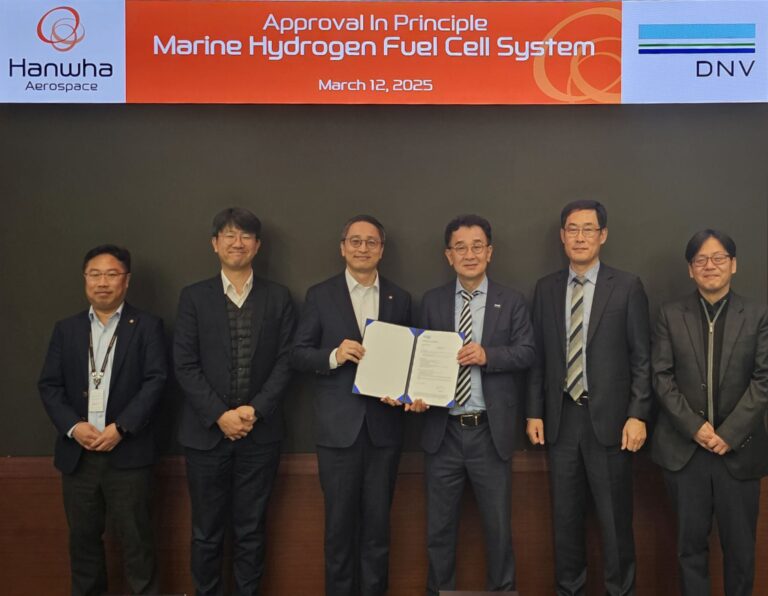
    Hanwha Aerospace has achieved a significant milestone. The company received Approval in Principle (AIP) from DNV for its 200 kW hydrogen fuel cell system designed for maritime use.

    This certification confirms the system’s safety and compliance with international regulations during the basic design phase. It builds upon a previous approval from the Korean Register of Shipping (KR).

    Source; Hanwha Aerospace via Linkedin

    Dong-jo Oh, Executive Director of Hanwha Aerospace, stated that this certification validates their hydrogen fuel cell technology at the highest global standards for safety and performance. He emphasized the company’s commitment to collaborating with Hanwha Ocean to target the global zero-carbon vessel market and help the maritime industry reduce carbon emissions.

    Full scale marketing

    With this approval, Hanwha Aerospace is set to begin full-scale marketing and sales of its maritime hydrogen fuel cells. The company also aims to secure type approval for its polymer electrolyte membrane fuel cell (PEMFC) technology, enhancing its competitiveness in the zero-carbon propulsion systems market. Plans are underway to further develop and commercialize this solution for various marine vessels, from commercial ships to specialized maritime applications.

    Ammonia

    In June 2024, Hanwha Aerospace, Hanwha Ocean, KR, and ammonia power solutions company Amogy signed a memorandum of understanding (MoU). This agreement focuses on technical collaboration and certification for applying ammonia reformers and ammonia fuel cell systems to ships. Previously, Hanwha Ocean agreed to purchase Amogy’s ammonia-to-electrical power system, which includes Hanwha Aerospace’s hydrogen fuel cell system.

    These developments position Hanwha Aerospace at the forefront of eco-friendly marine solutions. The company’s efforts contribute significantly to the maritime industry’s goal of achieving zero-carbon emissions.

  • EODEV Achieves Industry Milestone with Type Approval for REXH2 Fuel Cell System

    In order to develop hydrogen powered ships we need more development in the different building blocks like the fuel cells. Earlier this month I reported about the Ricardo fuel cell system achieving almost 400 kW output. Now it is great to see that EODEV has obtained Type Approval for its REXH2 fuel cell system. This development fits nicely with EO’s container ship project. The platform is based on the Toyota fuel cell technology. Personally, I have concerns about using automotive technology in shipping, however EODEV surely has taken this into consideration.

    A Major Step for Maritime Hydrogen Adoption

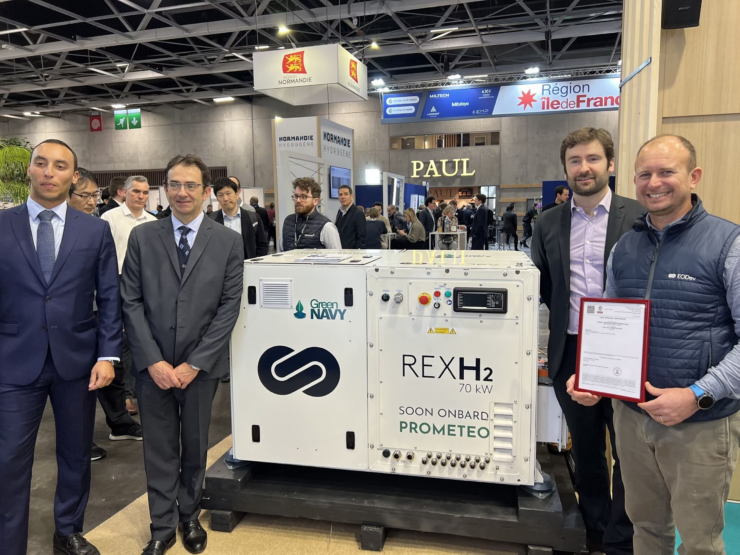
    The REXH2 fuel cell system, developed by Energy Observer Developments (EODEV), has now achieved Type Approval from Bureau Veritas, a leading classification society. This certification validates the system’s compliance with international safety and performance standards, making it easier for shipbuilders and operators to integrate hydrogen propulsion into new and existing vessels.

    Source: eo-dev.com

    Type Approval is a critical process that ensures maritime systems meet stringent regulations before deployment. This milestone means that the REXH2 is recognized as a safe and reliable solution for zero-emission marine power, significantly reducing regulatory hurdles for adoption in commercial shipping, passenger ferries, and even superyachts.

    The REXH2: A Proven Solution for Clean Marine Power

    The REXH2 is a modular hydrogen fuel cell system designed for maritime applications, offering a scalable and efficient alternative to diesel generators. It has been rigorously tested in real-world conditions aboard the Energy Observer, a pioneering hydrogen-powered vessel that has demonstrated the viability of fuel cell propulsion on long-distance journeys.

    Key features of the REXH2 include:

    • Modularity – The system can be configured to meet various power demands, making it suitable for different vessel types.
    • Zero Emissions – Producing only water and heat as byproducts, the REXH2 aligns with global decarbonization goals.
    • Compliance with IMO Regulations – The certification supports the International Maritime Organization’s (IMO) strategy to reduce greenhouse gas (GHG) emissions in shipping.

    Implications for the Hydrogen-Powered Shipping Industry

    The certification of the REXH2 represents a major leap forward for hydrogen-powered vessels. Until now, the maritime industry has faced significant challenges in adopting hydrogen fuel cells due to regulatory uncertainties and a lack of standardized certification frameworks. With this approval, shipowners and naval architects can integrate hydrogen propulsion with greater confidence, accelerating the transition to clean energy.

    This achievement also reinforces EODEV’s position as a leader in maritime hydrogen technology. By securing Type Approval, the company has set a benchmark for other hydrogen fuel cell manufacturers, fostering innovation and investment in the sector.

    Future Prospects

    For naval architects, shipbuilders, and operators exploring zero-emission solutions, the REXH2 is now a certified and viable option. With increasing pressure to meet sustainability targets, this certification is a game-changer for the future of maritime hydrogen propulsion.