HydrogenShipbuilding.com

click to database

Category: Offshore

  • Germany’s Coriolis: World’s First Research Vessel with Metal Hydride Hydrogen Storage Now Operational


    Germany’s Coriolis: World’s First Research Vessel with Metal Hydride Hydrogen Storage Now Operational

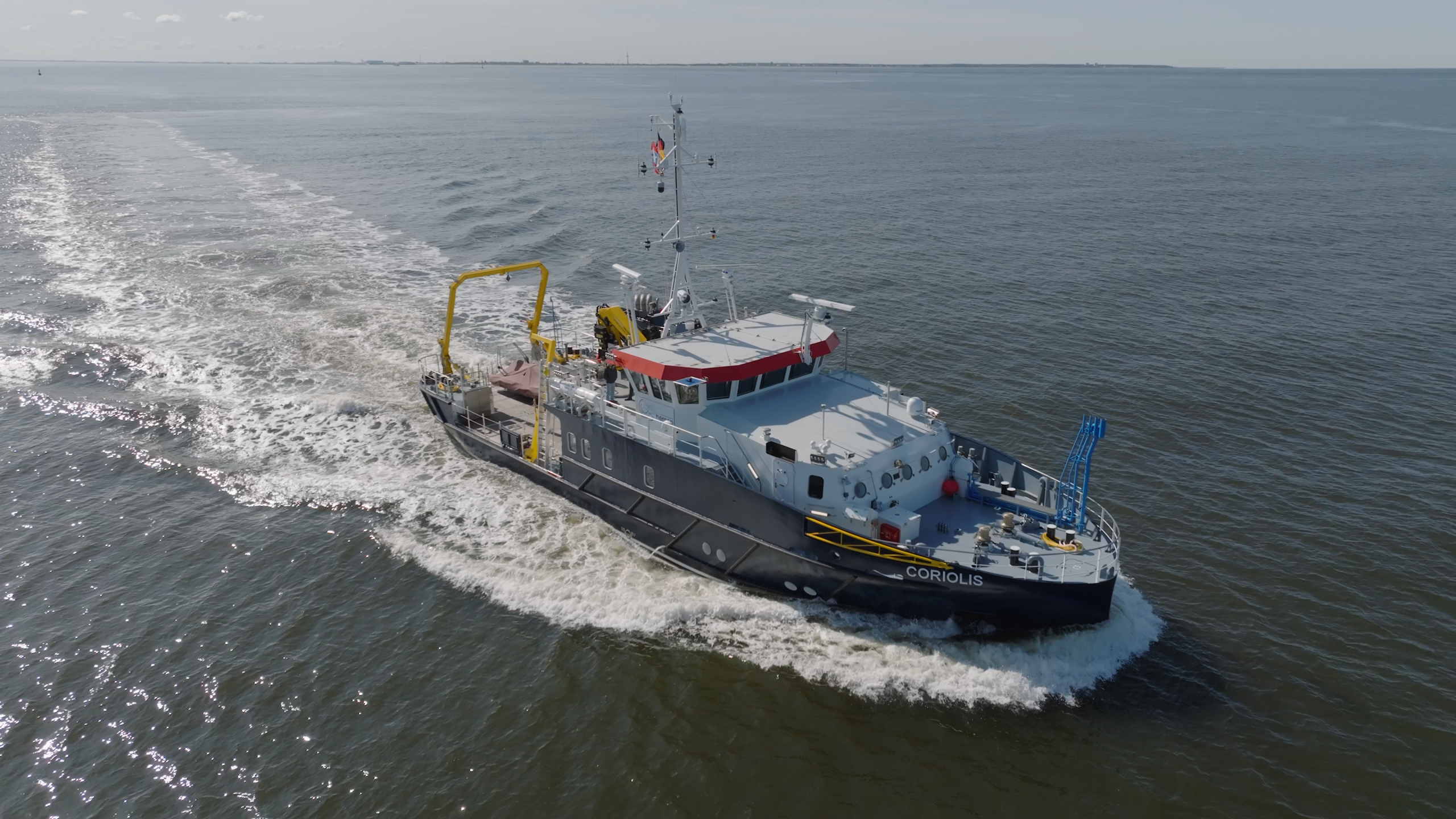
    The research vessel Coriolis at its christening ceremony at Hitzler Werft shipyard in Lauenburg, Germany, November 18, 2024
    The research vessel Coriolis at its christening ceremony at Hitzler Werft shipyard in Lauenburg, Germany, November 18, 2024. The 29.9-meter vessel features the world’s first commercial application of metal hydride hydrogen storage. Photo: Hereon/Marcel Schwickerath

    As a naval architect, I find the Coriolis project particularly exciting—not just because it’s another hydrogen vessel joining the fleet, but because it’s a floating laboratory specifically designed to advance the very technologies it uses. The fact that Hereon chose to develop and test their own metal hydride storage system on this vessel, rather than relying on conventional compressed or liquid hydrogen solutions, demonstrates the kind of bold experimentation the industry needs right now.

    Germany’s Helmholtz-Zentrum Hereon has officially taken delivery of the research vessel Coriolis, marking a significant milestone in both marine hydrogen technology and coastal research. Christened on November 18, 2024, at the Hitzler Werft shipyard in Lauenburg, the 29.9-meter vessel represents a globally unique approach to maritime hydrogen propulsion—using metal hydride storage technology developed in-house by Hereon’s Institute of Hydrogen Technology.

    The €18 million vessel, funded primarily by the German Federal Government, was delivered in January 2025 and is now operational for research missions in the North Sea, Baltic Sea, and shallow coastal waters.

    What sets Coriolis apart is its dual purpose: it’s simultaneously a coastal research platform and an innovation testbed for hydrogen maritime technologies, specifically designed to validate the metal hydride storage system developed by Hereon. Named after French scientist Gaspard Gustave de Coriolis (1792-1843), the vessel entered service in early 2025.

    Vessel Specifications

    Key Technical Data:

    • Length Overall: 29.9 meters (98.1 feet)
    • Beam: 8.0 meters (26 feet)
    • Draught: 1.6 meters (5.2 feet)—shallow enough for Wadden Sea operations
    • Maximum Speed: 12 knots
    • Range: 100 nautical miles
    • Crew: 2 (+1 optional)
    • Scientists: Up to 12
    • Operating Days/Year: 225
    • Laboratory Space: 47 m²
    • Working Deck: 70 m² with stern A-frame
    • Total Engine Power: 750 kW

    Innovative Propulsion System

    The Coriolis employs a hybrid diesel-electric, battery-electric, and hydrogen-electric propulsion concept. Electric traction motors drive the vessel’s two propellers and can draw power from three different sources:

    1. 100 kW Hydrogen Fuel Cell: Supplied by hydrogen from the metal hydride storage system
    2. Battery Bank: For short-term, high-power demands
    3. 45 kW Diesel Generator: Backup power for extended missions

    Hydrogen Operation Duration: Approximately 5 hours on a single tank charge in pure hydrogen mode.

    The Metal Hydride Storage Breakthrough

    What Makes Metal Hydride Storage Different?

    The Coriolis is the first commercial research vessel to use metal hydride (MH) hydrogen storage instead of conventional compressed (350-700 bar) or liquid hydrogen (-253°C) systems. This technology, previously used in German U212 and U214 class submarines, offers several distinct advantages for maritime applications:

    Storage Capacity:

    • Metal Hydride Tank System: 5 tonnes total weight
    • Hydrogen Capacity: 30 kg of hydrogen
    • Volumetric Density: >50 g H₂/liter at system level
    • Operating Pressure: <60 bar (vs. 350-700 bar for compressed hydrogen)
    • Operating Temperature: -30°C to +50°C (vs. -253°C for liquid hydrogen)

    Safety Advantages:

    • Chemical bonding prevents sudden release of hydrogen in case of valve failure or pressure vessel rupture
    • Only 5-10% residual hydrogen could be released abruptly due to porosity
    • Much safer than high-pressure or cryogenic storage in marine environments

    Design Flexibility:

    • Metal hydride tanks can be shaped to fit ship structure
    • Can replace ballast water, improving space utilization and stability
    • Modular cascade system allows for redundancy and scalability

    The Challenge

    Metal hydride formation generates heat that must be managed through cooling systems. The vessel uses waste heat recovery to improve overall energy efficiency of the hydrogen system.

    Key Partners and Technology Providers

    • Owner/Operator: Helmholtz-Zentrum Hereon, Institute of Surface Science
    • Shipyard: Hitzler Werft, Lauenburg, Germany (construction: January 2023 – January 2025)
    • Design Office: TECHNOLOG Services GmbH, Hamburg
    • Metal Hydride System: Developed in-house by Hereon’s Institute of Hydrogen Technology
    • Fuel Cell: 100 kW PEM fuel cell
    • Total Project Cost: €18 million (German Federal Government funding)

    The vessel was christened on November 18, 2024, by Karin Prien, Schleswig-Holstein’s Minister of Science, before approximately 400 guests from politics, science, and industry.

    Industry Context: Research Vessels Leading Hydrogen Adoption

    Research vessels are proving to be ideal platforms for hydrogen technology development:

    Similar Hydrogen Research Vessels:

    • Energy Observer (France): Liquid hydrogen-powered catamaran
    • Hydra (Norway): Liquid hydrogen ferry with LOHC testing capability
    • H₂ Barge 1 (Netherlands): Inland hydrogen bunker and supply vessel

    The research vessel segment benefits from:

    • Controlled operational profiles with known routes and durations
    • On-board scientific teams capable of monitoring and optimizing systems
    • Strong government funding for technology demonstration
    • Lower commercial pressure allowing for innovation testing

    The Coriolis takes this concept further by making hydrogen technology itself a primary research subject, not just a propulsion solution.

    Connection to H2Mare Flagship Project

    The Coriolis directly supports Germany’s H2Mare hydrogen flagship project, one of three major initiatives funded by the German Federal Ministry of Education and Research (BMBF) with up to €740 million total allocation. H2Mare focuses on producing green hydrogen and derivative products using offshore wind power.

    Hereon contributes to H2Mare through four of its institutes, advancing:

    • Offshore hydrogen production technologies
    • Hydrogen storage and transport solutions
    • Membrane-based gas separation and purification
    • System integration for maritime applications

    Operational Challenges and Considerations

    While the Coriolis represents technological advancement, several practical challenges remain:

    Hydrogen Infrastructure:

    ⚠️ BOTTLENECK: Germany currently has limited hydrogen bunkering infrastructure for vessels. The Coriolis will need to coordinate with specialized facilities or use mobile refueling solutions.

    Operational Range:

    • 5 hours of pure hydrogen operation limits extended offshore missions
    • 100 nautical mile total range requires careful mission planning
    • Diesel backup essential for current operations until hydrogen supply chain matures

    Refueling Logistics:

    • Metal hydride refueling requires cooling capacity during hydrogen loading
    • Refueling time longer than conventional fueling but safer than liquid hydrogen
    • Specialized training needed for crew and port personnel

    Technology Validation Period:

    As this is the world’s first commercial application of metal hydride storage in a research vessel, 2025 will be a critical year for validating:

    • System reliability in varied sea conditions
    • Practical refueling procedures
    • Heat management during extended operations
    • Overall operational economics

    Why Metal Hydrides Matter for Maritime Hydrogen

    The Coriolis demonstrates a storage solution that could be particularly attractive for smaller vessels and harbor craft:

    Advantages for Maritime Applications:

    • Safety: Lower pressure and ambient temperature reduce explosion risk
    • Structural Integration: Flexible tank shapes can optimize ship design
    • Stability: Dense storage low in hull improves metacentric height
    • Ballast Replacement: Hydrogen storage serves dual purpose
    • No Boil-Off: Unlike liquid hydrogen, no fuel is lost during storage

    Current Limitations:

    • Weight Penalty: 5 tonnes of tank system for only 30 kg hydrogen (167:1 ratio)
    • Energy Density: Still lower than diesel on a total system basis
    • Cooling Requirements: Heat management adds complexity
    • Cost: Specialized metal alloys and tank fabrication increase expenses
    • Refueling Speed: Slower than compressed hydrogen due to thermal constraints

    However, for vessels with predictable routes, shore-based power access, and weight tolerance, metal hydrides offer compelling safety and design advantages that could make them the preferred solution for certain applications.

    Looking Ahead: Metal Hydride Hydrogen as a Maritime Solution

    As the Coriolis begins operations in 2025, the maritime hydrogen industry will be watching closely. Key questions to be answered:

    1. Can metal hydride storage achieve the reliability needed for commercial maritime service?
    2. Will the safety and design advantages offset the weight penalty and refueling complexity?
    3. Can the technology scale up for larger vessels or be optimized for specific niches like harbor tugs, ferries, and coastal workboats?
    4. What refueling infrastructure investments will be required to support metal hydride vessels?

    Real-time operational data from Coriolis—available via the public dashboard—will provide invaluable insights for the broader maritime hydrogen transition. Every operational hour, every refueling cycle, every equipment performance metric becomes a data point that advances our collective understanding of metal hydride storage at sea. This is exactly the kind of real-world validation the hydrogen shipping sector needs to move from concept to commercial deployment.

    Conclusion: A Critical Test Platform for Maritime Hydrogen

    The €18 million investment in the Coriolis represents more than just a new research vessel for Germany—it’s a commitment to developing practical, safe hydrogen technologies specifically optimized for maritime environments. By making the vessel itself an experimental platform for metal hydride storage, Hereon has created a powerful feedback loop between hydrogen research and real-world maritime application.

    As Prof. Regine Willumeit-Römer, Scientific Director at Hereon, stated during the christening: “CORIOLIS will become our brand ambassador by researching complex systems… It is not only fundamental for coastal research, but also a tool for our entire center, because hydrogen and membrane technology are also used on board.”

    The vessel is expected to operate approximately 225 days per year, ensuring extensive operational data collection for metal hydride hydrogen storage validation. With Germany’s ambitious hydrogen strategy and the expansion of offshore wind capacity in the North and Baltic Seas, the Coriolis arrives at exactly the right moment to help demonstrate whether metal hydride storage can be a practical solution for the maritime sector’s transition to zero-emission operations.


    Sources

    • Baird Maritime: “VESSEL REVIEW | Coriolis – Hybrid hydrogen-powered research vessel delivered to German science institute” (January 21, 2026)
    • Helmholtz-Zentrum Hereon official website: Research Vessel Coriolis project pages
    • Innovations Report: “Hereon Unveils New Ship CORIOLIS in Grand Naming Ceremony” (November 20, 2024)
    • Power-to-X.de: “Research vessel Coriolis to embark on missions in 2025” (December 16, 2024)
    • NOW GmbH: “Onboard power for the CORIOLIS” (January 25, 2024)
    • German Federal Ministry of Education and Research (BMBF) H2Mare project information

  • New EMSA Study: Why Hydrogen Ships Can’t Use LNG Safety Playbook

    New EMSA Study: Why Hydrogen Ships Can’t Use LNG Safety Playbook | HydrogenShipbuilding.com

    Finally, we have the comprehensive safety data we’ve been waiting for. EMSA’s H-SAFE study, published November 2025, delivers what the hydrogen shipping industry desperately needed: hard numbers showing exactly where our assumptions about adapting LNG systems fall short. As someone who’s reviewed countless “hydrogen-ready” designs that were really just LNG systems with blue paint, this report is a reality check. The message is clear—secondary enclosures around ALL leak sources aren’t a nice-to-have feature, they’re non-negotiable. And that includes piping on open deck.

    The European Maritime Safety Agency (EMSA) just released the final report from DNV’s multi-year H-SAFE study investigating hydrogen fuel system safety. This isn’t another theoretical exercise—it’s quantitative risk analysis, HAZID workshops, and bowtie modeling across both compressed (CH₂) and liquefied (LH₂) systems. The findings fundamentally challenge the industry’s default assumption that hydrogen can be handled like LNG with minor modifications.

    The Numbers That Matter

    Here’s what jumps out from the technical analysis:

    Ignition Energy: Hydrogen’s minimum ignition energy is 0.017 mJ compared to 0.28 mJ for methane. That’s 16 times easier to ignite. Your certified electrical equipment? The study explicitly states you must assume ignition will occur anyway.

    Flammability Range: 4-75% for hydrogen versus 5-15% for natural gas. This isn’t a minor difference—it’s a 5x wider explosive window that makes inerting strategies far more complex.

    Burning Velocity: 3.46 m/s for hydrogen versus 0.45 m/s for methane. Translation: explosions are more severe and can transition to detonation more readily.

    Detection Response Time: The study found that conventional point gas detectors respond too slowly. At leak rates as low as 0.1 kg/s, ignitable clouds form within seconds—long before your detection system triggers emergency shutdown.

    The Secondary Enclosure Mandate

    The EMSA Guidance takes a more conservative position than the draft IMO Interim Guidelines on one critical point: ALL potential hydrogen leak sources should be protected within secondary enclosures—and that explicitly includes piping on open deck, not just enclosed spaces.

    Why the stricter approach? Three reasons backed by data:

    • Open deck leak detection is challenging. Wind, weather, and rapid dispersion make reliable detection uncertain.
    • Critical clouds form faster than detection systems respond. You can’t rely on catching leaks before ignition.
    • Industry best practice supports it. Both ISO 15916 and NASA guidelines recommend assuming ignition sources are present.

    For compressed hydrogen systems, this means inerted tank connection enclosures with nitrogen or helium. For liquefied hydrogen, it means vacuum-jacketed piping throughout—not just in the tank connection space.

    The Reliability Data Gap

    Here’s the sobering reality: leak frequency analysis has high uncertainty because we lack maritime-specific hydrogen equipment failure data. The study used generic HCRD and HyRAM+ databases, but neither accounts for ship motion, saltwater corrosion, or limited maintenance access during voyages.

    Current estimates suggest one leak event every 10 years for a four-tank compressed hydrogen system—but actual frequencies may be higher given data limitations. Heat exchangers, compressors, and valves are identified as the primary risk drivers.

    LH₂’s Cryogenic Challenge

    For liquefied hydrogen systems, the study identifies loss of vacuum insulation as a credible event that cannot be excluded from design. At -253°C, hydrogen is cold enough to liquefy air. When vacuum insulation fails:

    • External tank surfaces cool below air’s condensation point
    • Liquefied air with oxygen enrichment up to 50% forms on ship steel
    • Low-temperature embrittlement causes structural damage
    • Boil-off rates increase 10-50x normal levels

    The guidance requires ships using LH₂ to be designed to safely accommodate vacuum loss—not just detect and respond to it.

    The Human Factor

    Perhaps most concerning: analysis of 575 hydrogen accidents in the HIAD 2.0 database shows nearly 50% involve human and organizational errors. Safety management system factors account for 49% of incidents, individual human errors for 29%.

    This means even perfect technical design isn’t enough. Robust training programs, proper procedures, and active safety culture cultivation are non-negotiable for hydrogen operations.

    What This Means for Your Project

    If you’re designing or operating a hydrogen-fuelled vessel:

    1. Budget for secondary enclosures everywhere. This isn’t optional equipment you can value-engineer out.
    2. Design for substantial leaks. Small leak management won’t cut it—consider up to full-bore rupture.
    3. Invest heavily in training. Human factors dominate accident causation.
    4. Plan for data uncertainty. Your risk assessment will have wide confidence intervals until maritime-specific failure data exists.
    5. For LH₂ projects: design structures for cryogenic exposure. Tank support structure and surrounding ship steel must handle vacuum loss scenarios.

    The Bunkering Gap

    One significant finding: there’s no harmonized international guidance for shore-side hydrogen bunkering operations. Every port authority and jurisdiction has different requirements, making infrastructure development challenging. EMSA recommends developing comprehensive goal-based bunkering standards—something the industry urgently needs as the hydrogen fleet grows.

    Read the Full Technical Analysis

    This summary barely scratches the surface. The complete EMSA H-SAFE study includes detailed bowtie analysis for every major hazard scenario, frequency calculations for specific equipment failures, consequence modeling for collision and fire scenarios, and comprehensive guidance spanning 20 chapters.

    Read our complete deep dive technical analysis covering:

    • Detailed reliability analysis with equipment-specific failure rates
    • Complete comparison of CH₂ tank connection enclosure configurations
    • LH₂ vacuum insulation loss cascade analysis
    • Occupational safety hazards and human factors findings
    • Paragraph-by-paragraph comparison with IMO draft guidelines
    • Comprehensive prescriptive requirements from EMSA Guidance

    Industry Implications

    The IMO Interim Guidelines are expected for formal approval in 2026. Some flag States and classification societies may adopt the more conservative EMSA approach—particularly in early operational years as experience is gained. Projects currently under construction should review their designs against these findings to identify any gaps.

    For the broader industry, this study validates that hydrogen IS viable as marine fuel—but only with purpose-built safety systems that respect its unique properties. The days of “LNG-ready ships with hydrogen capability” are over. It’s time for hydrogen-specific design from the ground up.

    Have you encountered design decisions in your project that conflict with these findings? Our comprehensive technical deep dive provides the detailed analysis you need for engineering discussions.


    Source

    • Study: European Maritime Safety Agency (2025), “Study investigating the safety of hydrogen as fuel on ships,” Final Report, EMSA, Lisbon
    • Study Code: EMSA/OP/21/2023
    • Publication: November 14, 2025
    • Authors: DNV (Linda Hammer, Marius Leisner, Hans Jørgen Johnsrud, Olav Tveit, Torill Grimstad Osberg, Peter Hoffmann)
  • European Project Advances Liquid Hydrogen-Powered SOV Design

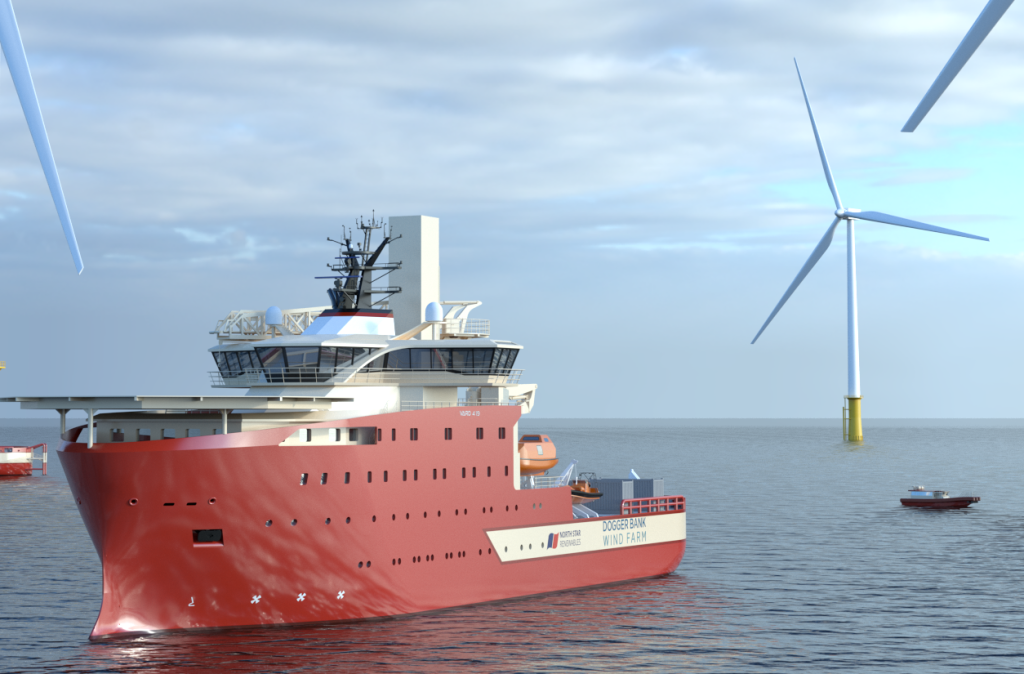
    With long term charter contracts, single port operations and fixed time at sea Service Operation Vessels (SOV) are ideally suited for powering by liquid hydrogen. There is little available space so installing liquid tanks below will be a challenge but this is what the new European project consortium led by ArianeGroup, intends to tackle. Last year a similar concept was revealed by Louis Dreyfus Armateurs and Salt Ship Design.

    The Project Scope

    The recently announced NAVHYS project brings together key industry players, research institutions, and shipbuilders to explore the technical and economic feasibility of an liquid hydrogen-fueled SOV design. The primary objective is to provide a concept for a below-deck LH2 storage and fuel system for an SOV to propose a fully decarbonised maintenance solution for wind energy providers.

    Source: North Star

    The consortium will address several critical aspects:

    • Fuel Storage & Safety – Developing safe and efficient LH2 storage solutions on board.
    • Power System Integration – Assessing how fuel cells and hydrogen combustion engines can be optimized for vessel propulsion.
    • Regulatory Compliance – Ensuring that the design adheres to evolving maritime safety and environmental regulations.
    • Operational Feasibility – Evaluating how LH2 can meet the energy demands of an SOV during offshore wind farm operations.

    Why Liquid Hydrogen?

    Hydrogen has long been considered a promising alternative to fossil fuels, but its adoption in shipping faces challenges related to storage, energy density, and infrastructure. LH2 offers significant advantages over compressed hydrogen due to its higher energy density per unit volume, making it more suitable for long-duration offshore operations. Additionally, it eliminates the need for complex high-pressure storage systems, a key concern for vessel integration.

    However, LH2 presents unique challenges, including:

    • The need for cryogenic storage at -253°C.
    • Potential boil-off losses during long voyages.
    • Limited bunkering infrastructure compared to conventional fuels.

    Despite these hurdles, the industry sees LH2 as a crucial component in the future of zero-emission offshore operations.

    Implications for the Offshore Wind Sector

    SOVs are the backbone of offshore wind farm operations, transporting technicians and equipment to wind turbines. As the demand for offshore wind energy grows, reducing the carbon footprint of support vessels becomes increasingly important. Hydrogen-fueled SOVs could significantly cut emissions, reduce reliance on fossil fuels, and demonstrate the viability of LH2 as a marine fuel in real-world applications.

    Furthermore, this initiative sets a precedent for future hydrogen-powered vessel designs, potentially influencing developments in other segments of the maritime industry, such as platform supply vessels (PSVs) and crew transfer vessels (CTVs).

    Stay tuned for further updates as the project progresses toward making hydrogen-powered SOVs a reality.