Category: Ship Projects

  • Norway supports liquid hydrogen fleet

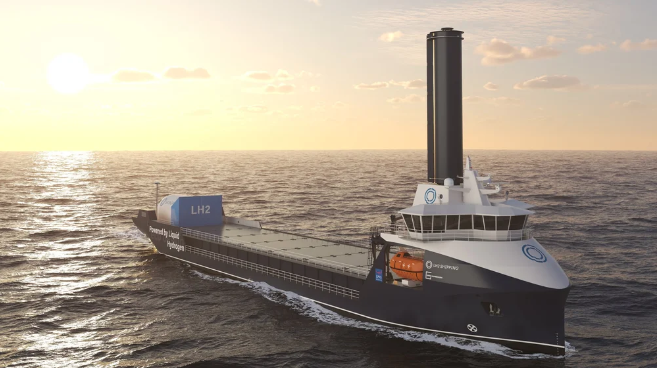
    Norway’s state-owned Enova has awarded substantial funding for six hydrogen-powered bulk carriers, marking a significant acceleration in the deployment of zero-emission maritime technology. The latest round brings the total number of liquid hydrogen bulk carriers to four, demonstrating growing confidence in hydrogen as a viable marine fuel.

    Expanding the Liquid Hydrogen Fleet

    LH2 Shipping, in partnership with Strand Shipping Bergen (part of the Vertom Group), received approximately $29 million in additional funding from Enova to construct two more liquid hydrogen-powered bulk carriers. This award follows an earlier grant of $23.5 million secured in the spring for the first two vessels, bringing the total number of hydrogen-powered ships in the project to four.

    Source: LH2 Shipping

    The expanded funding represents more than NOK 536 million ($52.5 million) in total state support for this single project—a clear signal of Norway’s commitment to maritime decarbonization.

    Technical Specifications

    The four vessels, branded under the “NordBulk” project, will be 7,700 dwt bulk carriers designed for short sea shipping. Each 108-meter (353-foot) vessel will transport bulk and general cargo between northern Norway, the Baltic region, and mainland Europe.

    Key technical features:

    • LH₂ Storage: 17 tonnes liquid hydrogen capacity per vessel
    • Power Generation: 3.5 MW PEM fuel cells
    • Battery Support: 1.5 MWh battery pack to support fuel cell operation
    • Shore Power: Equipped for shore power connection during loading/unloading
    • Backup System: Standby diesel/biodiesel generator for operational redundancy

    The onboard hydrogen systems consist of C-type vacuum-insulated tanks storing liquid hydrogen at -253°C. This proven technology builds directly on the experience gained from Norled’s MF Hydra ferry, which has been operating successfully on liquid hydrogen since 2023.

    Coastal Hydrogen Operations

    In addition to the liquid hydrogen bulk carriers, GMI Rederi received funding to construct two coastal bulk carriers powered by compressed hydrogen. These vessels will combine multiple zero-emission technologies:

    • Fuel cells running on compressed hydrogen
    • Battery energy storage systems
    • Wind-assisted propulsion technology

    The ships will operate along the Norwegian coast, transporting asphalt and construction materials—applications where the shorter range and established coastal infrastructure make compressed hydrogen a practical choice.

    Building the Supply Chain

    A critical component of these projects is the parallel development of hydrogen production and bunkering infrastructure. In November 2024, Enova awarded over NOK 777 million ($70.9 million) to five hydrogen production projects along the Norwegian coast, from Slagentangen in the southeast to Bodø in the north.

    These production facilities will provide:

    • Total capacity: 120 MW
    • Daily production: Approximately 40 tons of hydrogen
    • Coverage: Strategic locations along major shipping routes

    Nils Kristian Nakstad, CEO of Enova, stated: “The projects that receive support will be part of a network of hydrogen producers along the Norwegian coastline. This will make hydrogen more accessible to those who want to invest in sustainable shipping.”

    The Economics of Hydrogen Shipping

    The business case for hydrogen vessels is improving rapidly due to several factors:

    Regulatory Drivers:

    • EU Emissions Trading System (ETS) now includes maritime transport
    • FuelEU Maritime regulations mandate gradual emissions reductions
    • IMO’s 2050 net-zero target creates long-term regulatory certainty

    Cost Competitiveness:
    With carbon pricing mechanisms in place, the cost gap between fossil fuels and hydrogen is narrowing. After 2030, when CO₂ emission fees increase further under EU regulations, zero-emission vessels are expected to achieve operational cost parity with conventional ships on many routes.

    The Enova grants cover up to 80% of the additional costs associated with hydrogen technology—a significant increase from the previous 40% support level. This enhanced support reflects Norway’s strategic goal to establish first-mover advantage in zero-emission shipping technologies.

    Environmental Impact

    The six hydrogen-powered bulk carriers receiving funding in this round will collectively contribute to:

    • Annual CO₂ reduction: Significant emissions cuts in short-sea shipping
    • Zero local emissions: No NOx, SOx, or particulate matter during fuel cell operation
    • Scalable model: Demonstration of commercially viable hydrogen operations

    Enova emphasizes that supporting these pioneer vessels creates the foundation for broader adoption. As Andreas Bjelland Eriksen, Norway’s Minister for Climate and Environment, stated: “Norway must be at the forefront of the transition at sea.”

    Timeline and Next Steps

    The vessels are expected to enter service between 2026 and 2029, with construction beginning in 2025. Shipyard selection is underway, with Norwegian and European yards competing for the contracts.

    Enova has announced it will continue its support programs, with additional funding rounds planned for 2025 and 2026. The organization reports receiving 31 applications in the latest round, indicating strong industry interest in hydrogen and ammonia propulsion.

    Industry Significance

    This latest funding announcement positions Norway as the clear leader in hydrogen shipping deployment. The country’s comprehensive approach—supporting vessels, production facilities, and infrastructure simultaneously—creates the conditions for a functioning hydrogen maritime ecosystem.

    For the global shipping industry, Norway’s hydrogen program provides crucial real-world data on:

    • Operational costs of hydrogen vs. conventional fuel
    • Reliability of liquid vs. compressed hydrogen systems
    • Integration challenges in existing shipping operations
    • Bunkering procedures and infrastructure requirements

    As the maritime industry faces increasing pressure to decarbonize, Norway’s hydrogen pioneers are demonstrating that zero-emission bulk shipping is not just technically feasible—it’s becoming economically viable.

    Looking Ahead

    With four liquid hydrogen bulk carriers and two compressed hydrogen coastal vessels now funded and under development, Norway is creating a critical mass of hydrogen shipping operations. When these vessels enter service, they will provide the operational experience needed to scale hydrogen technology across larger ships and longer routes.

    The success of these projects will be closely watched by shipowners worldwide, particularly in Europe where emissions regulations are tightening rapidly. If the NordBulk vessels demonstrate reliable, cost-competitive operations, they may catalyze a broader shift toward hydrogen in the short-sea shipping segment.


    This article is based on reports from Maritime Executive, Ship & Bunker, Clean Shipping International, Norwegian Hydrogen, Hellenic Shipping News, and official Enova communications.

  • South Korea Charts New Course with Launch of First Hydrogen Fuel-Cell Vessel

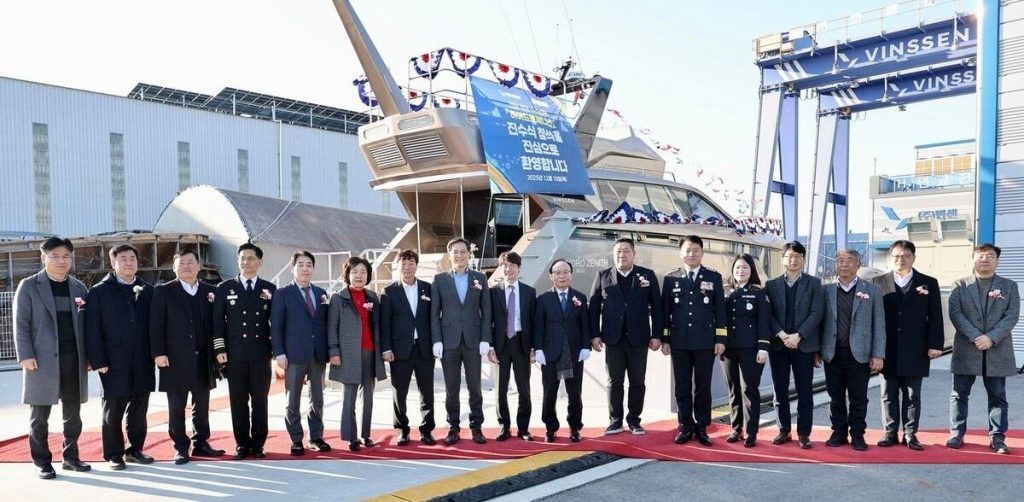
    December 18, 2024 marked a watershed moment for maritime decarbonization as VINSSEN, a South Korean clean technology firm, launched the Hydro Zenith — the nation’s first hydrogen fuel-cell powered vessel built in full compliance with official safety standards.

    Source: Vinssen

    The launch ceremony at VINSSEN’s Yeongam facility drew over 100 attendees, including government officials from Jeollanam-do Province and Yeongam County, industry partners, and research institutions. This milestone represents more than just a technological achievement; it signals South Korea’s serious commitment to transforming its maritime sector toward zero-emission operations.

    A Vessel Built on New Standards

    What sets Hydro Zenith apart is its development under the Ministry of Oceans and Fisheries’ Interim Standards, established in 2023 specifically for hydrogen fuel-cell propulsion vessels. These regulations provide a clear framework for design, equipment configuration, and inspection procedures, enabling hydrogen-powered ships to be built and certified within existing ship safety laws.

    The leisure vessel showcases impressive technical specifications. Its hybrid propulsion system combines two 100 kW hydrogen fuel cells with four 92 kWh battery packs, delivering speeds up to 20 knots (approximately 37 km/h) while producing zero emissions. The hydrogen fuel cell technology operates by creating an electrochemical reaction between hydrogen and oxygen at the anode and cathode, generating direct current electricity along with only heat and water as byproducts.

    Smart Technology Meets Clean Energy

    Beyond its clean propulsion system, Hydro Zenith integrates sophisticated digital monitoring capabilities that track vessel performance and energy consumption in real-time. This data-driven approach enables predictive maintenance and optimized operations — essential features as the maritime industry transitions toward digital management systems.

    The vessel’s hydrogen fuel cell system has undergone rigorous safety verification through pre-certification by the Korea Marine Traffic Safety Authority (KOMSA), demonstrating that it can be deployed without requiring regulatory exemptions. This achievement is particularly significant as it proves hydrogen technology can meet stringent maritime safety requirements.

    Public-Private Collaboration at Work

    The Hydro Zenith project exemplifies effective public-private partnership, with joint funding from Jeollanam-do Province, Yeongam County, and VINSSEN, supported by leading Korean research institutions including JNTP, KOMERI, and KITECH. Each partner brought specialized expertise: technical and regulatory support, hull stability assessment, fuel cell system performance evaluation, and advanced welding technology.

    VINSSEN CEO Chil Han Lee emphasized the project’s broader significance, noting it represents an essential step toward achieving carbon neutrality and improving Korea’s maritime environment. The company, which holds over 50 patents related to electric propulsion and hydrogen fuel cell systems, aims to convert diesel-powered vessels into eco-friendly alternatives.

    The Path Forward: Sea Trials and Beyond

    With the launch complete, Hydro Zenith will now undergo comprehensive real-sea trials to validate hydrogen vessel safety standards and demonstrate operational viability. These trials will provide critical data to accelerate the commercialization of zero-emission marine mobility solutions.

    VINSSEN isn’t stopping here. The company recently showcased its 100 kW and 250 kW marine hydrogen fuel cell systems, both currently undergoing type approval processes. In March 2025, VINSSEN also secured Approval in Principle from Korean Register for what would be South Korea’s first hydrogen fuel-cell powered tugboat, featuring a robust 2,700 kW system.

    The company has already received international recognition as well, including Type Approval from Italian classification society RINA for its 60 kW maritime fuel cell stack, and project-based approval from Bureau Veritas for trials conducted in Singapore with partners including Shell, Seatrium Limited, and Air Liquide.

    Korea’s Hydrogen Maritime Vision

    The Hydro Zenith launch fits into South Korea’s ambitious national hydrogen strategy. The country has positioned itself as a global hydrogen frontrunner, with Hyundai Motor launching the world’s first commercial fuel cell electric vehicle back in 2013. The government’s Hydrogen Economy Roadmap sets aggressive targets: producing 6.2 million fuel cell electric vehicles by 2040 and establishing 15 gigawatts of fuel cell power generation capacity.

    While fuel cell systems have been demonstrated on smaller vessels for shorter routes, commercial-scale deployment on large ships remains an ongoing challenge. However, projects like Hydro Zenith provide essential proof-of-concept and regulatory frameworks that could pave the way for broader adoption.

    The Bigger Picture

    As the maritime industry faces mounting pressure to reduce its carbon footprint, hydrogen fuel cells offer a promising pathway forward. Unlike battery-electric systems limited by weight and range constraints, hydrogen can provide the energy density needed for longer voyages while producing zero emissions at the point of use.

    The success of Hydro Zenith demonstrates that hydrogen marine technology is moving from experimental concept to regulatory-compliant reality. With proper safety frameworks, technological innovation, and collaborative partnerships, hydrogen-powered vessels could become a significant part of the maritime decarbonization puzzle.

    VINSSEN’s achievement also highlights South Korea’s strategic approach to building a complete hydrogen ecosystem — from production facilities and refueling infrastructure to end-use applications across automotive, industrial, and now maritime sectors.

    As Hydro Zenith prepares for its sea trials in 2025, the maritime industry will be watching closely. The data and operational experience gained from this pioneering vessel could help chart the course for hydrogen’s role in achieving the sector’s ambitious climate goals.


    The Hydro Zenith represents not just a technological milestone, but a tangible step toward reimagining marine transportation for a zero-emission future. As countries worldwide seek pathways to maritime decarbonization, South Korea’s integrated approach — combining regulatory frameworks, public-private partnerships, and technological innovation — offers valuable lessons for the global shipping industry.

  • Viking Libra: A step Towards Zero-Emission Cruising

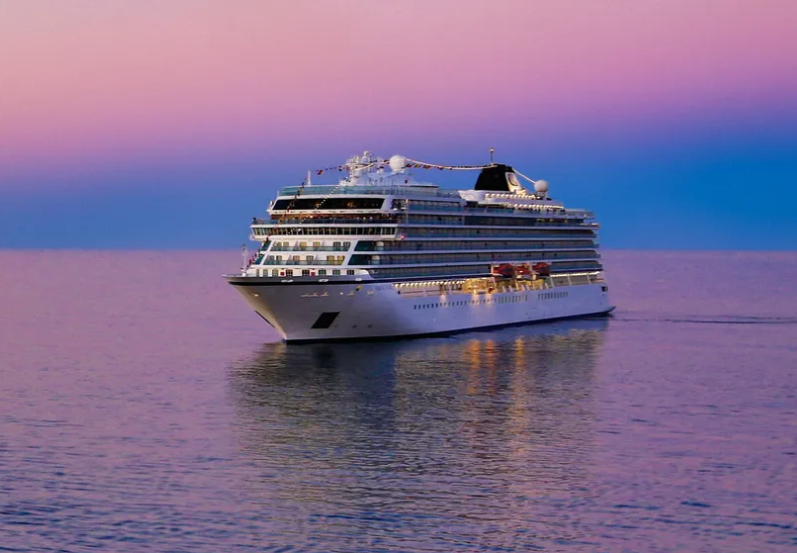
    In a groundbreaking development for the maritime industry, Italian shipbuilder Fincantieri and Swiss cruise line Viking have unveiled the world’s first cruise ship powered by liquid hydrogen stored onboard. This pioneering vessel, named Viking Libra, is currently under construction at Fincantieri’s Ancona shipyard, with delivery anticipated in late 2026. This has been long in the making but very good to see this public announcement. It is another confirmation of the role liquid hydrogen can play in maritime transport.

    Source: Viking cruises

    The Viking Libra represents a significant advancement in sustainable maritime technology. With a gross tonnage of approximately 54,300 tons and a length of 239 meters, the ship is engineered to operate with zero emissions. Its state-of-the-art hydrogen propulsion system, combined with advanced fuel cell technology, is capable of generating up to 6 megawatts of power.

    A notable feature of the Viking Libra is its innovative approach to hydrogen storage and utilization. The vessel will incorporate a containerized system designed to load and store hydrogen directly onboard, effectively addressing existing supply chain challenges. This hydrogen will fuel a polymer electrolyte membrane (PEM) fuel cell system, specifically optimized for cruise operations and developed by Isotta Fraschini Motori (IFM), a subsidiary of Fincantieri specializing in advanced fuel cell technology.

    Torstein Hagen, Chairman and CEO of Viking, expressed pride in this environmental milestone:

    “From the outset, we have designed our river and ocean ships thoughtfully to reduce their fuel consumption, and we are very proud that the Viking Libra and the Viking Astrea will be even more environmentally friendly. Viking made the principled decision to invest in hydrogen, which offers a true zero-emission solution. We look forward to welcoming the world’s first hydrogen-powered cruise ship to our fleet in 2026.”

    Expanding the Fincantieri-Viking Partnership

    In addition to the Viking Libra, Fincantieri is constructing the Viking Astrea, another hydrogen-powered vessel scheduled for delivery in 2027. This initiative underscores Viking’s commitment to sustainable cruising and marks a significant step toward reducing the environmental impact of maritime travel.

    Further strengthening their collaboration, Fincantieri and Viking have signed an agreement for the construction of two additional cruise ships, set for delivery in 2031. This contract includes an option for two more vessels and is based on the successful design features of previous units built by Fincantieri for Viking. These new ships will comply with the latest environmental regulations and incorporate modern safety systems. Positioned in the small cruise ship segment, each will have a gross tonnage of about 54,300 tons and accommodate 998 passengers across 499 cabins.

    Pierroberto Folgiero, CEO and Managing Director of Fincantieri, highlighted the significance of this partnership:

    “With the Viking Libra, we are not only delivering the world’s first cruise ship powered by hydrogen stored on board, but we are also reinforcing our commitment to shaping the future of sustainable maritime transportation. Furthermore, we are thrilled about Viking’s decision to expand its fleet with the order of two additional ships, which reaffirms the strength of our partnership and the trust placed in our expertise.”

    Pioneering Sustainable Maritime Transportation

    The launch of the Viking Libra signifies a pivotal moment in the cruise industry’s journey toward sustainability. By integrating hydrogen fuel technology, Viking and Fincantieri are setting new standards for eco-friendly maritime operations, paving the way for a future where zero-emission cruising becomes the norm.

    As the maritime sector continues to seek innovative solutions to reduce its environmental footprint, collaborations like that of Fincantieri and Viking exemplify the transformative potential of embracing green technologies. The Viking Libra and its sister ships stand as beacons of progress, heralding a new era in sustainable sea travel.

  • H2ESTIA Project: Liquid Hydrogen-Powered General Cargo Ship

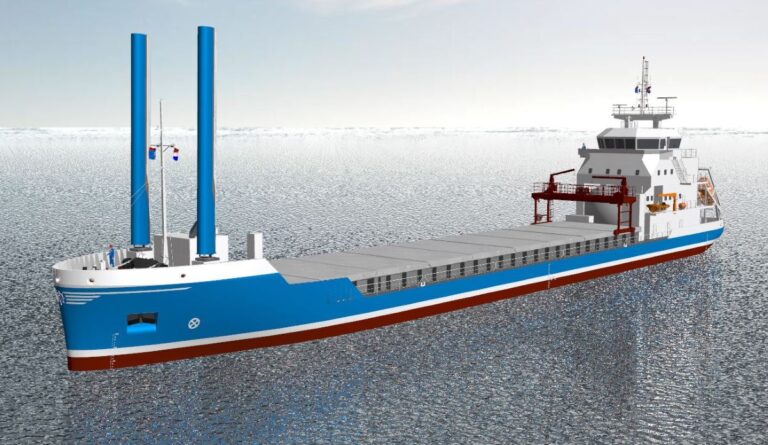
    In February this site already reported on five Dutch hydrogen ships winning subsidy. Now the general public is introduced to one of those vessels: the H2ESTIA Project. Spearheaded by the Nederlandse Innovatie Maatschappij (NIM), this project aims to develop the world’s first zero-emission general cargo ship powered by liquid hydrogen, marking a significant milestone in the quest for greener shipping solutions.

    Project Overview

    The H2ESTIA Project focuses on the design, construction, and demonstration of a hydrogen-powered cargo vessel intended for operations in the North Sea and beyond. Managed by Van Dam Shipping, a family-run short-sea and inland shipping company, the vessel is designed to transport bulk goods without emitting harmful pollutants, thereby redefining sustainable maritime logistics.

    Source: NIM

    Innovative Technological Integration

    Central to the project’s innovation is its integrated approach to hydrogen propulsion. The vessel will feature a newly designed cryogenic hydrogen storage and bunkering system, ensuring the safe handling and storage of liquid hydrogen at extremely low temperatures. Propulsion will be achieved through a hydrogen fuel cell system complemented by batteries, delivering clean and efficient power.

    To enhance energy efficiency further, the ship will incorporate:

    • Wind-Assisted Propulsion: Utilizing wind power to reduce reliance on hydrogen fuel.
    • Waste Heat Recovery Systems: Capturing and reusing excess heat to improve overall energy utilization.

    Additionally, the implementation of digital twin technology will create a virtual model of the ship, allowing for real-time monitoring, operational optimization, and enhanced safety measures.

    Collaborative Effort

    The H2ESTIA Project is supported by a consortium of leading maritime and technology organizations, including TNO, MARIN, the University of Twente, Cryovat, EnginX, Encontech, and classification society RINA. This collaborative effort is further backed by the Dutch Ministry of Infrastructure and Water Management, highlighting the project’s national significance in advancing sustainable shipping practices.

    Statements from Key Stakeholders

    Sander Roosjen, CTO at NIM, emphasized the project’s groundbreaking nature: “H2ESTIA is a flagship project for commercial shipping. By integrating hydrogen technology with digital innovation, we are proving that zero-emission shipping is not just a vision—it is an achievable reality.”

    Jan van Dam, CEO of Van Dam Shipping, highlighted the importance of collaborative efforts: “Parallel to the H2ESTIA Project, we are working on securing the supply, as well as the necessary bunkering and logistics. This is a combined effort, as a single ship alone does not generate sufficient demand. Collaboration at this stage is what transforms our ambitions into reality.”

    Implications for the Maritime Industry

    The H2ESTIA Project aims to demonstrate both the technological readiness and economic viability of hydrogen-powered cargo vessels, paving the way for their commercial deployment. By addressing challenges such as hydrogen system certification, risk management, and crew training, the project sets a precedent for the safe integration of hydrogen technology into maritime operations.

    As the maritime industry continues to seek sustainable alternatives to traditional fossil fuels, initiatives like H2ESTIA exemplify the potential of hydrogen as a clean energy source, offering a promising pathway toward achieving zero-emission shipping in the near future.

  • European Project Advances Liquid Hydrogen-Powered SOV Design

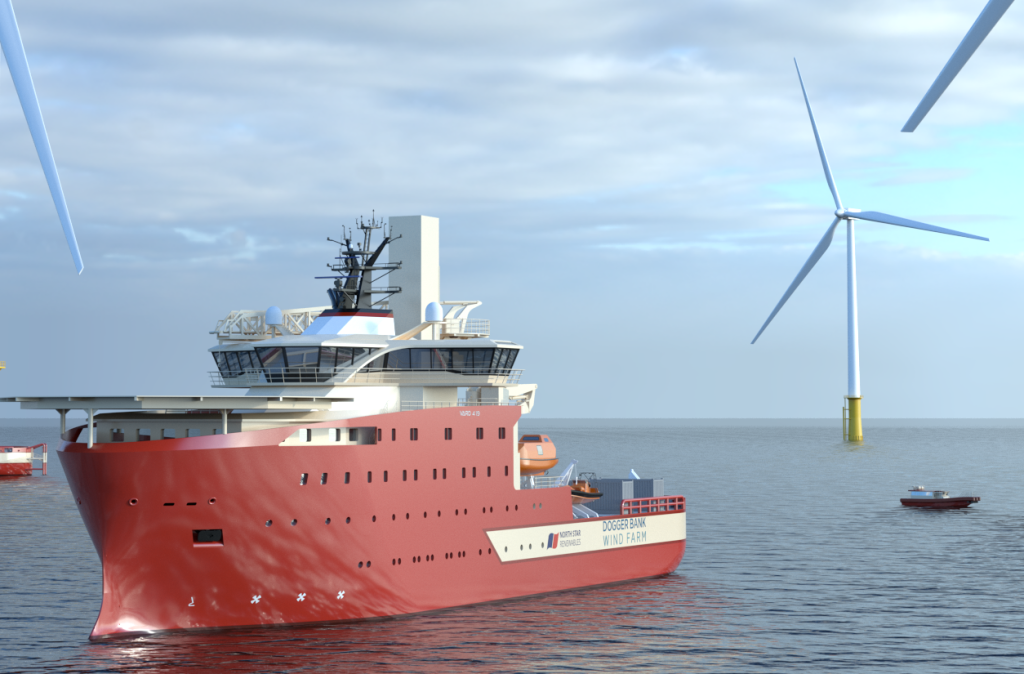
    With long term charter contracts, single port operations and fixed time at sea Service Operation Vessels (SOV) are ideally suited for powering by liquid hydrogen. There is little available space so installing liquid tanks below will be a challenge but this is what the new European project consortium led by ArianeGroup, intends to tackle. Last year a similar concept was revealed by Louis Dreyfus Armateurs and Salt Ship Design.

    The Project Scope

    The recently announced NAVHYS project brings together key industry players, research institutions, and shipbuilders to explore the technical and economic feasibility of an liquid hydrogen-fueled SOV design. The primary objective is to provide a concept for a below-deck LH2 storage and fuel system for an SOV to propose a fully decarbonised maintenance solution for wind energy providers.

    Source: North Star

    The consortium will address several critical aspects:

    • Fuel Storage & Safety – Developing safe and efficient LH2 storage solutions on board.
    • Power System Integration – Assessing how fuel cells and hydrogen combustion engines can be optimized for vessel propulsion.
    • Regulatory Compliance – Ensuring that the design adheres to evolving maritime safety and environmental regulations.
    • Operational Feasibility – Evaluating how LH2 can meet the energy demands of an SOV during offshore wind farm operations.

    Why Liquid Hydrogen?

    Hydrogen has long been considered a promising alternative to fossil fuels, but its adoption in shipping faces challenges related to storage, energy density, and infrastructure. LH2 offers significant advantages over compressed hydrogen due to its higher energy density per unit volume, making it more suitable for long-duration offshore operations. Additionally, it eliminates the need for complex high-pressure storage systems, a key concern for vessel integration.

    However, LH2 presents unique challenges, including:

    • The need for cryogenic storage at -253°C.
    • Potential boil-off losses during long voyages.
    • Limited bunkering infrastructure compared to conventional fuels.

    Despite these hurdles, the industry sees LH2 as a crucial component in the future of zero-emission offshore operations.

    Implications for the Offshore Wind Sector

    SOVs are the backbone of offshore wind farm operations, transporting technicians and equipment to wind turbines. As the demand for offshore wind energy grows, reducing the carbon footprint of support vessels becomes increasingly important. Hydrogen-fueled SOVs could significantly cut emissions, reduce reliance on fossil fuels, and demonstrate the viability of LH2 as a marine fuel in real-world applications.

    Furthermore, this initiative sets a precedent for future hydrogen-powered vessel designs, potentially influencing developments in other segments of the maritime industry, such as platform supply vessels (PSVs) and crew transfer vessels (CTVs).

    Stay tuned for further updates as the project progresses toward making hydrogen-powered SOVs a reality.

  • Gotlandsbolaget’s Hydrogen-Ready High-Speed Ferry

    I have to admit the hydrogen system of this vessel is not very clear yet. What means hydrogen ready? However we can see hydrogen storage containers at the bow open deck area. Therefore very good to see these kind of vessels being introduced with hydrogen as fuel.

    Austal Australasia

    Austal Australasia has secured a contract valued between A$265 and A$275 million to design and construct a 130-meter, hydrogen-ready high-speed ferry for Sweden’s Gotlandsbolaget. This vessel, part of the ‘Horizon X’ program, will be the largest ever built by Austal. It will feature a unique combined cycle propulsion system that includes both gas and steam turbines—a first for high-speed craft worldwide. The ferry will have the capacity to transport up to 1,500 passengers, 400 vehicles, and cargo. Construction is scheduled to begin in the first half of 2026 at Austal’s Philippines shipyard, utilizing ‘green aluminium’ produced through energy-efficient processes to reduce emissions. Completion is expected by mid-2028.

    Source: Austal

    Combined cycle propulsion system

    The combined cycle propulsion system enhances efficiency by repurposing engine exhaust to power steam turbines, reducing overall fuel consumption and emissions. This design allows for flexibility in fuel types, including hydrogen, aligning with global decarbonization efforts in maritime transport. The vessel’s hydrogen-ready configuration means it can transition to zero-emission operations as hydrogen fuel becomes more accessible. In October 2024, the project received approval in principle from the international classification society DNV, confirming compliance with regulations for gas-fueled ship installations and the International Code of Safety for Ships Using Gases or Other Low Flashpoint Fuels.

    Collaboration

    Austal and Gotland Tech Development have collaborated with global technology providers to refine the vessel’s propulsion system. This partnership has focused on selecting preferred equipment and defining system arrangements that repurpose engine exhaust to contribute to vessel propulsion, thereby reducing emissions. The use of ‘green aluminium’ in construction further underscores the project’s commitment to sustainability, as this material is produced using energy-efficient processes that result in lower carbon emissions.

    This project represents a significant advancement in sustainable maritime transport, combining innovative propulsion technology with environmentally friendly materials to set new standards in eco-friendly ferry design.

  • Five new hydrogen vessels receive Dutch subsidy

    On Thursday 06 February five new hydrogen vessels were granted a subsidy by the Dutch government under Maritime Masterplan program. Two methanol and two carbon capture projects received subsidy too. This first call included a total budget of €85 million of which €40 was allocated to hydrogen vessels. For those who missed out, a next call is planned for next year. Among this years winners are the following projects.

    H2ESTIA: A Zero-Emission Coaster

    H2ESTIA is a 5,000 DWT hydrogen-powered coaster, developed by a consortium led by NIM. It features a 1.5 MW LT-PEM fuel cell, a 1 MW battery, and electric propulsion. The ship carries 200m³ of liquid hydrogen (11 tons) and boasts a 1,700 NM range, assisted by e-sails and a waste heat recovery system. This project is a major step toward sustainable coastal shipping.

    Source: Maritiem Masterplan

    Hydrogen-Powered River Cruiser

    A hydrogen-powered river cruise vessel is under development for operations on the Rhine and Danube. It measures 110m x 11m and reaches speeds of up to 22 km/h. This project introduces hydrogen as a clean energy source for the river cruise industry, reducing emissions on inland waterways.

    Hybrid H2 ICE-FC Dredging Vessel

    The Gaasterland, a deep-suction dredger motor barge, is being upgraded with a hybrid hydrogen internal combustion engine (ICE) and fuel cell system. This retrofit aims to reduce emissions while maintaining operational efficiency. The project involves Mineralis B.V., NPS Driven B.V., TNO, and other industry leaders.

    Columbus Zero One: Hydrogen-Powered Inland Transport

    Columbus Zero One is a small, zero-emission hydrogen-powered barge designed for transporting construction materials between the IJsselmeer and Randstad. The ship operates on compressed hydrogen (350 bar), setting a benchmark for sustainable inland shipping.

    Hydro Navis: Liquid Hydrogen Transport

    Hydro Navis is a new zero-emission vessel designed for steel plate transport in wind farm construction. It features a cryogenic liquid hydrogen tank, ensuring efficient and clean operations. The project is supported by NPRC, Hydro-Nova, Marin, NIM, and Concordia Damen Shipyard.

    Source: Maritiem Masterplan

    MOBY NL: Methanol-Powered Bunkering Ship

    MOBY NL is a newly built bunkering vessel operating in the Amsterdam-Rotterdam-Antwerp (ARA) region. The 135m x 11.45m methanol tanker exceeds 6,000 GT and features a dual-fuel methanol propulsion system. The project is backed by Victrol, Shipping Technology, NIM, and other key partners.

    Methanorms: Geophysical Survey Vessel

    Methanorms is a DP-1 geophysical survey vessel designed for efficient execution and real-time monitoring. Its success lies in prior research, scalability, and regulatory compliance. It serves as a model for future survey vessels operating with lower environmental impact.

    BLUE HORIZON: Carbon Capture for LNG Tankers

    Coral Energy, an LNG tanker (115m x 22m, 13,501 GT), is being equipped with a carbon capture system to reduce CO₂ emissions. This project demonstrates how carbon capture can enhance the sustainability of LNG-powered vessels.

    ME2CC: Compact Carbon Capture for LNG Ships

    The Maritime Efficient & Easy Carbon Capture (ME2CC) project is focused on developing compact carbon capture systems for LNG-powered vessels. The first implementation will be on MV Kvitbjorn, a Samskip-operated ship. This technology could bridge the gap toward zero-emission shipping.

    A Step Toward a Cleaner Future

    These projects highlight the rapid advancements in hydrogen and alternative fuel shipping. It is good to see these projects receive capex support. This is the way to develop green hydrogen shipping. After Norway leading the way it is good to see the Dutch following and we can only hope for more.

  • New Hydrogen Ship Discoveries: January 2025

    Over the past month, I have discovered several hydrogen-powered shipbuilding projects that highlight the growing adoption of this sustainable fuel in the maritime industry. These projects span diverse vessel types, from research ships to inland barges and innovative catamarans. From now on I will follow these projects and keep you informed about them. Below is a summary of these four notable developments.

    Lithuania’s First Hydrogen-Powered Ship

    Lithuania has launched its first hydrogen-powered vessel, a pioneering step for the Baltic region. Developed by KN Energies in partnership with Port of Klaipėda, this vessel is designed for port operations and logistical support. The ship is equipped with a hybrid propulsion system, combining hydrogen fuel cells with battery storage to optimize efficiency. This marks a significant milestone for Lithuania’s decarbonization efforts in the maritime sector, demonstrating a shift toward cleaner port activities.

    Source: Port of Klaipeda

    Beyond its environmental benefits, the vessel’s design focuses on operational flexibility. The hybrid system allows it to adapt to varying power demands while reducing greenhouse gas emissions. By incorporating hydrogen, the port aims to set an example for future projects, aligning with the European Union’s broader clean energy initiatives. This development reinforces the role of hydrogen in coastal and port applications, paving the way for further regional investments in green maritime technologies.

    Hydrogen-Hybrid Coastal Research Vessel

    The Scripps Institution of Oceanography has initiated the shipyard selection process for a groundbreaking hydrogen-hybrid Coastal Class research vessel. This ship, part of a broader initiative to decarbonize oceanographic research, will be equipped with hydrogen fuel cells supplemented by battery storage, ensuring near-zero emissions during operations. The vessel’s design focuses on silent, low-impact propulsion, which is crucial for scientific studies that require minimal interference with marine ecosystems.

    Source: Glosten

    A key advantage of this hydrogen-hybrid configuration is its extended operational range, allowing researchers to conduct long-duration missions without relying on fossil fuels. By pioneering hydrogen adoption in research fleets, Scripps sets a precedent for academia and government agencies looking to transition to sustainable marine technologies. This project represents a major step toward reducing the environmental footprint of scientific exploration at sea.

    Rhenus Hydrogen-Powered Coupled Barges

    Logistics giant Rhenus is making a bold move with the introduction of 70 cleaner coupled barges, incorporating hydrogen-based propulsion. These vessels will serve European inland waterways, significantly cutting emissions in a sector that has long relied on diesel engines. With hydrogen fuel cells providing the primary energy source, these barges represent a major leap forward for sustainable inland shipping, a critical component of Europe’s transport network.

    Source: Rhenus Group

    By replacing conventional engines with hydrogen-powered systems, Rhenus aims to align with EU regulations targeting emissions reductions in inland waterways. The project underscores the potential for hydrogen in large-scale commercial applications, proving that clean energy solutions can be economically viable. If successful, this fleet could set a precedent for similar initiatives across Europe, transforming inland shipping into a low-emission alternative.

    Prometeo: Europe’s First Hydrogen-Electric Catamaran

    French company Green Navy has introduced Prometeo, the first hydrogen-electric catamaran in Europe. Designed for passenger transport and leisure applications, this vessel operates entirely on hydrogen fuel cells, producing zero emissions. The catamaran’s design emphasizes efficiency, with lightweight materials and streamlined hulls to maximize performance. As a result, it offers a practical alternative to diesel-powered vessels in coastal and inland waters.

    Source: Green Navy

    Prometeo showcases the potential for hydrogen-electric propulsion in the leisure and transport sectors, where sustainability is becoming an increasing priority. The vessel’s development highlights France’s commitment to green maritime technology, potentially inspiring other shipbuilders to follow suit. As hydrogen infrastructure continues to expand, vessels like Prometeo may become more commonplace, helping to decarbonize the wider maritime industry.

    Four more exciting project to follow

    These four projects demonstrate the accelerating pace of hydrogen adoption in maritime applications. From inland barges to oceanographic research vessels, hydrogen is proving to be a viable alternative to fossil fuels, driving innovation across multiple segments of the industry. As more shipbuilders and operators commit to hydrogen, the path to a cleaner maritime future is becoming increasingly clear.

  • Energy Observer 2 – Fuel EU Maritime

    In my previous post I explained how the Energy Observer 2 is a new milestone for hydrogen powered vessels. This post analyzes a typical operation for such vessel across European ports in an assumed schedule and evaluates its potential benefits from Fuel EU Maritime.

    Operational Snapshot

    The vessel operates between key European ports on the west coast:

    PortDistance (nautical miles)Port MovesWaiting Time (hours)Maneuvering Time (hours)
    Hamburg40560022
    Antwerp25250022
    Le Havre46340022
    La Rochelle10320022
    Bordeaux99650022
    Total2,2192,2001010
    Overview of EO2 trade route

    Speed, Time, and Energy Calculations

    The vessel operates at a service speed of 12 knots for regular operations. The journey duration and corresponding energy consumption were calculated as follows:

    • Total sailing days: 7.70 (12 knots)
    • Energy consumption during sailing: 554,750 kWh
    • Port energy consumption: 20,000 kWh (port waiting and maneuvering energy combined)

    Based on the following assumed power ratings:

    • Sailing: 3,000 kW
    • Maneuvering: 1,500 kW
    • Port operations: 500 kW

    Hydrogen Fuel Usage and Emissions

    With a typical consumption rate of 60 grams of LH2 per kWh for fuel cells and no further losses assumed, the vessel’s total hydrogen fuel usage per journey is 34.5 tons. Annually, considering regular operations of one round-trip every two weeks, the vessel consumes 897 tons of liquid hydrogen, or 2.5 tons per day.

    Fuel EU Maritime

    The Fuel EU Maritime regulations that came into force this year is meant to enforce the adoption of renewable fuels and to reward early adopters. When we consider the above amount of RFNBO hydrogen in Fuel EU maritime it demonstrates a strong over-compliance compared to requirements in 2029. This can be verified in any free online calculate like provided here

    Moreover, this over-compliance can be traded at marketplaces which came into operation this year (for example here and here). If we assume a rate of €320 per ton CO2-eq – half of the penalty rate – this give a value of €2.55 million. Or €2.85 per kilo LH2. Whether this amount itself justifies to cost of sailing on liquid hydrogen is doubtful but at least it reduced the operational cost of doing so.

    A Path Forward

    This analysis showcases the potential effect of Fuel EU maritime on hydrogen-powered ships across European shipping routes. As port infrastructure evolves to support hydrogen refueling, this mode of operation will become increasingly viable.

    The hydrogen shipping revolution is just beginning—charting the way toward a sustainable and efficient future.

    What’s your take on hydrogen-powered shipping? Share your thoughts below!

  • Energy Observer 2, a new milestone

    In the past week, more information became known about the largest vessel to-date to operate on liquid hydrogen: the Energy Observer 2 (EO2), a project spearheaded by Energy Observer in collaboration with partners like LMG Marin. This blog post summarizes what is known to date about this large vessel.

    Introducing Energy Observer 2

    Building upon the success of the original Energy Observer—a vessel that demonstrated the viability of renewable energy and hydrogen integration—the EO2 project aims to revolutionize cargo shipping. This 160-meter containership will carry up to 1,100 TEU containers, operating entirely on liquid hydrogen, thereby ensuring zero-emission voyages. Zero emission operation is scheduled to take place on a route along the west coast of Europe. This will connect major ports such as Hamburg, Rotterdam, Antwerp, and Bordeaux, offering a new green corridor on a high-traffic maritime route.

    Source: LMG Marin

    Key Features of EO2:

    • Sustainable Propulsion: Equipped with electric propulsion powered by 4.8 MW fuel cells developed in partnership with EODev and Toyota, EO2 exemplifies cutting-edge maritime technology.
    • Innovative Design: Two large C-type liquid hydrogen tanks located on the aft deck with a total volume of 1,000 m3.
    • Operational Efficiency: With a range of up to 4,000 nautical miles, EO2 is tailored for intra-continental and coastal routes. This is a sustainable alternative to traditional road transportation.
    • No sails: surprisingly, this latest design does not show the Oceanwings’ sails that were present in earlier designs. One possible reason for this omission is the potential interference with cargo operations(?).

    Collaborative Efforts

    The development of EO2 is a testament to collaborative innovation. LMG Marin, renowned for its expertise in decarbonized propulsion, is leading the ship’s design. Other key partners include Air Liquide, CMA CGM Group, Bureau Veritas, and Ayro, each contributing specialized knowledge to ensure the project’s success.

    European Union’s Support

    Highlighting its commitment to sustainable maritime solutions, the European Union’s Innovation Fund has awarded the EO2 project €40 million. See also this blog post.This funding should cover all green equipment cost and a significant amount of operational expense. The grant accelerates the path toward constructing and operating the world’s largest liquid hydrogen-powered cargo ship by 2029.

    A Vision for the Future

    EO2 is not just another ship; it’s a vision for the future of maritime transport. By integrating advanced technologies and fostering international collaboration, it aims to set a new standard for zero-emission shipping due to it’s larger scale, aligning with global efforts to combat climate change.

    As the maritime industry navigates toward a sustainable future, projects like Energy Observer 2 illuminate the course, demonstrating that with innovation and cooperation, zero-emission shipping is not just an aspiration but an achievable reality.