HydrogenShipbuilding.com

click to database

Category: Reports

  • New EMSA Study: Why Hydrogen Ships Can’t Use LNG Safety Playbook

    New EMSA Study: Why Hydrogen Ships Can’t Use LNG Safety Playbook | HydrogenShipbuilding.com

    Finally, we have the comprehensive safety data we’ve been waiting for. EMSA’s H-SAFE study, published November 2025, delivers what the hydrogen shipping industry desperately needed: hard numbers showing exactly where our assumptions about adapting LNG systems fall short. As someone who’s reviewed countless “hydrogen-ready” designs that were really just LNG systems with blue paint, this report is a reality check. The message is clear—secondary enclosures around ALL leak sources aren’t a nice-to-have feature, they’re non-negotiable. And that includes piping on open deck.

    The European Maritime Safety Agency (EMSA) just released the final report from DNV’s multi-year H-SAFE study investigating hydrogen fuel system safety. This isn’t another theoretical exercise—it’s quantitative risk analysis, HAZID workshops, and bowtie modeling across both compressed (CH₂) and liquefied (LH₂) systems. The findings fundamentally challenge the industry’s default assumption that hydrogen can be handled like LNG with minor modifications.

    The Numbers That Matter

    Here’s what jumps out from the technical analysis:

    Ignition Energy: Hydrogen’s minimum ignition energy is 0.017 mJ compared to 0.28 mJ for methane. That’s 16 times easier to ignite. Your certified electrical equipment? The study explicitly states you must assume ignition will occur anyway.

    Flammability Range: 4-75% for hydrogen versus 5-15% for natural gas. This isn’t a minor difference—it’s a 5x wider explosive window that makes inerting strategies far more complex.

    Burning Velocity: 3.46 m/s for hydrogen versus 0.45 m/s for methane. Translation: explosions are more severe and can transition to detonation more readily.

    Detection Response Time: The study found that conventional point gas detectors respond too slowly. At leak rates as low as 0.1 kg/s, ignitable clouds form within seconds—long before your detection system triggers emergency shutdown.

    The Secondary Enclosure Mandate

    The EMSA Guidance takes a more conservative position than the draft IMO Interim Guidelines on one critical point: ALL potential hydrogen leak sources should be protected within secondary enclosures—and that explicitly includes piping on open deck, not just enclosed spaces.

    Why the stricter approach? Three reasons backed by data:

    • Open deck leak detection is challenging. Wind, weather, and rapid dispersion make reliable detection uncertain.
    • Critical clouds form faster than detection systems respond. You can’t rely on catching leaks before ignition.
    • Industry best practice supports it. Both ISO 15916 and NASA guidelines recommend assuming ignition sources are present.

    For compressed hydrogen systems, this means inerted tank connection enclosures with nitrogen or helium. For liquefied hydrogen, it means vacuum-jacketed piping throughout—not just in the tank connection space.

    The Reliability Data Gap

    Here’s the sobering reality: leak frequency analysis has high uncertainty because we lack maritime-specific hydrogen equipment failure data. The study used generic HCRD and HyRAM+ databases, but neither accounts for ship motion, saltwater corrosion, or limited maintenance access during voyages.

    Current estimates suggest one leak event every 10 years for a four-tank compressed hydrogen system—but actual frequencies may be higher given data limitations. Heat exchangers, compressors, and valves are identified as the primary risk drivers.

    LH₂’s Cryogenic Challenge

    For liquefied hydrogen systems, the study identifies loss of vacuum insulation as a credible event that cannot be excluded from design. At -253°C, hydrogen is cold enough to liquefy air. When vacuum insulation fails:

    • External tank surfaces cool below air’s condensation point
    • Liquefied air with oxygen enrichment up to 50% forms on ship steel
    • Low-temperature embrittlement causes structural damage
    • Boil-off rates increase 10-50x normal levels

    The guidance requires ships using LH₂ to be designed to safely accommodate vacuum loss—not just detect and respond to it.

    The Human Factor

    Perhaps most concerning: analysis of 575 hydrogen accidents in the HIAD 2.0 database shows nearly 50% involve human and organizational errors. Safety management system factors account for 49% of incidents, individual human errors for 29%.

    This means even perfect technical design isn’t enough. Robust training programs, proper procedures, and active safety culture cultivation are non-negotiable for hydrogen operations.

    What This Means for Your Project

    If you’re designing or operating a hydrogen-fuelled vessel:

    1. Budget for secondary enclosures everywhere. This isn’t optional equipment you can value-engineer out.
    2. Design for substantial leaks. Small leak management won’t cut it—consider up to full-bore rupture.
    3. Invest heavily in training. Human factors dominate accident causation.
    4. Plan for data uncertainty. Your risk assessment will have wide confidence intervals until maritime-specific failure data exists.
    5. For LH₂ projects: design structures for cryogenic exposure. Tank support structure and surrounding ship steel must handle vacuum loss scenarios.

    The Bunkering Gap

    One significant finding: there’s no harmonized international guidance for shore-side hydrogen bunkering operations. Every port authority and jurisdiction has different requirements, making infrastructure development challenging. EMSA recommends developing comprehensive goal-based bunkering standards—something the industry urgently needs as the hydrogen fleet grows.

    Read the Full Technical Analysis

    This summary barely scratches the surface. The complete EMSA H-SAFE study includes detailed bowtie analysis for every major hazard scenario, frequency calculations for specific equipment failures, consequence modeling for collision and fire scenarios, and comprehensive guidance spanning 20 chapters.

    Read our complete deep dive technical analysis covering:

    • Detailed reliability analysis with equipment-specific failure rates
    • Complete comparison of CH₂ tank connection enclosure configurations
    • LH₂ vacuum insulation loss cascade analysis
    • Occupational safety hazards and human factors findings
    • Paragraph-by-paragraph comparison with IMO draft guidelines
    • Comprehensive prescriptive requirements from EMSA Guidance

    Industry Implications

    The IMO Interim Guidelines are expected for formal approval in 2026. Some flag States and classification societies may adopt the more conservative EMSA approach—particularly in early operational years as experience is gained. Projects currently under construction should review their designs against these findings to identify any gaps.

    For the broader industry, this study validates that hydrogen IS viable as marine fuel—but only with purpose-built safety systems that respect its unique properties. The days of “LNG-ready ships with hydrogen capability” are over. It’s time for hydrogen-specific design from the ground up.

    Have you encountered design decisions in your project that conflict with these findings? Our comprehensive technical deep dive provides the detailed analysis you need for engineering discussions.


    Source

    • Study: European Maritime Safety Agency (2025), “Study investigating the safety of hydrogen as fuel on ships,” Final Report, EMSA, Lisbon
    • Study Code: EMSA/OP/21/2023
    • Publication: November 14, 2025
    • Authors: DNV (Linda Hammer, Marius Leisner, Hans Jørgen Johnsrud, Olav Tveit, Torill Grimstad Osberg, Peter Hoffmann)
  • IEA Global Hydrogen Review 2025: Key Highlights for Shipping

    IEA Global Hydrogen Review 2025: Key Highlights for Shipping

    IEA Global Hydrogen Review 2025: Key Highlights

    Summary for Shipping & Cost Perspectives

    The International Energy Agency’s Global Hydrogen Review 2025 is one of the most comprehensive annual assessments of the hydrogen sector worldwide. While the report takes a broad view—covering everything from industrial applications to road transport and power generation—it remains highly relevant for those of us focused specifically on maritime decarbonisation. The sections on hydrogen-derived fuels for shipping, port infrastructure readiness, and bunkering economics provide valuable data that’s difficult to find elsewhere. Even the general cost projections and policy updates help contextualise where maritime hydrogen applications fit within the wider energy transition. Below, I’ve distilled the key takeaways most relevant to shipping and hydrogen economics.

    The Big Picture

    Global hydrogen demand reached almost 100 million tonnes in 2024, up 2% from 2023. Low-emissions hydrogen production grew 10% and is on track to reach 1 Mt in 2025, but still accounts for less than 1% of global production. Despite project delays and cancellations, the sector continues to mature with more than 200 low-emissions hydrogen projects having received final investment decisions since 2020.

    Hydrogen for Shipping: Key Takeaways

    Fleet Growth and Momentum

    • 60+ methanol-powered ships are now on the water as of June 2025
    • ~300 additional methanol-powered ships are on order books
    • Ships expected for delivery in 2028: only one-third will have conventional oil engines; methanol-powered ships represent ~10% of gross tonnage
    • 30+ ammonia-powered ships are on order, with deliveries starting late 2025

    IMO Net-Zero Framework (Potential Game-Changer)

    Approved in April 2025, the framework introduces fuel emission intensity standards and a GHG pricing mechanism. Note: Final adoption is expected around October 2026, with enforcement beginning Q1 2028—though these timelines remain subject to ongoing negotiations and are not yet finalised.

    • Fuel emission intensity standards with two trajectories (base target and direct compliance target)
    • GHG pricing mechanism:
      • Tier 2 pricing: USD 380/t CO₂-eq for fuels above base target
      • Tier 1 pricing: USD 100/t CO₂-eq for fuels above direct compliance target
    • Zero or near-zero rewards for fuels below 19 g CO₂-eq/MJ

    Bunkering Infrastructure at Ports

    • Marine fuel bunkering is highly concentrated: Singapore alone supplies ~20% of global demand; just 17 ports cover >60% of sector refuelling needs
    • Nearly 80 ports have well-developed chemical handling expertise (Chemical-handling Infrastructure Score >5), indicating readiness for hydrogen-based fuels
    • 55 ports combine both high infrastructure readiness AND significant nearby hydrogen supply (>100 ktpa within 500 km)
    • Key early-mover ports: Rotterdam, Singapore, Ain Sokhna (Egypt), Middle East ports, US East Coast

    Technology Status

    Technology Status
    Methanol engines Commercially available (dual-fuel)
    4-stroke ammonia engines Commercially available (smaller vessels)
    2-stroke ammonia engines Pre-commercial (large ocean vessels)
    Hydrogen fuel cell vessels First-of-a-kind commercial stage
    Hydrogen ICE vessels Demonstration stage

    Shipping Offtake & Supply Concerns

    • Shipping accounts for significant share of firm offtake agreements for low-emissions hydrogen
    • Major shipping companies (Maersk, CMA CGM, COSCO) increasing methanol orders
    • Supply concerns emerging: Maersk scaling back methanol orders as hedging strategy against fuel supply uncertainty

    Hydrogen Production Costs: Key Data

    Current Cost Ranges (2024)

    Production Route Cost Range (USD/kg H₂)
    Natural gas (unabated) $0.8 – $4.6
    Natural gas with CCUS ~$2+ (gas regions)
    Coal (unabated) ~$1.5 (China)
    Renewable hydrogen (global) $4 – $10+
    Renewable hydrogen (China) ~$4 (low end)

    Cost Gap Reality

    The drop in natural gas prices since 2022-23 and the increase in electrolyser costs due to inflation have widened the cost gap between low-emissions and fossil-based hydrogen. Support schemes remain essential.

    Regional Cost Leaders (2030 Projected – Stated Policies Scenario)

    Region Projected Renewable H₂ Cost
    China ~$2/kg (could be cost-competitive)
    Middle East $2-4/kg
    Australia $3-4/kg
    United States $3-4/kg
    Europe Higher, but gap narrowing due to CO₂ prices

    Electrolyser Costs

    Electrolysers made outside China (2024):

    • Capital cost: $2,000 – $2,600/kW

    Electrolysers made in China (2024):

    • Capital cost in China: $600 – $1,200/kW
    • Installed outside China: $1,500 – $2,450/kW (after transport, tariffs, adaptation)

    Key insight: Using Chinese electrolysers in Europe reduces hydrogen production cost by only 3-13% due to lower efficiency, compliance requirements, and local EPC costs.

    Cost Reduction Outlook

    • Electrolyser costs could fall 30-50% by 2030 depending on deployment levels
    • In China, renewable hydrogen could become cost-competitive with fossil-based hydrogen by 2030
    • In other regions, CO₂ prices of $100-270/t CO₂ would be needed to close the gap

    Hydrogen-Based Marine Fuel Costs

    Hydrogen Price at Pump (March 2025)

    Region Price (USD/kg H₂)
    China $6.3
    Germany $14.6
    California $34.3

    Price Targets for Competitiveness

    • For fuel cell trucks to reach TCO parity with battery electric: ~$2.8/kg H₂ needed
    • Ammonia from electrolytic H₂: Can meet IMO “zero or near-zero” threshold depending on electricity source

    Key Trade Infrastructure Projects

    • H2Global tenders: EUR 3 billion allocated for hydrogen/ammonia/methanol imports to Germany
    • Fertiglobe-H2Global contract: 397 kt ammonia over 6 years at EUR 1,000/t (fixed price)
    • Japan CfD auction: $20 billion for 15-year hydrogen import contracts
    • Korea CHPS scheme: 15-year CfDs for hydrogen-fired power (enables imports)

    Timeline Outlook

    Milestone Timeframe
    IMO Net-Zero Framework adoption October 2026 (TBD)
    Framework enforcement begins Q1 2028 (TBD)
    Major ammonia-powered vessel deliveries Late 2025+
    4x increase in low-emissions H₂ production By 2030
    Cost-competitive renewable H₂ (China) ~2030
    EU RFNBO mandate (shipping) 1.2% by 2030

    Key Recommendations from IEA

    1. Maintain support schemes for low-emissions hydrogen production
    2. Accelerate demand creation through regulations in shipping and other sectors
    3. Expedite infrastructure deployment at ports and industrial clusters
    4. Enhance public finance to reduce technology risks for first-of-a-kind projects
    5. Support emerging economies in developing hydrogen value chains

    Source: IEA Global Hydrogen Review 2025 (October 2025)

  • Hydrogen as a Marine Fuel: What Lloyd’s Register’s Fuel for Thought Really Tells Us

    Lloyd’s Register has delivered what may be the most comprehensive and refreshingly honest assessment of hydrogen as a marine fuel to date. As a naval architect who’s followed the hydrogen transition closely, I appreciate LR’s refusal to sugarcoat the challenges while clearly articulating the pathways forward. This isn’t marketing material—it’s engineering reality.

    The maritime energy transition is no longer theoretical. It is regulatory-driven, time-critical, and already shaping vessel design decisions today. Lloyd’s Register’s Fuel for Thought: Hydrogen report provides one of the most comprehensive and sober assessments of hydrogen as a marine fuel to date.

    This post distils the key messages for shipowners, designers, and policymakers who need actionable intelligence, not promotional fluff.

    Why This Matters Now

    Shipping has transitioned fuels before, but never under this kind of pressure. Previous shifts—from sail to coal, coal to oil—took decades, even centuries. This transition must happen within a single generation.

    Hydrogen stands out because it can deliver near-zero well-to-wake emissions if produced renewably, aligns with long-term IMO and EU decarbonisation targets, and underpins all synthetic e-fuels, including ammonia and e-methanol.

    Crucially, hydrogen adoption is being pulled forward by regulation rather than pure economics. FuelEU Maritime and the EU ETS are making the cost of doing nothing increasingly expensive.

    Hydrogen in Brief: Fundamental Strengths and Constraints

    Hydrogen is the lightest element in the universe. It is carbon-free and produces only water at the point of use. These are its undeniable advantages.

    The constraints, however, are equally fundamental:

    • Very low volumetric energy density – Even liquefied at −253°C, hydrogen requires significantly more volume than conventional fuels
    • Cryogenic storage complexity – Maintaining liquid hydrogen (LH₂) at −253°C requires specialized insulation and boil-off management systems
    • High flammability – Extremely wide flammability range (4-75% in air) and low ignition energy create unique safety considerations
    • Volumetric penalty – Even with liquid hydrogen, effective volumetric energy density is roughly 13% of HFO once insulation and containment systems are factored in

    Design Implications

    This single volumetric density fact shapes almost every design decision for hydrogen vessels. It explains why today’s hydrogen-powered vessels are predominantly short-sea shipping, ferries, offshore support vessels, and other applications with frequent bunkering opportunities.

    Production Pathways Define Credibility

    Less than 1% of global hydrogen production is currently low-emission. Most hydrogen today is still “grey” (from natural gas without carbon capture) or “black” (from coal).

    Green hydrogen—produced via electrolysis powered by renewable electricity—is the end goal for maritime decarbonisation. Blue hydrogen (natural gas with carbon capture) may play a transitional role, but only with robust CCS systems achieving capture rates above 90%.

    ⚠️ Critical Point: Lifecycle Emissions Matter

    From a regulatory perspective, lifecycle emissions are what count. Under FuelEU Maritime regulations, hydrogen from natural gas without carbon capture can actually be worse than HFO on a well-to-tank basis.

    This means supply chain verification and certification of hydrogen production methods will become increasingly important for compliance and credibility.

    Current Production Reality

    • Green H₂ costs: Currently €3.50-€10.00/kg, varying significantly by region and electricity prices
    • Blue H₂ costs: €2.00-€4.00/kg, but dependent on natural gas prices and CCS effectiveness
    • Grey H₂ costs: €1.50-€3.00/kg, but offers minimal climate benefit
    • Cost trajectory: Green hydrogen costs expected to decline 30-50% by 2030 with scale and technology improvements

    Safety Is Manageable, But Non-Negotiable

    Hydrogen is not toxic, but it is unforgiving. The report correctly emphasizes that hydrogen can be used safely at sea—but only with purpose-designed systems, rigorous risk assessment, and extensive crew training.

    Key Safety Considerations

    • Wide flammability range: 4-75% in air (compared to 1-6% for diesel), requiring advanced ventilation and detection systems
    • Near-invisible flames: Hydrogen burns with an almost invisible flame in daylight, necessitating thermal imaging systems for fire detection
    • Hydrogen embrittlement: Can affect certain metals over time, requiring careful material selection for piping and storage systems
    • Cryogenic hazards: LH₂ at −253°C presents severe cold burn risks and can cause rapid phase transitions if mishandled
    • Low ignition energy: Can be ignited by static electricity or hot surfaces, demanding enhanced electrical safety protocols

    Classification Society Role

    Lloyd’s Register and other classification societies are developing specific rules for hydrogen fuel systems, including requirements for hazard identification (HAZID), quantitative risk assessment (QRA), and detailed safety case documentation. These frameworks are essential for demonstrating equivalent safety to conventional fuels.

    Regulation Is Catching Up—But Gaps Remain

    Hydrogen currently sits ahead of regulation, operating largely under alternative design approvals and individual safety cases. However, the regulatory framework is rapidly maturing.

    Regulatory Timeline

    • 2026: IMO interim guidelines for hydrogen fuel systems expected
    • 2027-2028: Development of full statutory requirements under IGF Code
    • 2028+: Integration into STCW training requirements for crew competency
    • Ongoing: Flag states developing national regulations (Norway, Netherlands, Japan leading)

    Ship designers and owners should anticipate these regulations rather than treating them as obstacles. Early engagement with classification societies and flag states can streamline approval processes.

    ⚠️ Bunkering Remains the Critical Bottleneck

    Hydrogen bunkering infrastructure is the weakest link in the value chain. While technology for vessel-based hydrogen systems is advancing, the shore-side bunkering infrastructure lags significantly.

    Current Bunkering Status

    • Operational facilities: Fewer than 10 commercial-scale LH₂ bunkering stations worldwide
    • Standards development: ISO and industry groups working on bunkering protocols, but global standards still 2-3 years away
    • Operational experience: Limited to pilot projects and research vessels; commercial best practices still emerging
    • Cost uncertainty: Bunkering costs not yet established at commercial scale

    The Chicken-and-Egg Problem

    Without bunkering certainty, shipowners will remain cautious about ordering hydrogen vessels. Without a fleet to serve, infrastructure developers hesitate to invest. Breaking this deadlock requires coordinated policy support and first-mover incentives.

    This is where subsidies like Norway’s Enova program, the EU Innovation Fund, and regional hydrogen strategies become critical—not just for vessels, but for the entire supply chain.

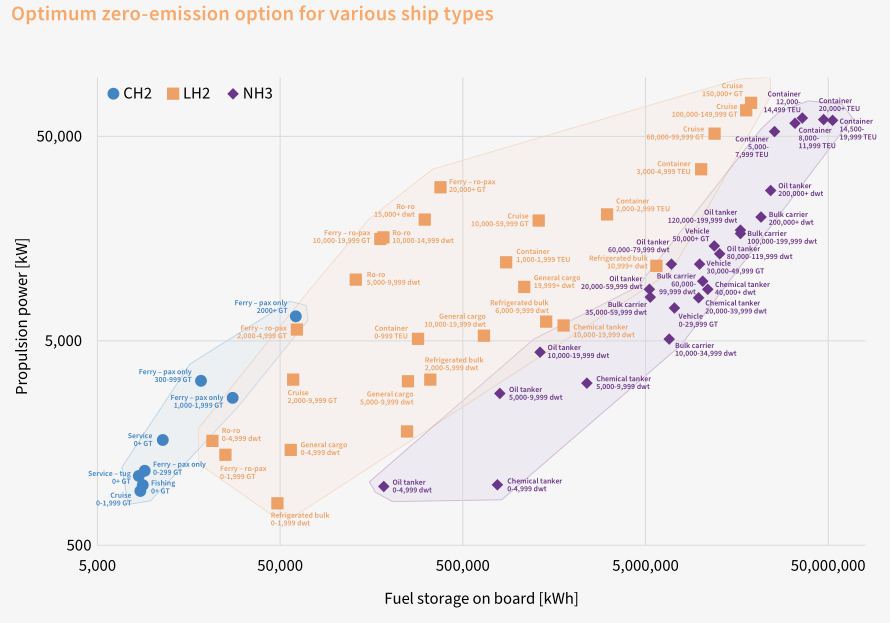
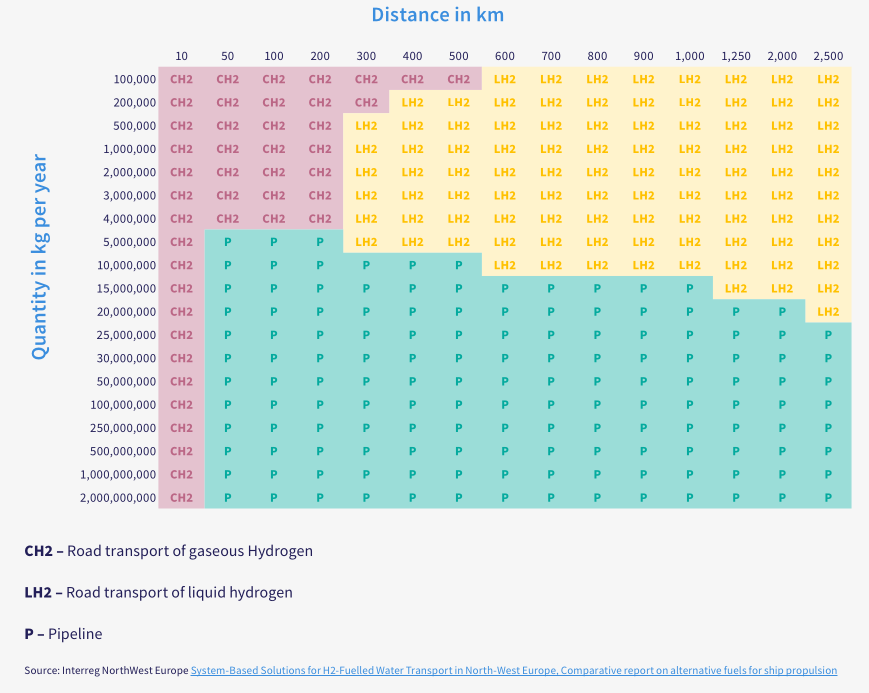
    Hydrogen transportation and storage options for maritime applications - comparing liquid hydrogen, compressed hydrogen, and hydrogen carriers
    Hydrogen transportation and storage pathways for maritime use. Source: Lloyd’s Register, Fuel for Thought: Hydrogen

    Technology Readiness: Viable but Maturing

    Hydrogen propulsion is technically viable today through two primary pathways:

    Internal Combustion Engines (ICE)

    • Efficiency: 40-45% typical
    • Advantages: Lower capital cost, proven marine engine platforms available
    • Challenges: NOx emissions require selective catalytic reduction (SCR), less efficient than fuel cells
    • Best suited for: Higher power applications, vessels with existing ICE experience

    Fuel Cells

    • Efficiency: 50-60% typical (system level)
    • Advantages: Higher efficiency, zero NOx emissions, quieter operation
    • Challenges: Higher capital cost, less operational experience in marine applications, limited power density for larger vessels
    • Best suited for: Ferries, short-sea vessels, auxiliary power applications

    Beyond Technology: Investment Readiness

    Technology readiness alone is not enough. The report correctly identifies that investment readiness and community readiness now matter just as much. This means:

    • Access to green financing and subsidy programs
    • Port authority support and regulatory alignment
    • Crew training infrastructure and operational protocols
    • Public acceptance and stakeholder engagement

    The Real Role of Hydrogen in Shipping

    Hydrogen will not replace diesel everywhere—and it shouldn’t. Its real strategic value lies in three areas:

    1. Enabling zero-emission vessels for specific applications: Short-sea routes, ferries, and offshore support vessels where bunkering frequency aligns with operational patterns
    2. Acting as a gateway fuel: Experience with hydrogen fuel systems, cryogenic storage, and safety protocols translates directly to ammonia and other hydrogen carriers
    3. Supporting the e-fuel ecosystem: Hydrogen is the feedstock for all synthetic fuels; maritime hydrogen adoption helps build production infrastructure for the broader transition

    For deep-sea shipping, hydrogen’s volumetric limitations make it less practical than hydrogen-derived fuels like ammonia or e-methanol. But for coastal and regional shipping, hydrogen offers a viable pathway to zero-emission operations today—not decades from now.

    Hydrogen fuel options mapped to different vessel types - ferries, offshore support, short-sea shipping, and deep-sea vessels
    Hydrogen applicability across different vessel types and operational profiles. Source: Lloyd’s Register, Fuel for Thought: Hydrogen

    Practical Takeaways for the Industry

    For Shipowners

    • Hydrogen is viable for specific routes and vessel types—assess it honestly against your operational profile
    • Engage early with classification societies to understand approval pathways
    • Factor in lifecycle costs including bunkering infrastructure and fuel certification
    • Explore available subsidies and financing programs; they significantly improve economics

    For Designers and Yards

    • Prioritize volumetric efficiency in tank arrangement and insulation design
    • Design for operational flexibility; dual-fuel or fuel-agnostic systems provide risk mitigation
    • Invest in hazard analysis expertise; safety case quality determines approval timeline
    • Consider boil-off gas management as integral to propulsion design, not an afterthought

    For Policymakers

    • Bunkering infrastructure requires coordinated support across maritime clusters
    • Certification and traceability of hydrogen production must be streamlined for regulatory compliance
    • Crew training standards need urgent development to support fleet growth
    • Policy stability matters—stop-start subsidies undermine investment confidence

    Final Thought: Viable, Advancing, Demanding

    Hydrogen is viable. It is advancing fast—faster than many expected even two years ago. But it demands discipline in design, honesty in lifecycle accounting, and patience in scaling infrastructure.

    Lloyd’s Register’s report cuts through the noise to deliver engineering reality. For shipowners and designers, hydrogen is no longer hypothetical. It is a strategic option that must be understood properly—not oversold, not dismissed, but evaluated with clear-eyed technical and commercial rigor.

    The question is no longer “Can we use hydrogen?” but “Where, when, and how does hydrogen make sense for our fleet?”

    That shift in perspective—from possibility to planning—is the real marker of how far the hydrogen transition has come.

    Related Resources on HydrogenShipbuilding.com

    Explore our comprehensive resources to understand hydrogen’s role in shipping:

    Sources & References

    • Lloyd’s Register (2024). Fuel for Thought: Hydrogen. Comprehensive assessment of hydrogen as marine fuel.
    • International Maritime Organization (IMO). Development of interim guidelines for hydrogen fuel systems (expected 2026).
    • FuelEU Maritime Regulation (EU) 2023/1805. Well-to-wake emissions accounting for alternative fuels.
    • International Organization for Standardization (ISO). Ongoing development of hydrogen bunkering standards.
    • Various industry reports on green hydrogen production costs and infrastructure development timelines.
  • European Study Reveals Best Ways to Transport Hydrogen

    The European Commission’s Joint Research Centre has published a comprehensive analysis comparing the costs and environmental impacts of transporting hydrogen across Europe. The study evaluated five delivery methods—compressed hydrogen, liquid hydrogen, ammonia, methanol, and liquid organic hydrogen carriers (LOHC)—transporting renewable hydrogen from Portugal to the Netherlands. The findings provide crucial guidance for Europe’s ambitious target of importing 10 million tonnes of renewable hydrogen annually by 2030.

    The Challenge: Moving Hydrogen Across Europe

    Europe’s hydrogen strategy hinges on a fundamental question: how do we transport large quantities of renewable hydrogen from production sites with abundant renewable energy to industrial demand centers? The EU’s REPowerEU initiative targets producing 10 million tonnes domestically and importing another 10 million tonnes of renewable hydrogen by 2030. This requires determining not just whether long-distance hydrogen transport is viable, but which methods offer the best balance of cost and environmental performance.

    To answer these questions, researchers at the Joint Research Centre conducted both a techno-economic assessment (TEA) and life cycle assessment (LCA) of hydrogen delivery chains. The study stands out for its comprehensive approach—most existing research focuses solely on costs or greenhouse gas emissions, neglecting broader environmental and social impacts.

    The Study Design

    The analysis examined a case study route from Portugal to the Netherlands (2,500 km), representing typical intra-European hydrogen corridors. A sensitivity analysis also considered longer distances (10,000 km) representing routes from the Persian Gulf via the Suez Canal. The assessment assumed delivery of 1 million tonnes of hydrogen annually post-2030.

    Five hydrogen carriers were compared:

    • Compressed hydrogen (C-H2) – Stored at 250 bar for shipping or 70 bar for pipelines
    • Liquid hydrogen (L-H2) – Cooled to -253°C for transport
    • Ammonia (NH3) – Synthesized from hydrogen and nitrogen
    • Methanol (MeOH) – Produced by combining hydrogen with CO2 from direct air capture
    • Liquid Organic Hydrogen Carrier (LOHC) – Using dibenzyltoluene as the carrier molecule

    All hydrogen was assumed to be produced via renewable electrolysis powered by photovoltaic electricity in Portugal (20 g CO2e/kWh), while processes at the delivery site used the projected 2030 Netherlands grid mix. Transportation by ship was modeled using biodiesel fuel, as large-scale hydrogen-powered vessels are unlikely by 2030.

    Key Findings: Winners and Losers

    The study’s conclusions were clear: shipping liquid hydrogen and transporting compressed hydrogen via pipeline emerged as the most cost-effective and environmentally sustainable options for long-distance delivery within Europe.

    Cost Analysis

    For the reference case (2,500 km), importing renewable hydrogen was generally more economical than on-site production using local renewable electricity, with one notable exception: the LOHC pathway proved more expensive than local production. Compressed hydrogen via pipeline and liquid hydrogen by ship offered the best economics, particularly where existing natural gas pipelines could be repurposed.

    As distance increased to 10,000 km, liquid hydrogen maintained its cost advantage, while compressed hydrogen became less attractive due to the increased number of vessels and fuel required for transport. Among chemical carriers, ammonia proved more economical than local production even over longer distances, while LOHC showed comparable costs and methanol remained the most expensive option.

    Environmental Performance

    On-site hydrogen production using renewable electricity at the delivery location remained the most environmentally sustainable option overall. However, when affordable renewable sources aren’t accessible at the delivery site, liquid hydrogen by ship and compressed hydrogen by pipeline proved most favorable among import options.

    The study assessed 16 environmental impact categories using the European Commission’s Environmental Footprint method, finding that resource use, climate change, and water use contributed most to overall environmental impact. Key insights included:

    • Chemical carriers face conversion penalties – Ammonia, LOHC, and methanol incurred higher costs and environmental impacts due to energy and materials required for “packing” (converting hydrogen to the carrier) and “unpacking” (reconverting to hydrogen)
    • Direct air capture is energy-intensive – Methanol’s packing stage proved particularly detrimental due to the high energy demands of capturing CO2 from the atmosphere
    • Dehydrogenation drives impacts – For ammonia and LOHC, the main environmental drawback was the additional energy required at the delivery site to extract hydrogen from the carrier
    • Transportation impact is relatively small – The transport stage itself had negligible environmental impact for most pathways, with compressed hydrogen being the exception (accounting for 27% of overall climate impact due to large shipping volumes)
    • PV panel production matters – Chemical carriers require additional renewable electricity at the production site, necessitating more solar panels. Given the significant environmental burden of manufacturing photovoltaic panels, this substantially increases overall impact

    The Global Warming Perspective

    When analysis focused solely on greenhouse gas emissions, compressed hydrogen and liquid hydrogen consistently showed the lowest carbon intensity. The study found climate impacts ranging from 1.88 kg CO2e per kg H2 delivered for compressed hydrogen by ship to 3.33 kg CO2e per kg H2 for methanol by pipeline over 2,500 km.

    An important finding: hydrogen leakage during transport partially offsets the climate benefits of shipping hydrogen in liquid or compressed form. Current loss estimates for liquid hydrogen (1.6% during liquefaction, 0.21% during storage, 0.2% per day during transport) are considerably higher than for chemical carriers, though these are expected to decrease. The study incorporated the latest research showing hydrogen has a global warming potential of 11.6 kg CO2e per kg H2 over a 100-year timeframe.

    Why Chemical Carriers Underperform

    The research reveals a consistent pattern: while chemical carriers like ammonia, methanol, and LOHC offer advantages in terms of using existing infrastructure and established handling protocols, they face fundamental thermodynamic challenges.

    Converting hydrogen into these carriers and back again requires significant energy input. For example:

    • Ammonia synthesis requires nitrogen extraction from air and energy-intensive Haber-Bosch processing, followed by energy-intensive cracking at the delivery site
    • Methanol production demands CO2 capture (via direct air capture in this study to maintain carbon neutrality) plus synthesis energy, with dehydrogenation required at delivery
    • LOHC hydrogenation and dehydrogenation both require substantial heat input, with the dehydrogenation step being particularly energy-intensive

    This additional energy typically requires more renewable electricity generation capacity at the production site—meaning more solar panels, which carry their own manufacturing environmental burden. When processes at the delivery site rely on grid electricity (which in 2030 will still have fossil fuel components), this further increases the environmental footprint.

    Literature Context and Validation

    The study’s literature review revealed significant gaps in existing research. Of 334 papers on hydrogen delivery costs published since 2015, only 34 addressed life cycle assessment and 44 covered greenhouse gas emissions. Just 8 studies included both cost and environmental analysis.

    The JRC findings align with most existing literature identifying compressed and liquid hydrogen as environmentally favorable options. However, comparisons across studies remain challenging due to varying assumptions about transport distance, hydrogen volumes, technology maturity, and infrastructure availability. Cost estimates for identical pathways can vary by factors of 2-3x depending on these assumptions.

    Why This Matters

    Why This Matters

    For Policymakers: Europe’s hydrogen import targets require immediate infrastructure decisions. This research provides evidence-based guidance: prioritize liquid hydrogen shipping and compressed hydrogen pipelines while improving efficiency of conversion technologies for chemical carriers.

    For Industry: Shipping companies and infrastructure developers can focus investment on the two most promising pathways. The study also highlights that repurposing existing natural gas pipelines for compressed hydrogen offers significant cost advantages.

    For the Environment: The comprehensive assessment reveals that seemingly “clean” hydrogen pathways can have hidden environmental costs in manufacturing solar panels, water consumption in water-scarce regions, and materials extraction. Multi-criteria assessments are essential to avoid shifting environmental burdens from one category to another.

    For Maritime Decarbonization: Liquid hydrogen emerges as a viable marine fuel pathway, particularly relevant for the shipping vessels themselves. The study’s finding that shipping with hydrogen-derived fuels could reduce transport-phase GHG emissions by up to 15% suggests a self-reinforcing benefit as the hydrogen economy scales.

    Limitations and Future Research

    The authors acknowledge several limitations that warrant consideration:

    • Geographic specificity – Results are specific to the Portugal-Netherlands corridor; different regions with varying renewable resources, grid mixes, and existing infrastructure may show different optimal pathways
    • Technology maturity uncertainty – Many technologies assessed are still in early development stages, with significant uncertainty around future costs and performance
    • Forward-looking projections – The study assumes post-2030 deployment with optimistic projections for renewable electricity GHG intensity (20 g CO2e/kWh), considerably lower than current state-of-the-art
    • Social impacts excluded – The analysis doesn’t address safety considerations, training costs, or societal acceptance—factors that may favor established chemical carriers despite higher environmental costs
    • Limited environmental models – Some environmental impact categories have low robustness in their assessment methodologies

    The JRC has since conducted separate social life cycle assessments, finding that local hydrogen production in Northern Europe outperforms import-based scenarios across most social indicators due to simpler value chains and reduced labor intensity.

    Policy Recommendations

    Based on the findings, the researchers recommend:

    1. Promote multi-criteria assessments to avoid shifting impacts from one sustainability dimension to another
    2. Expand regulatory scope – Mechanisms like the Carbon Border Adjustment Mechanism (CBAM) should encompass the entire hydrogen delivery chain and consider environmental categories beyond climate change
    3. Prioritize infrastructure development for liquid hydrogen shipping and compressed hydrogen pipelines while continuing R&D on conversion efficiency improvements
    4. Enhance data quality – Improve reliability and transparency of life cycle inventory data for hydrogen technologies
    5. Refine assessment methodologies – Emphasize underrepresented environmental categories and develop robust social impact indicators
    6. Consider temporal trade-offs – Substantial investments in ammonia infrastructure may delay development of more efficient direct hydrogen transport systems

    The Bottom Line

    For Europe’s hydrogen economy to achieve its dual goals of cost-effectiveness and environmental sustainability, the path forward is clear: liquid hydrogen shipping and compressed hydrogen pipelines should be the primary focus for long-distance transport infrastructure investment. Chemical carriers like ammonia, methanol, and LOHC have roles to play—particularly where existing infrastructure can be leveraged—but their fundamental conversion inefficiencies mean they cannot match the economics and environmental performance of direct hydrogen transport.

    The study also underscores a crucial insight: the most economically favorable options tend to be environmentally preferable as well. This alignment suggests that market forces, if properly structured through mechanisms like carbon pricing and environmental standards, can drive deployment of the most sustainable hydrogen delivery pathways.

    As Europe moves toward its 2030 target of importing 10 million tonnes of renewable hydrogen, this research provides the evidence base needed for informed infrastructure investment decisions worth tens of billions of euros.

    Specifications at a Glance

    Carrier Cost (€/kg H2) at 2,500 km Climate Impact (kg CO2e/kg H2) Key Advantage Main Challenge
    C-H2 Pipeline ~4.0 2.22 Existing pipeline infrastructure can be repurposed Limited to pipeline-connected regions
    L-H2 Ship ~4.8 1.89 Best cost-environment balance for shipping Boil-off losses, cryogenic handling
    NH3 ~7.0 2.84 Existing handling infrastructure and experience Energy-intensive cracking at delivery
    LOHC ~6.5 2.84-3.33 Ambient temperature/pressure handling Very high dehydrogenation energy demand
    MeOH ~8.0 2.84-3.33 Liquid at ambient conditions Direct air capture energy intensity
    On-site Production ~6.8 0.50 No transport needed, lowest environmental impact Requires local renewable electricity availability

    Note: Values are approximate and vary with specific assumptions. Costs shown are levelized costs including production, packing, transport, unpacking, and delivery.

    Sources

    • Arrigoni, A., D’Agostini, T., Dolci, F., & Weidner, E. (2025). “Techno-economic and life-cycle assessment comparisons of hydrogen delivery options.” Frontiers in Energy, 19(6): 1129-1142. DOI: 10.1007/s11708-025-1041-1
    • Ortiz Cebolla, R., Dolci, F., & Weidner, E. (2022). “Assessment of hydrogen delivery options: Feasibility of transport of green hydrogen within Europe.” Joint Research Centre, European Commission.
    • Arrigoni, A., Dolci, F., Ortiz Cebolla, R., et al. (2024). “Environmental life cycle assessment (LCA) comparison of hydrogen delivery options within Europe.” Joint Research Centre, European Commission.
    • European Commission. (2020). “A Hydrogen Strategy for a Climate-Neutral Europe.”
    • European Commission. (2022). “REPowerEU: Joint European Action for More Affordable, Secure and Sustainable Energy.”