HydrogenShipbuilding.com

click to database

Category: Classification Societies

  • Bureau Veritas granted AiP for CSSC Jiangnan Shipyard Hydrogen carrier

    Bureau Veritas has granted Approval in Principle (AIP) certification to CSSC Jiangnan Shipyard for a 20,000 m³ liquid hydrogen carrier designed for long-distance green hydrogen transport between East Asia, the Middle East, and Australia.

    Hydrogen Carrier Design Certified

    The vessel features Jiangnan Shipyard’s proprietary ultra-low-temperature cargo containment system, enabling safe hydrogen transport while significantly reducing boil-off rate. The AIP certification validates the technical feasibility and safety of the design, paving the way for construction of what would be one of the world’s largest liquid hydrogen carriers.

    Long-distance hydrogen shipping requires maintaining cargo at -253°C throughout voyages potentially spanning thousands of nautical miles. The reduced boil-off rate is critical for commercial viability, as hydrogen loss during transport directly impacts the economics of international green hydrogen trade.

    Supporting Infrastructure Development

    The certified design targets emerging hydrogen export routes from Australia and the Middle East—regions developing large-scale green hydrogen production capacity—to energy-importing nations in East Asia. This aligns with Japan and South Korea’s strategies to import significant volumes of hydrogen as part of their decarbonization pathways.

    Why This Matters

    AIP certification for a 20,000 m³ hydrogen carrier marks a critical step toward establishing international hydrogen shipping routes. While smaller demonstration vessels have proven the concept, commercial-scale hydrogen trade requires purpose-built carriers with capacities sufficient to make long-distance transport economically viable. The vessel’s focus on East Asia-Middle East-Australia routes directly addresses the anticipated major hydrogen trade corridors of the 2030s, where resource-rich exporters will supply demand centers lacking domestic renewable energy capacity. Bureau Veritas’s independent technical validation reduces investment risk for shipowners and charterers planning to participate in the emerging hydrogen shipping market.

    Additional Green Ship Certifications

    Bureau Veritas also granted AIP certification to three other Jiangnan Shipyard projects supporting maritime decarbonization:

    • 200,000 m³ ULAC-FSRU: Ultra-large ammonia carrier with regasification capability for direct pipeline supply
    • 175,000 m³ MARK III Flex LNG Carrier: Optimized design reducing carbon emissions and methane slip
    • JINAGAS Ammonia Fuel Supply System: Zero-carbon fuel solution compliant with IMO interim guidelines for ammonia as fuel

    The certifications strengthen cooperation between Bureau Veritas and Jiangnan Shipyard, supporting practical deployment of green shipping technologies across multiple alternative fuel pathways.


    Source: Bureau Veritas Marine & Offshore – “BV Grants AIP Certification to Four Jiangnan Shipyard Projects” (December 29, 2025)
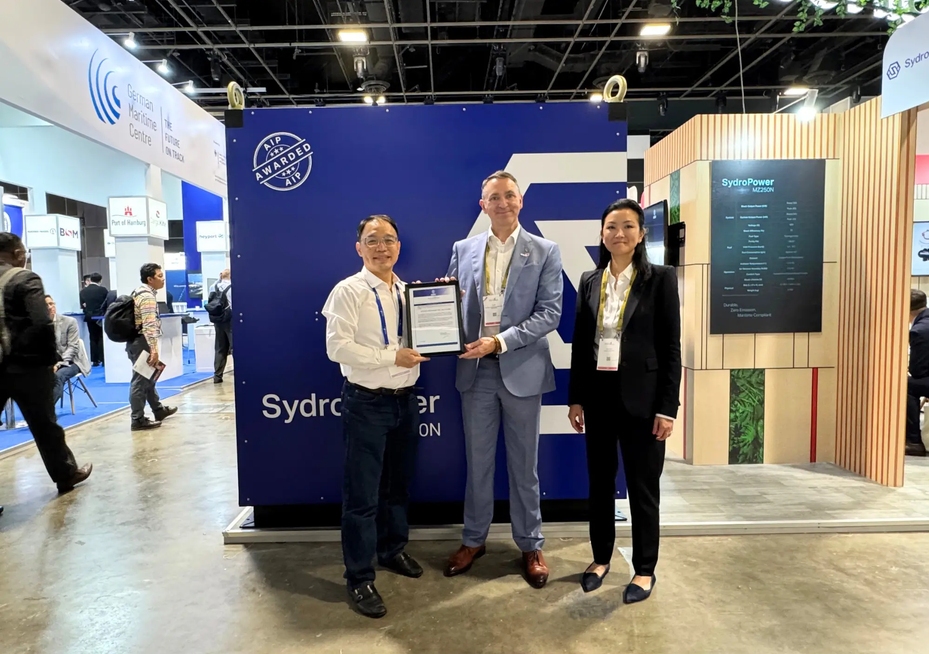
  • Sydrogen Achieves Key Certification for Maritime Fuel Cell

    Another maritime fuel cell supplier achieves Approval in Principle as a first step toward commercialization for maritime applications. The recent flurry of announcements regarding fuel cell approvals is a good sign. More competition is required in this space.

    A Milestone for Maritime Decarbonization

    Singapore-based innovator Sydrogen Energy has achieved a significant breakthrough, securing crucial certification milestones for its maritime hydrogen fuel cell technology. Sydrogen’s Maritime Fuel Cell, the SydroPOWER MZ250N, recently received a Basic Design Assessment (BDA) Statement and Approval in Principle (AiP)from Bureau Veritas Marine & Offshore (BV). The statements mark a vital step toward commercializing advanced hydrogen-based energy solutions in maritime operations.

    Source: Sydrogen

    Advanced Fuel Cell Technology

    The SydroPOWER MZ250N incorporates proven automotive hydrogen fuel cell technology from Sydrogen’s partner, Shanghai Hydrogen Propulsion Technology (SHPT). Designed specifically for maritime environments, this fuel cell system promises reliable and efficient power for various applications, including commercial vessels and offshore platforms. The system significantly reduces greenhouse gas emissions and pollutants, contributing directly to global climate goals and cleaner oceans.

    Rigorous Certification and Validation

    The BDA Statement from Bureau Veritas confirms that the SydroPOWER MZ250N meets stringent safety, performance, and reliability standards. This rigorous evaluation process reinforces Sydrogen’s commitment to excellence and highlights the reliability of their technology. This certification demonstrates the industry’s increasing acceptance and readiness for hydrogen-based maritime solutions.

    Industry Leaders Voice Support

    Teo Eng Dih, Chief Executive of the Maritime and Port Authority of Singapore, praised Sydrogen’s milestone, stating, “We welcome the efforts by Sydrogen and its partners in advancing hydrogen fuel cell technology for maritime use. The Basic Design Assessment is an encouraging milestone that reflects momentum across the industry to explore cleaner energy solutions.”

    Gian Yi-Hsen, CEO of Sydrogen, emphasized the impact of this achievement, noting, “Receiving this Basic Design Assessment Statement from Bureau Veritas marks a transformative moment for Sydrogen Energy. This achievement is not just a validation of our technology’s safety and reliability; it represents a significant step forward in our mission to revolutionize maritime energy solutions.”

    Moving Forward with Sustainable Maritime Energy

    With the certification milestone achieved, Sydrogen is now positioned to accelerate deployment of the SydroPOWER MZ250N. The company is actively engaging with potential customers and industry partners to launch pilot projects and commercial installations. These efforts will help drive maritime operations toward a sustainable, zero-emission future.

    This certification highlights not only Sydrogen’s innovative approach but also underscores the broader maritime industry’s commitment to sustainable and environmentally friendly solutions.