Category: Netherlands Maritime Masterplan

  • H2ESTIA Project: Liquid Hydrogen-Powered General Cargo Ship

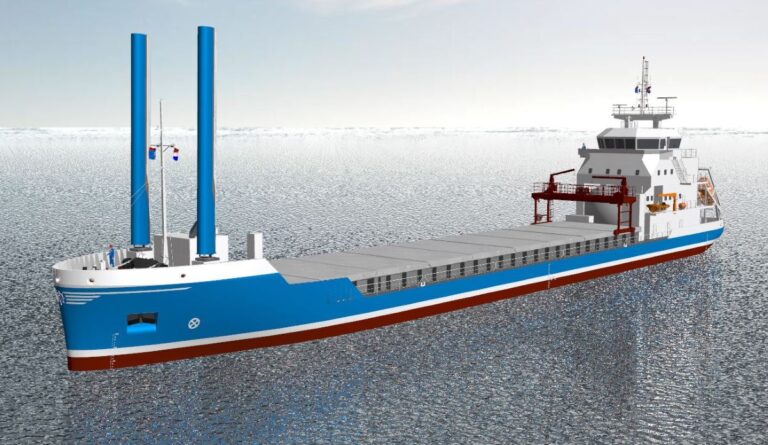
    In February this site already reported on five Dutch hydrogen ships winning subsidy. Now the general public is introduced to one of those vessels: the H2ESTIA Project. Spearheaded by the Nederlandse Innovatie Maatschappij (NIM), this project aims to develop the world’s first zero-emission general cargo ship powered by liquid hydrogen, marking a significant milestone in the quest for greener shipping solutions.

    Project Overview

    The H2ESTIA Project focuses on the design, construction, and demonstration of a hydrogen-powered cargo vessel intended for operations in the North Sea and beyond. Managed by Van Dam Shipping, a family-run short-sea and inland shipping company, the vessel is designed to transport bulk goods without emitting harmful pollutants, thereby redefining sustainable maritime logistics.
    Source: NIM

    Innovative Technological Integration

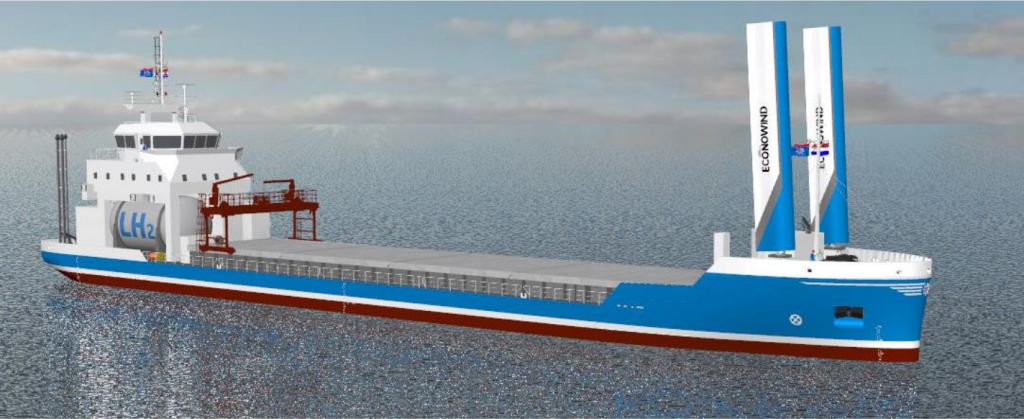
    Central to the project’s innovation is its integrated approach to hydrogen propulsion. The vessel will feature a newly designed cryogenic hydrogen storage and bunkering system, ensuring the safe handling and storage of liquid hydrogen at extremely low temperatures. Propulsion will be achieved through a hydrogen fuel cell system complemented by batteries, delivering clean and efficient power.

    To enhance energy efficiency further, the ship will incorporate:

    • Wind-Assisted Propulsion: Utilizing wind power to reduce reliance on hydrogen fuel.
    • Waste Heat Recovery Systems: Capturing and reusing excess heat to improve overall energy utilization.

    Additionally, the implementation of digital twin technology will create a virtual model of the ship, allowing for real-time monitoring, operational optimization, and enhanced safety measures.

    Collaborative Effort

    The H2ESTIA Project is supported by a consortium of leading maritime and technology organizations, including TNO, MARIN, the University of Twente, Cryovat, EnginX, Encontech, and classification society RINA. This collaborative effort is further backed by the Dutch Ministry of Infrastructure and Water Management, highlighting the project’s national significance in advancing sustainable shipping practices.

    Statements from Key Stakeholders

    Sander Roosjen, CTO at NIM, emphasized the project’s groundbreaking nature: “H2ESTIA is a flagship project for commercial shipping. By integrating hydrogen technology with digital innovation, we are proving that zero-emission shipping is not just a vision—it is an achievable reality.”

    Jan van Dam, CEO of Van Dam Shipping, highlighted the importance of collaborative efforts: “Parallel to the H2ESTIA Project, we are working on securing the supply, as well as the necessary bunkering and logistics. This is a combined effort, as a single ship alone does not generate sufficient demand. Collaboration at this stage is what transforms our ambitions into reality.”

    Implications for the Maritime Industry

    The H2ESTIA Project aims to demonstrate both the technological readiness and economic viability of hydrogen-powered cargo vessels, paving the way for their commercial deployment. By addressing challenges such as hydrogen system certification, risk management, and crew training, the project sets a precedent for the safe integration of hydrogen technology into maritime operations.

    As the maritime industry continues to seek sustainable alternatives to traditional fossil fuels, initiatives like H2ESTIA exemplify the potential of hydrogen as a clean energy source, offering a promising pathway toward achieving zero-emission shipping in the near future.
  • Five new hydrogen vessels receive Dutch subsidy

    On Thursday 06 February five new hydrogen vessels were granted a subsidy by the Dutch government under Maritime Masterplan program. Two methanol and two carbon capture projects received subsidy too. This first call included a total budget of €85 million of which €40 was allocated to hydrogen vessels. For those who missed out, a next call is planned for next year. Among this years winners are the following projects.

    H2ESTIA: A Zero-Emission Coaster

    H2ESTIA is a 5,000 DWT hydrogen-powered coaster, developed by a consortium led by NIM. It features a 1.5 MW LT-PEM fuel cell, a 1 MW battery, and electric propulsion. The ship carries 200m³ of liquid hydrogen (11 tons) and boasts a 1,700 NM range, assisted by e-sails and a waste heat recovery system. This project is a major step toward sustainable coastal shipping.

    Source: Maritiem Masterplan

    Hydrogen-Powered River Cruiser

    A hydrogen-powered river cruise vessel is under development for operations on the Rhine and Danube. It measures 110m x 11m and reaches speeds of up to 22 km/h. This project introduces hydrogen as a clean energy source for the river cruise industry, reducing emissions on inland waterways.

    Hybrid H2 ICE-FC Dredging Vessel

    The Gaasterland, a deep-suction dredger motor barge, is being upgraded with a hybrid hydrogen internal combustion engine (ICE) and fuel cell system. This retrofit aims to reduce emissions while maintaining operational efficiency. The project involves Mineralis B.V., NPS Driven B.V., TNO, and other industry leaders.

    Columbus Zero One: Hydrogen-Powered Inland Transport

    Columbus Zero One is a small, zero-emission hydrogen-powered barge designed for transporting construction materials between the IJsselmeer and Randstad. The ship operates on compressed hydrogen (350 bar), setting a benchmark for sustainable inland shipping.

    Hydro Navis: Liquid Hydrogen Transport

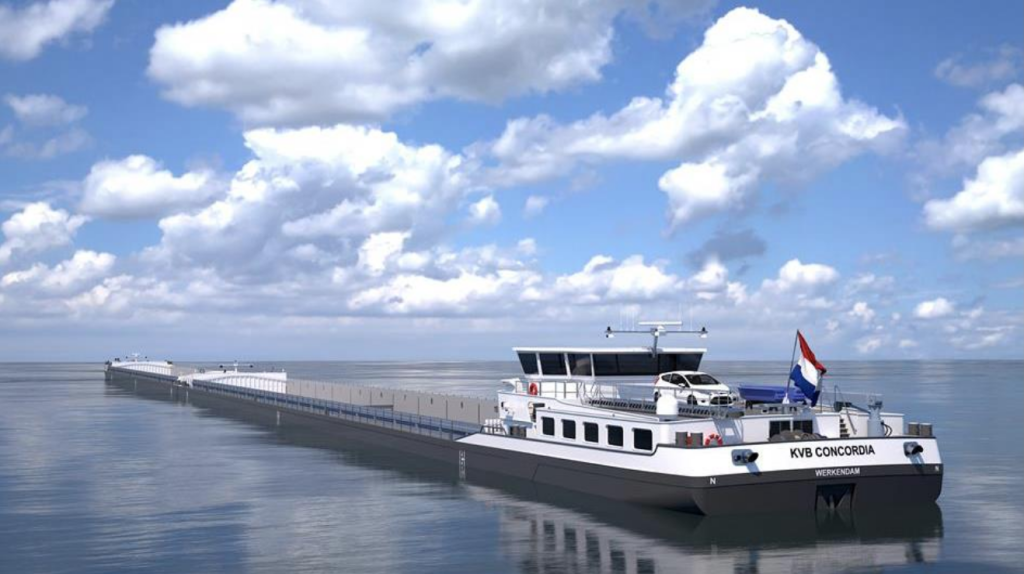
    Hydro Navis is a new zero-emission vessel designed for steel plate transport in wind farm construction. It features a cryogenic liquid hydrogen tank, ensuring efficient and clean operations. The project is supported by NPRC, Hydro-Nova, Marin, NIM, and Concordia Damen Shipyard.

    Source: Maritiem Masterplan

    MOBY NL: Methanol-Powered Bunkering Ship

    MOBY NL is a newly built bunkering vessel operating in the Amsterdam-Rotterdam-Antwerp (ARA) region. The 135m x 11.45m methanol tanker exceeds 6,000 GT and features a dual-fuel methanol propulsion system. The project is backed by Victrol, Shipping Technology, NIM, and other key partners.

    Methanorms: Geophysical Survey Vessel

    Methanorms is a DP-1 geophysical survey vessel designed for efficient execution and real-time monitoring. Its success lies in prior research, scalability, and regulatory compliance. It serves as a model for future survey vessels operating with lower environmental impact.

    BLUE HORIZON: Carbon Capture for LNG Tankers

    Coral Energy, an LNG tanker (115m x 22m, 13,501 GT), is being equipped with a carbon capture system to reduce CO₂ emissions. This project demonstrates how carbon capture can enhance the sustainability of LNG-powered vessels.

    ME2CC: Compact Carbon Capture for LNG Ships

    The Maritime Efficient & Easy Carbon Capture (ME2CC) project is focused on developing compact carbon capture systems for LNG-powered vessels. The first implementation will be on MV Kvitbjorn, a Samskip-operated ship. This technology could bridge the gap toward zero-emission shipping.

    A Step Toward a Cleaner Future

    These projects highlight the rapid advancements in hydrogen and alternative fuel shipping. It is good to see these projects receive capex support. This is the way to develop green hydrogen shipping. After Norway leading the way it is good to see the Dutch following and we can only hope for more.