HydrogenShipbuilding.com

click to database

Category: EU Fund

  • European Project Advances Liquid Hydrogen-Powered SOV Design

    With long term charter contracts, single port operations and fixed time at sea Service Operation Vessels (SOV) are ideally suited for powering by liquid hydrogen. There is little available space so installing liquid tanks below will be a challenge but this is what the new European project consortium led by ArianeGroup, intends to tackle. Last year a similar concept was revealed by Louis Dreyfus Armateurs and Salt Ship Design.

    The Project Scope

    The recently announced NAVHYS project brings together key industry players, research institutions, and shipbuilders to explore the technical and economic feasibility of an liquid hydrogen-fueled SOV design. The primary objective is to provide a concept for a below-deck LH2 storage and fuel system for an SOV to propose a fully decarbonised maintenance solution for wind energy providers.
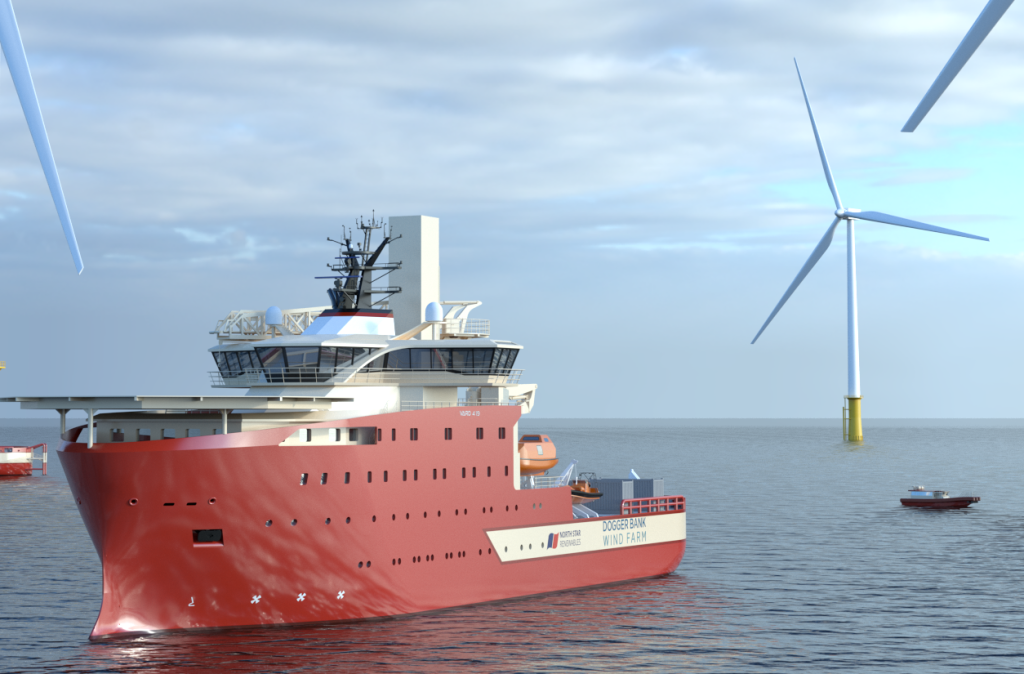
    Source: North Star

    The consortium will address several critical aspects:

    • Fuel Storage & Safety – Developing safe and efficient LH2 storage solutions on board.
    • Power System Integration – Assessing how fuel cells and hydrogen combustion engines can be optimized for vessel propulsion.
    • Regulatory Compliance – Ensuring that the design adheres to evolving maritime safety and environmental regulations.
    • Operational Feasibility – Evaluating how LH2 can meet the energy demands of an SOV during offshore wind farm operations.

    Why Liquid Hydrogen?

    Hydrogen has long been considered a promising alternative to fossil fuels, but its adoption in shipping faces challenges related to storage, energy density, and infrastructure. LH2 offers significant advantages over compressed hydrogen due to its higher energy density per unit volume, making it more suitable for long-duration offshore operations. Additionally, it eliminates the need for complex high-pressure storage systems, a key concern for vessel integration.

    However, LH2 presents unique challenges, including:

    • The need for cryogenic storage at -253°C.
    • Potential boil-off losses during long voyages.
    • Limited bunkering infrastructure compared to conventional fuels.

    Despite these hurdles, the industry sees LH2 as a crucial component in the future of zero-emission offshore operations.

    Implications for the Offshore Wind Sector

    SOVs are the backbone of offshore wind farm operations, transporting technicians and equipment to wind turbines. As the demand for offshore wind energy grows, reducing the carbon footprint of support vessels becomes increasingly important. Hydrogen-fueled SOVs could significantly cut emissions, reduce reliance on fossil fuels, and demonstrate the viability of LH2 as a marine fuel in real-world applications.

    Furthermore, this initiative sets a precedent for future hydrogen-powered vessel designs, potentially influencing developments in other segments of the maritime industry, such as platform supply vessels (PSVs) and crew transfer vessels (CTVs).

    Stay tuned for further updates as the project progresses toward making hydrogen-powered SOVs a reality.

  • EU grants hydrogen vessels

    Very pleased to see the EU Innovation fund specifically supporting three projects developing vessels operating on hydrogen. Ponant enables environmental friendly cruising with a very interesting mix of technologies. Samskip continues their venture into hydrogen vessels after already ordering the Sea Shuttles. While the original Energy Observer get is much larger container-carrying sister.

    In November 2023, the European Commission announced the recipients of the EU Innovation Fund 2023, dedicating substantial grants to pioneering projects aimed at decarbonizing the maritime industry. Among the notable beneficiaries are:

    Ponant’s SWAP2ZERO Project

    • Grant Amount: Not publicly disclosed.
    • Project Overview: Ponant, a French luxury cruise operator, is developing the world’s first transoceanic vessel targeting carbon neutrality.
    • Key Features:
      • Wind Propulsion: A sail power system providing up to 50% of the vessel’s propulsion energy.
      • Solar Energy: Approximately 1,000 square meters of eco-friendly photovoltaic panels.
      • Fuel Cells: Integration of both low-temperature and high-temperature fuel cells for propulsion and hotel load needs.
      • Carbon Capture: Onboard technology to capture and reuse CO₂ emissions.
    • Operational Target: Aiming for zero CO₂ emissions during operation with one month of autonomy.
    • Planned Launch: The vessel is expected to be operational by 2030.

    Samskip’s HydroShuttles

    • Grant Amount: Funding details not publicly disclosed.
    • Project Overview: Samskip, a leading logistics company, is developing hydrogen-powered short-sea vessels designed for efficient, clean coastal transport.
    • Key Features:
      • Hydrogen Fuel Cells: Utilization of advanced fuel cell technology for propulsion.
      • Scalable Hydrogen Storage: Innovative storage solutions to support extended operations.
    • Impact: Aiming to reduce emissions in regional trade routes, showcasing the viability of hydrogen for short-sea shipping applications.

    Energy Observer 2 (EO2)

    • Grant Amount: €40 million from the EU Innovation Fund.
    • Project Overview: Building upon the success of the original Energy Observer, EO2 is a 160-meter liquid hydrogen-powered container ship.
    • Key Features:
      • Fuel Cell Capacity: Equipped with 4.8 MW of fuel cells developed by EODev in partnership with Toyota.
      • Cargo Capacity: Capable of carrying up to 1,100 TEU containers.
      • Range: Designed for a 1,600 nautical mile route over 14 days.
    • Operational Target: Scheduled for commercial operation by 2029 on Europe’s Atlantic and Channel coasts.
    • Environmental Impact: Projected to reduce CO₂ emissions by 112,250 tonnes over ten years, equivalent to the annual absorption of 190,000 mature trees.