What Shipowners Should Know About Transitioning to Hydrogen
A comprehensive technical guide covering hydrogen storage options, regulatory requirements, infrastructure challenges, and the business case for zero-emission maritime propulsion.
As ship operators face mounting environmental regulations and the global push towards decarbonization, hydrogen has emerged as a promising alternative fuel. Its potential to drastically reduce greenhouse gas emissions makes it attractive—but transitioning to hydrogen is not straightforward. This guide provides technical insights for maritime professionals evaluating the switch.
Understanding Hydrogen as a Marine Fuel
Hydrogen can be applied in maritime settings in several forms, each with unique implications for ship design and operation. The choice depends on vessel type, operating profile, and available infrastructure.
Storage Form Comparison
| Storage Form | Energy Density | Storage Conditions | Best Suited For | Key Challenge |
|---|---|---|---|---|
| Compressed H₂ (CH₂) | ~5.6 MJ/L @ 350 bar | High pressure (350-700 bar), ambient temp | Short-sea, inland, ferries | Large volume, leak risk at fittings |
| Liquid H₂ (LH₂) | ~8.5 MJ/L | Cryogenic (-253°C), low pressure | Deep-sea, cruise, longer routes | Boil-off, complex insulation |
| Ammonia (NH₃) | ~12.7 MJ/L | -33°C @ 1 bar or ambient @ 10 bar | Deep-sea bulk carriers | Toxicity, cracking energy loss (20-30%) |
| Methanol (CH₃OH) | ~15.8 MJ/L | Ambient temperature and pressure | Container ships, tankers | Reforming energy loss (15-25%) |
Compressed Hydrogen
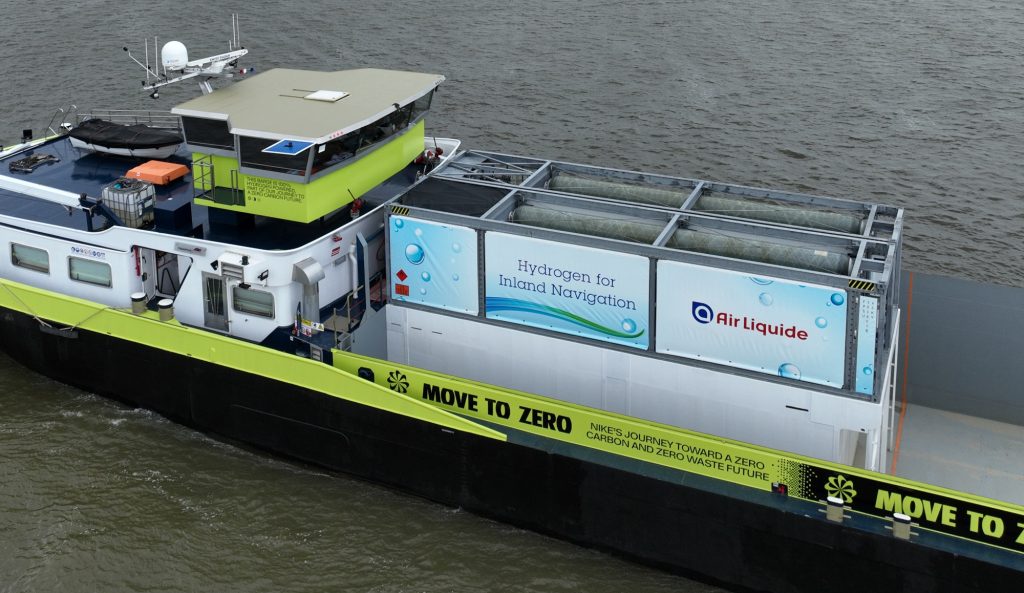
Compressed hydrogen stored at 350-700 bar avoids cryogenic systems but has lower energy density, requiring larger tanks. Hydrogen’s small molecular size increases leak risk at seals and joints, demanding meticulous piping design. Storage typically uses deck-mounted bottles in fixed installations or swappable modules that can be exchanged in port.
Liquefied Hydrogen
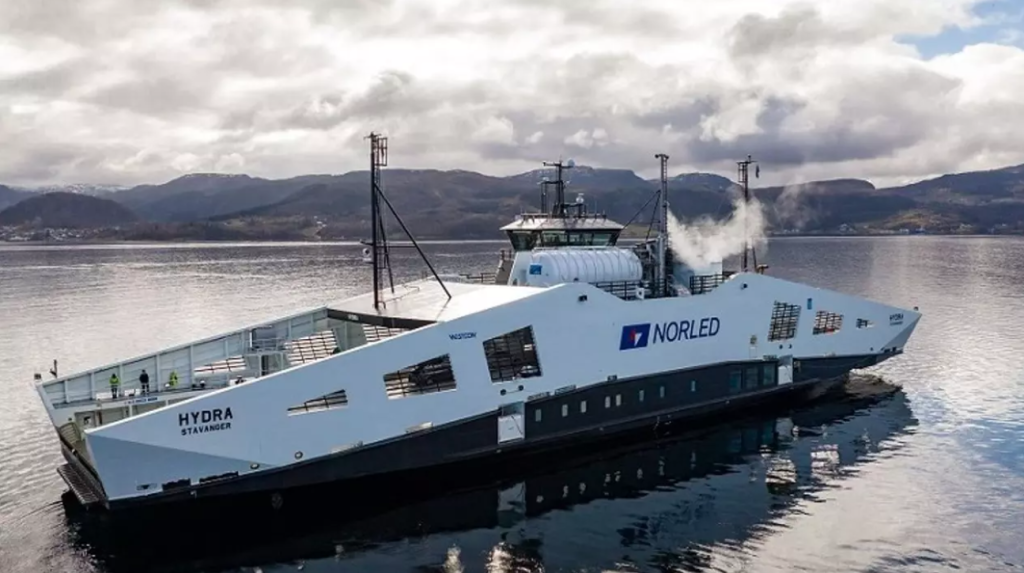
Liquefied hydrogen at -253°C offers higher energy density but requires complex cryogenic insulation and specialized materials. C-type cylindrical tanks handle extreme thermal and structural stresses. The hydrogen supply chain for maritime applications remains limited, with few specialized suppliers—making LH₂ adoption pioneering work.
Hydrogen Carriers (Ammonia & Methanol)
Ammonia and methanol store hydrogen in chemically bonded form, simplifying storage and leveraging existing bunkering infrastructure. However, extracting hydrogen requires onboard cracking or reforming systems, adding complexity and reducing overall efficiency by 15-30%. This approach is gaining traction for deep-sea applications where range requirements favor higher volumetric density.
Conversion Technology: Fuel Cells vs. Combustion
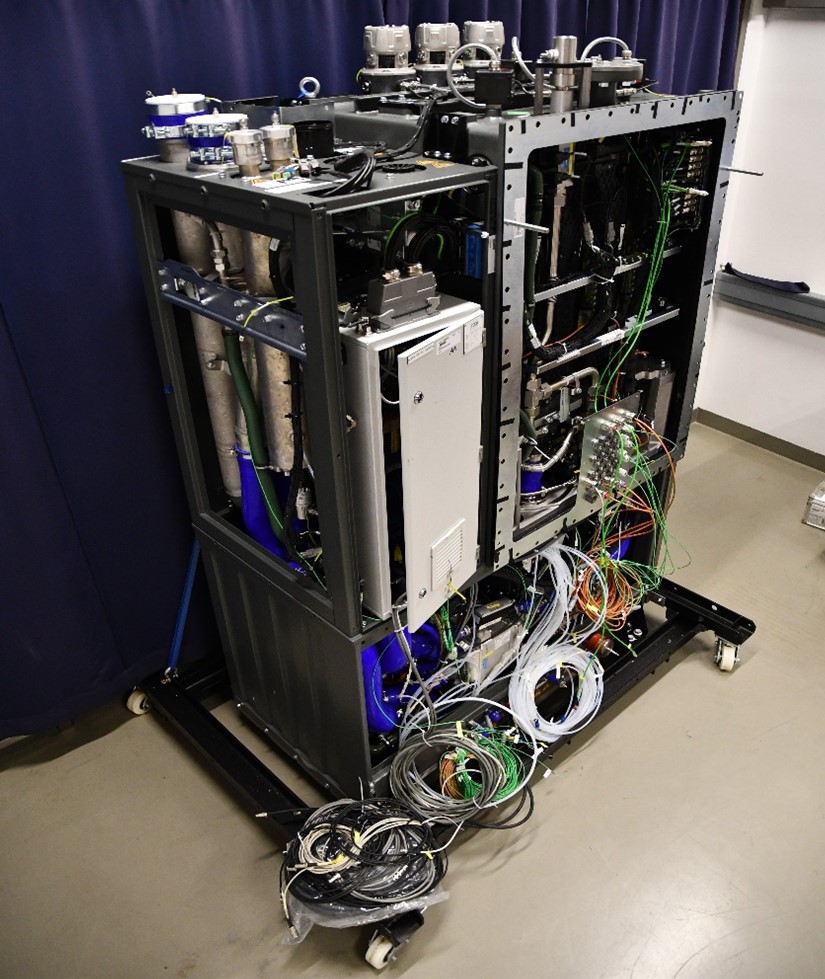
⚡ Fuel Cells
- 50-60% electrical efficiency
- Zero direct emissions (only water)
- Ideal for emission control areas
- ~€1,500/kW capital cost
- Quiet operation, low vibration
🔥 H₂ Combustion Engines
- ~40% thermal efficiency
- Still produces NOx emissions
- Requires SCR aftertreatment
- Transitional solution using existing tech
- Higher power density available
The Different Colors of Hydrogen
Hydrogen production methods vary significantly in carbon intensity. Understanding these distinctions is essential for lifecycle emissions calculations and regulatory compliance.
Regulatory and Policy Drivers
The regulatory landscape is a key driver for hydrogen adoption, compelling shipowners to comply with emissions reduction targets while incentivizing low-carbon technologies through financial mechanisms.
IMO Decarbonization Framework
The International Maritime Organization targets a 50% reduction in greenhouse gas emissions by 2050 compared to 2008 levels. Key mechanisms already affecting fleet planning:
| Regulation | Effective | Impact | Hydrogen Relevance |
|---|---|---|---|
| EEXI | 2023 | One-time technical efficiency requirement for existing ships | Hydrogen retrofits can improve attained EEXI |
| CII | 2023+ | Annual operational carbon intensity rating (A-E scale) | Zero-emission fuels achieve best ratings |
| GHG Fuel Standard | 2027 (proposed) | Well-to-wake lifecycle carbon assessments | Green hydrogen scores near-zero |
| IGF Code | Ongoing | Safety code for low-flashpoint fuels | Hydrogen covered by interim guidelines |
EU Maritime Regulations
The EU’s “Fit for 55” package creates the world’s most stringent maritime emissions framework:
From 2024, shipping companies must purchase carbon allowances for EU voyage emissions. At current prices (~€80/tonne CO₂), a large container ship could face €1-2 million annually in carbon costs—creating strong financial incentive for zero-emission alternatives.
Funding Opportunities
Several government programs offset hydrogen transition costs:
| Program | Region | Coverage | Notes |
|---|---|---|---|
| ENOVA | Norway | Up to 80% CAPEX | NOK 1.5B+ awarded in 2024 for maritime hydrogen |
| EU Innovation Fund | EU-wide | Up to 60% CAPEX | Large-scale low-carbon technology projects |
| Maritime Masterplan | Netherlands | 40-50% CAPEX | Focus on inland and short-sea vessels |
| Horizon Europe | EU-wide | R&D grants | Research and demonstration projects |
Key Challenges of Transitioning to Hydrogen
Transitioning to hydrogen presents significant technical and economic hurdles. Addressing these proactively is essential for project success.
Regulatory Uncertainty
Unlike LNG (covered by IGF Code), hydrogen lacks specific IMO safety rules. Shipowners must rely on interim guidance and classification society Alternative Design processes. This creates approval uncertainty and longer project timelines until comprehensive rules are established.
Infrastructure Gaps
Hydrogen bunkering infrastructure remains nascent. Current production and liquefaction capacity is concentrated in:
| Region | Key Facilities | Status |
|---|---|---|
| Norway | Hydrogen Valley (Bergen), Glomfjord, Mosjøen | Operational / Under construction |
| Germany | Heide Refinery, Hamburg port facilities | Planned (2026-2028) |
| Netherlands | Rotterdam LH₂ terminal | Planned (2027-2028) |
| Japan | Kawasaki LH₂ production (Kobe) | Operational (pilot scale) |
| Australia | Port of Newcastle export hub | Under development |
Storage Requirements
Hydrogen’s lower volumetric energy density requires significantly more space than conventional fuels:
This 5-7× volume increase directly impacts cargo capacity. Innovative tank designs (prismatic cryogenic tanks) help optimize space, but the fundamental physics cannot be overcome without accepting shorter range or reduced payload.
Hydrogen Production & Equipment Costs
| Cost Component | Current Range | Notes |
|---|---|---|
| Green H₂ production | €4-6/kg | Varies by region; Middle East/Australia lowest |
| Compression (to 350 bar) | +€1-2/kg | Adds 3-5 kWh/kg energy requirement |
| Liquefaction | +€3-4/kg | Adds 10-13 kWh/kg; total €8-10/kg delivered |
| PEM fuel cells | ~€1,500/kW | Declining with scale; expect €800-1,000 by 2030 |
| Cryogenic storage | €500-1,000/kg capacity | C-type tanks for marine application |
Most hydrogen vessels maintain conventional fuel backup for redundancy, effectively doubling propulsion system CAPEX. This requirement may relax as operational experience grows and regulations mature.
Safety Considerations
Hydrogen’s high flammability (4-75% concentration in air) and small molecular size demand rigorous safety measures:
- Double-walled piping with leak detection
- Explosion-proof compartments with enhanced ventilation
- Hydrogen-specific sensors throughout fuel system
- Classification society risk-based design approval
- Crew training and certification programs
The absence of prescriptive IMO rules means each project requires Alternative Design approval through a risk-based approach—working closely with classification societies like DNV, Lloyd’s Register, or Bureau Veritas.
Steps for Transitioning to Hydrogen
Feasibility Study
Assess vessel operating profile (energy demand, range requirements), hydrogen supply availability along routes, and CAPEX/OPEX implications. Engage multidisciplinary teams spanning hydrogen technology, naval architecture, and supply chain logistics.
Retrofit vs. Newbuild Decision
Retrofitting can be cost-effective for newer vessels but faces space constraints. Newbuilds can optimize hull geometry for hydrogen storage from the outset. Hybrid approaches—using hydrogen for auxiliary power only—offer incremental adoption paths.
Technology Partner Selection
Identify fuel cell manufacturers (PowerCell, Ballard, Nedstack), storage system providers, and classification societies. Joint development projects enable cost sharing and access to operational experience.
Regulatory Pathway
Engage classification society early for Alternative Design approval. Document risk assessments, safety studies, and operational procedures. Plan for longer approval timelines than conventional builds.
Crew Training & Certification
Implement specialized training for hydrogen handling, fuel cell operation, and emergency procedures. DNV, Lloyd’s Register, and others offer certification programs. Training must be ongoing as technology evolves.
Infrastructure Agreements
Secure long-term bunkering arrangements. Consider port partnerships for dedicated facilities. Swappable container systems can bridge infrastructure gaps in the near term.
Retrofit vs. Newbuild Comparison
🔧 Retrofit
- Lower capital cost if hull is suitable
- Faster deployment (existing vessel)
- Space constraints limit storage capacity
- May require structural reinforcement
- Good for partial hydrogen (auxiliary power)
🚢 Newbuild
- Optimized design for hydrogen from keel up
- Maximum storage capacity integration
- State-of-the-art safety systems
- Higher initial investment
- Best for full hydrogen propulsion
The Business Case for Hydrogen
Environmental Benefits
Hydrogen-powered vessels emit zero CO₂, SOx, and particulates at point of use. When using green hydrogen, well-to-wake emissions approach zero. This enables:
- Operations in zero-emission zones (Norwegian fjords, California ports)
- Compliance with tightening CII requirements without operational restrictions
- Enhanced ESG credentials for sustainability-focused customers and investors
Economic Opportunities
| Factor | Current Impact | Future Trajectory |
|---|---|---|
| Carbon cost avoidance | €1-2M/year for large vessels under EU ETS | Rising as carbon prices increase and coverage expands |
| Green port incentives | Reduced fees, priority berthing at select ports | Expanding globally as ports decarbonize |
| Premium cargo rates | Emerging for sustainability-conscious shippers | Growing demand from scope 3 reporting requirements |
| Fuel cell efficiency | 50-60% vs. 40% for combustion engines | Higher efficiency = lower fuel consumption per kWh delivered |
Future Market Positioning
Early adopters gain operational experience, establish supply relationships, and avoid stranded asset risk as regulations tighten. Fleets committed to conventional fuels face potential obsolescence as zero-emission requirements become mandatory in more jurisdictions.
The total cost of ownership calculation increasingly favors hydrogen as carbon costs rise, green hydrogen prices fall, and regulatory pressure intensifies. Shipowners should model scenarios across different carbon price and hydrogen cost trajectories to identify optimal transition timing.
Conclusion
The transition to hydrogen is complex but increasingly compelling. By understanding hydrogen’s technical requirements, navigating the regulatory landscape, addressing infrastructure and safety challenges, and building a robust business case, shipowners can position their fleets for a sustainable future. Early engagement with classification societies, technology partners, and funding programs will accelerate the path to zero-emission operations—turning regulatory compliance into competitive advantage.